
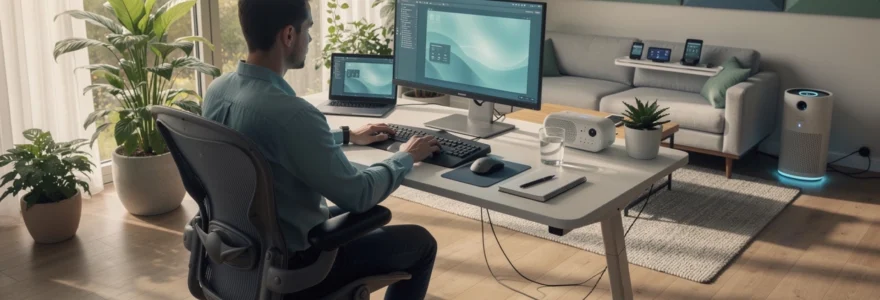
Modern living spaces profoundly impact cognitive function, yet many individuals underestimate the connection between environmental design and mental performance. Research indicates that thoughtfully designed environments can enhance focus, reduce stress hormones by up to 68%, and improve overall cognitive capacity. The spaces where you spend your time directly influence neural pathways, affecting everything from decision-making abilities to creative thinking processes.
Creating a home environment that supports mental clarity requires understanding how spatial elements interact with brain function. Your living space acts as an external extension of your mind, either facilitating or hindering cognitive processes through carefully orchestrated design elements. Strategic environmental modifications can transform ordinary rooms into powerful tools for mental enhancement and psychological well-being.
Cognitive load theory and spatial design principles for enhanced mental performance
Cognitive load theory demonstrates how environmental factors directly influence mental processing capacity. Visual clutter increases cortisol production by forcing the brain to process excessive stimuli, leaving fewer resources available for complex thinking tasks. Studies reveal that individuals working in cluttered environments show 32% decreased performance on memory-related tasks compared to those in organised spaces.
The human brain processes visual information through two primary channels: focused attention and ambient perception. When your environment contains excessive visual elements, these systems become overwhelmed, creating what researchers term cognitive interference. This interference manifests as difficulty concentrating, increased mental fatigue, and reduced problem-solving abilities.
Minimalist design philosophy: reducing visual clutter through strategic object placement
Minimalist design principles offer practical solutions for reducing cognitive load while maintaining functional living spaces. The key lies in strategic object placement rather than complete elimination of possessions. Research from UCLA’s Center for Everyday Lives demonstrates that homes with fewer visible objects correlate with lower stress hormones in residents.
Implementing minimalist principles involves creating clear visual pathways and designated zones for different activities. Each object within your space should serve either a functional purpose or provide genuine emotional value. Surface management becomes crucial – keeping countertops, desks, and tables clear of non-essential items reduces visual noise and promotes mental clarity.
Colour psychology applications: Blue-Green spectrum integration for cortical relaxation
Colour selection profoundly influences neural activity patterns and emotional regulation. The blue-green spectrum specifically activates parasympathetic nervous system responses, promoting cortical relaxation while maintaining alertness. Studies from the University of British Columbia show that blue environments enhance creative thinking by 41% compared to red environments.
Cool colours trigger physiological responses that support cognitive function. Blue hues stimulate the release of calming neurotransmitters while maintaining focus-enhancing properties. Green tones reduce eye strain and mental fatigue, particularly beneficial for spaces where extended concentration is required. Integrating these colours through paint, textiles, or accent pieces creates environments conducive to sustained mental performance.
Natural light optimisation: circadian rhythm synchronisation through window positioning
Natural light exposure directly regulates circadian rhythms, which influence cognitive performance throughout the day. Circadian rhythm disruption impairs memory consolidation, reduces attention span, and compromises decision-making abilities. Positioning workspaces and frequently used areas near windows maximises exposure to natural light cycles.
The timing and intensity of light exposure significantly impact mental clarity. Morning light exposure between 6-9 AM helps establish healthy sleep-wake cycles, while avoiding bright light in evening hours prevents circadian disruption. Window placement should consider the path of sunlight throughout the day, ensuring consistent illumination without creating glare or harsh shadows that strain visual processing systems.
Biophilic design elements: incorporating living plants for improved oxygen flow and stress reduction
Biophilic design elements, particularly living plants, provide measurable cognitive benefits through multiple mechanisms. Plants improve indoor air quality by removing volatile organic compounds while increasing oxygen levels, directly supporting brain function. The presence of greenery reduces stress hormones and activates attention restoration processes that combat mental fatigue.
Strategic plant placement creates microenvironments that enhance specific cognitive functions. Larger plants like fiddle leaf figs or rubber trees provide significant air purification benefits, while smaller
desk plants such as pothos, peace lilies, or snake plants can be positioned within your immediate field of view to provide subtle visual breaks without becoming distractions. Grouping plants at varying heights creates a layered, natural focal point that calms the visual field in the same way a forest edge does, giving your prefrontal cortex short moments of recovery throughout the day. Aim for at least one medium plant per 9–10 square metres to meaningfully impact perceived air quality and stress levels.
Ergonomic furniture selection and workspace configuration for neurological comfort
While visual and spatial design influence how much information your brain must process, ergonomic furniture directly affects how much physiological stress your nervous system endures. Poor posture, sustained muscle tension, and compressive forces on joints send a constant stream of discomfort signals to the brain, quietly draining cognitive resources. In contrast, well-designed ergonomic setups reduce this background noise, allowing more bandwidth for complex thinking, problem-solving, and creative work.
Designing a living space that supports mental clarity therefore requires aligning furniture selection with evidence-based ergonomic standards. Proper seat height, lumbar support, desk elevation, and device positioning all contribute to what researchers call neurological comfort – a state where your brain is not constantly compensating for physical strain. When your body is stabilised and supported, you experience fewer distractions from pain or discomfort, extending your capacity for deep work.
Herman miller aeron chair specifications: lumbar support impact on mental focus duration
The Herman Miller Aeron chair has become a benchmark in ergonomic chair design due to its data-driven approach to spinal support. Its adjustable lumbar pad and mesh suspension system distribute body weight evenly, reducing pressure points that commonly cause lower back pain and leg numbness. Studies on ergonomic seating suggest that proper lumbar support can increase focused work duration by 30–45 minutes before noticeable mental fatigue sets in.
To leverage these benefits, adjust the Aeron’s seat height so your feet rest flat on the floor with knees at approximately 90 degrees. The lumbar pad should sit in the natural curve of your lower back, providing gentle but firm support without forcing your spine into an exaggerated arch. Tilt tension can be set to allow small, controlled movements – this subtle micro-movement keeps blood flowing and prevents the static postures that often trigger tension headaches and shoulder strain.
Adjustable standing desk mechanics: varidesk and FlexiSpot models for cognitive enhancement
Adjustable standing desks, such as Varidesk and FlexiSpot models, introduce postural variability into your day, which is crucial for sustained mental clarity. Alternating between sitting and standing reduces lower back compression, improves circulation, and can enhance subjective alertness. Research from the University of Leicester indicates that sit-stand desk users report up to 32% less fatigue and improved focus compared to those using fixed-height desks.
For optimal cognitive benefits, position your Varidesk or FlexiSpot so the work surface aligns roughly with your elbows when bent at 90 degrees, whether sitting or standing. The top of your monitor should be at or slightly below eye level to keep your neck in a neutral position. Transition between sitting and standing every 30–60 minutes rather than remaining in either position for extended periods – think of it as “movement snacks” for your brain, keeping both body and mind in a more responsive state.
Monitor positioning standards: 20-20-20 rule implementation for reduced eye strain
Improper monitor placement forces your visual system to work harder, contributing to digital eye strain, headaches, and reduced concentration. Industry guidelines recommend placing your monitor about an arm’s length away, with the centre of the screen approximately 15–20 degrees below horizontal eye level. This slight downward gaze minimises neck extension and helps maintain a relaxed, sustainable posture during extended screen use.
To protect mental clarity during long work sessions, implement the widely recommended 20-20-20 rule: every 20 minutes, look at something at least 20 feet away for 20 seconds. Setting a subtle timer or using screen-break software can help you build this habit without constant self-monitoring. These micro-breaks allow your eye muscles to reset, much like stretching a stiff joint, preventing cumulative fatigue that can silently erode your productivity.
Keyboard and mouse ergonomics: microsoft sculpt and logitech MX master integration
Keyboard and mouse design significantly influence wrist position, shoulder tension, and overall comfort. Split, curved keyboards like the Microsoft Sculpt encourage a more natural hand and forearm alignment, reducing strain on the median nerve associated with carpal tunnel symptoms. When your wrists are neutral rather than bent upward or outward, your nervous system receives fewer pain signals, helping you maintain focus for longer periods.
High-precision mice such as the Logitech MX Master series support the hand in a more neutral handshake position and require smaller movements to control the cursor. Position your keyboard directly in front of you, with the “B” key aligned to your midline, and keep your mouse close enough that your elbow stays near your body. If you notice shoulder or neck tension, it often indicates your mouse is too far away or your desk is too high, both of which can be corrected with simple height adjustments or a pull-out keyboard tray.
Acoustic environment management and soundscape design for mental clarity
Sound is one of the most underestimated variables in creating a living space that supports mental clarity. Even low-level background noise – distant traffic, humming appliances, or hallway conversations – activates the brain’s threat detection systems, diverting attention from tasks. Chronic exposure to uncontrolled noise has been linked to elevated stress hormones, reduced working memory capacity, and slower reaction times.
By intentionally shaping your acoustic environment, you can convert your home into a soundscape that supports rather than sabotages focus. This involves managing direct noise sources, controlling reverberation, and introducing beneficial sound layers that mask unpredictable disturbances. The goal is not absolute silence, which can feel unsettling, but a consistent, predictable auditory backdrop that allows your nervous system to relax.
Sound absorption materials: acoustic foam panel placement and noise reduction coefficients
Acoustic foam panels and other sound-absorbing materials reduce reverberation – the lingering reflections of sound waves that create echo and muddiness. Each material has a noise reduction coefficient (NRC) indicating how much sound it absorbs; panels with an NRC of 0.7 or higher are typically effective for home offices and living rooms. When strategically placed, they reduce the overall “loudness” of the room and make speech easier to understand without raising your voice.
For best results, position panels at the primary reflection points – usually on the walls to the left and right of your seating position and on the ceiling above. Soft furnishings such as rugs, heavy curtains, and upholstered furniture also contribute to absorption, acting like acoustic “sponges” that tame high-frequency reflections. This layered approach prevents the hollow, fatiguing quality common in hard-surfaced rooms and produces a more cognitively comfortable listening environment.
White noise generators: marpac dohm vs digital sound machines for concentration
When external noise cannot be fully eliminated, white noise generators can create a protective acoustic buffer. Devices like the Marpac Dohm use mechanical fans to generate a consistent, broadband sound, while digital sound machines simulate white, pink, or brown noise via speakers. Research suggests that steady, non-intrusive noise can improve focus by masking sudden, attention-grabbing sounds that would otherwise disrupt working memory.
The Marpac Dohm’s mechanical sound is often preferred for its natural, non-looping quality, which feels less artificial during long listening sessions. Digital machines, however, offer greater customisation, allowing you to experiment with specific frequency profiles that feel most soothing. Place the device between yourself and the primary noise source, and keep volume just high enough to blur disruptive sounds without becoming its own distraction.
Room acoustics analysis: reverberation time calculations and echo elimination techniques
Reverberation time (RT60) – the time it takes for sound to decay by 60 decibels – is a key metric in assessing how “live” or “dead” a room sounds. For spaces designed to support mental clarity, an RT60 between 0.3 and 0.6 seconds is typically ideal; longer times can make conversations tiring and concentration difficult. While professional acoustic analysis tools exist, simple clap tests and smartphone apps can provide a practical estimate for home environments.
If you notice a distinct echo when you clap or speak, focus on adding absorption to large, parallel surfaces. Bookshelves filled with unevenly sized books act as both absorbers and diffusers, breaking up sound reflections much like trees scatter wind in a forest. Corner bass traps, thick area rugs over hard floors, and fabric wall hangings further reduce reverberation, resulting in a quieter, more mentally supportive soundscape.
Nature soundscapes integration: rainfall and forest audio frequencies for cognitive performance
Nature-based soundscapes, such as gentle rainfall, ocean waves, or forest ambience, provide an additional layer of support for cognitive performance. Studies in environmental psychology indicate that natural sounds can lower sympathetic nervous system activity, reduce perceived stress, and restore directed attention. Unlike lyrical music, which competes with language processing, non-vocal nature sounds tend to occupy a more neutral cognitive space.
To use these effectively, choose recordings with minimal sudden changes in volume or intensity, ideally in the 40–60 dB range. Forest soundscapes with soft bird calls and rustling leaves can be particularly effective for tasks requiring creativity, while steady rainfall or distant waves may better suit analytical work. Think of these soundscapes as an auditory equivalent to biophilic design – they recreate the calming patterns of nature within the controlled environment of your home.
Temperature and air quality control systems for optimal brain function
Thermal comfort and air quality are foundational to designing a living space that supports mental clarity. Even small deviations from optimal temperature or air composition can reduce cognitive performance, often before you consciously notice discomfort. Research from Lawrence Berkeley National Laboratory suggests that performance starts to decline when indoor temperatures exceed 23–24°C (73–75°F), and that elevated CO₂ levels can dramatically impair decision-making and strategic thinking.
Maintaining an indoor temperature between 20–23°C (68–73°F) generally supports focus for most people, though individual preferences vary slightly. Equally important is fresh air exchange; high indoor CO₂ concentrations – common in closed, poorly ventilated rooms – can make you feel drowsy and unfocused even if you slept well. If opening windows is not always practical, consider mechanical ventilation systems with heat recovery or at least schedule regular “airing out” intervals during the day.
Air purifiers with HEPA filters and activated carbon can further enhance air quality by removing particulates, allergens, and volatile organic compounds (VOCs) from cleaning products or low-quality furnishings. Place purifiers near primary seating or sleeping areas, and ensure they are appropriately sized for the room’s square footage to avoid a false sense of security. Combining purification with houseplants creates a multi-layered approach that supports both physiological and psychological comfort.
Technology integration and digital wellness strategies in living spaces
Technology is deeply woven into modern living spaces, but unmanaged screens and devices can fragment attention and undermine mental clarity. Constant notifications, visual clutter from multiple monitors, and blue-light exposure late at night all disrupt the brain’s natural rhythms. Designing for digital wellness means integrating technology in ways that serve your goals rather than constantly competing with them.
Start by defining zones of use: areas where devices are welcome, and areas intentionally kept tech-light or tech-free, such as bedrooms or reading corners. Cable management solutions, docking stations, and closed storage for electronics reduce visual noise and reinforce boundaries between work and rest. You might ask yourself: when you look around your living room in the evening, does it invite relaxation or remind you of unfinished tasks?
On the software side, leverage focus modes, notification schedules, and app limiters built into most operating systems. Blue-light–filtering settings or dedicated glasses help protect circadian rhythms when evening screen use is unavoidable. Consider adopting a “single-screen rule” for deep work sessions – one primary display with all non-essential windows minimised – to reduce cognitive switching costs and keep your mental energy aligned with a single priority.
Feng shui principles and evidence-based spatial arrangement techniques
Feng Shui, the ancient Chinese practice of harmonising individuals with their surrounding environment, offers intuitive guidelines for spatial arrangement that often align with modern environmental psychology. While some traditional explanations are metaphoric rather than scientific, many underlying principles support mental clarity when interpreted through a contemporary lens. Concepts such as clear pathways, balanced visual weight, and protected seating positions resonate with our innate needs for safety and control.
One key Feng Shui idea is the command position, where you can see the main entrance to a room without being directly in line with it, typically with a solid wall behind you. From a psychological perspective, this placement reduces subconscious vigilance, as your brain does not need to constantly monitor potential approaches from behind. Applying this to desks, sofas, or beds can create an immediate sense of ease and stability, which in turn supports deeper relaxation or concentration.
Feng Shui also emphasises the importance of unobstructed circulation paths and the avoidance of sharp, aggressive visual lines pointing directly at seating or sleeping areas. In evidence-based design terms, this aligns with reducing environmental stressors and visual threats that keep the amygdala subtly activated. By rounding furniture arrangements, softening corners with plants or textiles, and ensuring that frequently used routes are free from obstacles, you create a more cognitively “smooth” experience of moving through your home.
Finally, the principle of balancing elements – such as wood, water, metal, fire, and earth – can be reframed as balancing textures, colours, and materials to avoid monotony or overstimulation. A space dominated by cold, hard surfaces and bright lighting may feel energising but quickly becomes tiring; conversely, an overly soft, dim environment might be calming yet demotivating. Thoughtfully mixing natural materials, soft furnishings, controlled lighting, and a cohesive colour palette allows you to tune each room’s emotional tone, supporting the specific type of mental clarity you need there, whether that is calm reflection, focused work, or creative exploration.
 Good health cannot be bought, but rather is an asset that you must create and then maintain on a daily basis.