
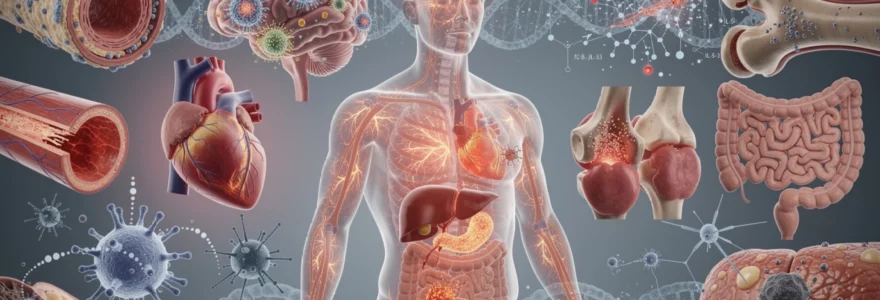
# L’inflammation : un facteur clé dans un large éventail de pathologies
Inflammation has emerged as one of the most significant contributors to chronic disease in modern medicine. While this biological response serves as a vital protective mechanism against infection and injury, mounting evidence reveals that when inflammation persists beyond its useful purpose, it transforms into a destructive force. Research now suggests that chronic low-grade inflammation underlies an estimated 60-80% of all noncommunicable diseases worldwide, from cardiovascular disorders to neurodegenerative conditions. Understanding the intricate molecular pathways through which inflammation influences disease progression has become paramount for developing targeted therapeutic interventions. The complex interplay between inflammatory mediators, cellular signalling cascades, and tissue damage presents both challenges and opportunities for healthcare professionals seeking to mitigate the burden of inflammation-related conditions.
Molecular mechanisms of inflammatory cascade activation and cytokine signalling pathways
The inflammatory response operates through sophisticated molecular machinery that coordinates cellular defence mechanisms. At the heart of this system lies a network of signalling proteins, transcription factors, and enzymatic pathways that determine whether inflammation resolves appropriately or becomes chronic. These mechanisms represent critical intervention points for therapeutic strategies aimed at controlling excessive inflammatory responses.
Nuclear factor kappa B (NF-κB) activation in chronic inflammatory states
Nuclear Factor Kappa B (NF-κB) functions as a master regulator of inflammatory gene expression, orchestrating the production of numerous pro-inflammatory mediators. This transcription factor remains sequestered in the cytoplasm under normal conditions, bound to inhibitory proteins called IκBs. When cells encounter inflammatory stimuli—whether from pathogens, tissue damage, or metabolic stress—a cascade of phosphorylation events releases NF-κB, allowing it to translocate to the nucleus. Once there, it activates genes encoding cytokines, chemokines, adhesion molecules, and enzymes that perpetuate inflammation. In chronic inflammatory states, this pathway becomes dysregulated, leading to sustained NF-κB activation that drives tissue destruction and disease progression.
Tumour necrosis factor alpha (TNF-α) and interleukin-6 (IL-6) overexpression
TNF-α and IL-6 represent two of the most influential pro-inflammatory cytokines in human physiology. TNF-α, produced primarily by activated macrophages, initiates inflammatory cascades by binding to cell surface receptors and triggering downstream signalling pathways. This cytokine promotes vascular permeability, recruits immune cells to sites of inflammation, and in excessive amounts, contributes to tissue damage. IL-6 serves multiple functions, including acute phase protein synthesis in the liver, B cell differentiation, and T cell activation. Chronically elevated IL-6 levels have been documented in conditions ranging from rheumatoid arthritis to cardiovascular disease, with serum concentrations correlating directly with disease severity. The overexpression of these cytokines creates a self-perpetuating inflammatory environment that proves remarkably difficult to resolve without targeted intervention.
Cyclooxygenase-2 (COX-2) enzyme activity and prostaglandin E2 production
The cyclooxygenase enzymes catalyse the conversion of arachidonic acid into prostaglandins, lipid mediators with diverse physiological effects. While COX-1 operates constitutively in most tissues, COX-2 expression increases dramatically during inflammation. This inducible enzyme produces prostaglandin E2 (PGE2), which amplifies inflammatory signals by enhancing vascular permeability, sensitizing pain receptors, and promoting fever generation. COX-2 expression is tightly regulated by inflammatory transcription factors, particularly NF-κB, creating a positive feedback loop. In chronic inflammatory diseases, sustained COX-2 activity contributes to ongoing tissue damage, pain, and systemic inflammation. The therapeutic targeting of this enzyme through nonsteroidal anti-inflammatory drugs (NSAIDs) has provided significant symptom relief for millions of patients, though concerns about cardiovascular side effects have necessitated careful patient selection.
C-reactive protein (CRP) elevation as a systemic inflammation biomarker
<p
C-reactive protein (CRP) is a well-established systemic biomarker of inflammation, synthesised predominantly by the liver in response to cytokines such as IL-6 and IL-1β. High-sensitivity CRP (hs-CRP) assays can detect even low-grade inflammation and are now widely used in cardiovascular risk stratification. Persistently elevated CRP levels reflect ongoing activation of the innate immune system and have been linked to conditions including atherosclerosis, metabolic syndrome, autoimmune disease, and certain cancers. While CRP itself may not always be a direct driver of pathology, its elevation serves as a practical, clinically accessible indicator that inflammatory pathways are active and potentially contributing to disease progression.
Cardiovascular disease pathogenesis through inflammatory mediators
Cardiovascular disease offers one of the clearest examples of how chronic inflammation drives pathology over years or decades. Rather than being a purely “plumbing” problem caused by cholesterol build-up, heart disease is now understood as a complex inflammatory process involving endothelial dysfunction, immune cell recruitment, and oxidative stress. Inflammatory mediators shape every stage of atherosclerosis, from the first subtle changes in the vessel wall to plaque rupture and thrombosis. Recognising this inflammatory component helps explain why some people with only modest cholesterol elevations still develop serious cardiovascular events.
Atherosclerotic plaque formation and endothelial dysfunction via IL-1β
Interleukin-1β (IL-1β) is a potent pro-inflammatory cytokine that plays a central role in atherosclerotic plaque formation. When the endothelium—the thin, delicate lining of blood vessels—is exposed to risk factors such as high LDL cholesterol, smoking, or hypertension, it becomes activated and more permeable. IL-1β promotes this endothelial dysfunction by upregulating adhesion molecules and encouraging LDL particles to infiltrate the arterial wall, where they become oxidised and trigger immune activation. Over time, repeated IL-1β signalling leads to the accumulation of lipid-laden foam cells, smooth muscle cell proliferation, and the development of fibrotic, vulnerable plaques that can rupture and cause heart attack or stroke.
Clinical trials have underscored the importance of IL-1β in cardiovascular inflammation. In the CANTOS trial, targeting IL-1β with a monoclonal antibody significantly reduced recurrent cardiovascular events in high-risk patients, independent of cholesterol lowering. This supports the concept that dampening specific inflammatory pathways can meaningfully alter disease outcomes. From a practical standpoint, interventions that reduce IL-1β activity—such as smoking cessation, weight loss, and improved glycaemic control—can complement pharmacological strategies to stabilise the endothelium and slow plaque progression.
Coronary artery disease progression through monocyte infiltration
Monocytes are circulating white blood cells that act as key “first responders” in coronary artery inflammation. When the endothelium expresses adhesion molecules in response to cytokines and oxidative stress, monocytes adhere to the vessel wall and migrate into the intima. Once inside, they differentiate into macrophages and ingest oxidised LDL, transforming into foam cells that form the fatty streaks characteristic of early atherosclerosis. This process resembles a chronic, smouldering wound within the artery wall, continually fuelled by dyslipidaemia and systemic inflammation.
As coronary artery disease advances, monocyte-derived cells continue to shape plaque composition and stability. They secrete matrix metalloproteinases and other enzymes that weaken the fibrous cap, making it more prone to rupture under mechanical stress. They also release cytokines that attract additional immune cells, amplifying the inflammatory milieu. Strategies that lower systemic inflammation—such as adopting an anti-inflammatory diet or improving sleep and stress management—can help reduce monocyte activation and infiltration, providing another layer of protection against coronary events.
Hypertension development linked to vascular inflammation
Hypertension was historically viewed as a purely haemodynamic disorder, but growing evidence links it closely to vascular inflammation. Cytokines such as TNF-α, IL-6, and IL-17 can impair endothelial nitric oxide production, reducing the vessel’s ability to relax and leading to increased vascular tone. At the same time, inflammatory cells infiltrate the vessel wall and perivascular adipose tissue, producing reactive oxygen species that further degrade nitric oxide and stiffen arteries. The result is a self-reinforcing cycle in which elevated blood pressure and inflammation each exacerbate the other.
This inflammatory dimension helps explain why lifestyle measures that lower inflammation also tend to reduce blood pressure. Weight loss, regular physical activity, and a Mediterranean-style diet have all been shown to improve endothelial function and reduce inflammatory markers. In some patients, particularly those with metabolic syndrome, addressing chronic low-grade inflammation may be as important as prescribing antihypertensive drugs in achieving long-term blood pressure control.
Myocardial infarction risk amplification through oxidative stress
Oxidative stress—an imbalance between reactive oxygen species (ROS) and antioxidant defences—is tightly interwoven with inflammation in the pathogenesis of myocardial infarction. Inflammatory cells within atherosclerotic plaques generate ROS that oxidise lipids, proteins, and DNA, making plaques more unstable and prone to rupture. ROS also directly damage endothelial cells and promote thrombosis by altering platelet function and coagulation cascades. When a vulnerable plaque finally ruptures, the resulting clot can abruptly block coronary blood flow and trigger a heart attack.
From a clinical perspective, oxidative stress serves as both a marker and a mediator of heightened myocardial infarction risk. Diets rich in antioxidants (from fruits, vegetables, nuts, and whole grains), regular exercise, and avoidance of tobacco smoke help bolster endogenous antioxidant systems and reduce ROS generation. While antioxidant supplements have produced mixed results in trials, comprehensive lifestyle strategies that address both oxidative stress and inflammation remain a cornerstone of myocardial infarction prevention.
Neuroinflammation in alzheimer’s disease and parkinson’s disease progression
The brain was once considered an immune-privileged organ, relatively isolated from systemic inflammatory processes. We now know that neuroinflammation plays a pivotal role in neurodegenerative diseases such as Alzheimer’s disease and Parkinson’s disease. Chronic activation of glial cells, disruption of the blood-brain barrier, and cytokine-driven signalling contribute to progressive neuronal injury. You can think of this process as a slow-burning fire within neural circuits: initially protective, but over time, increasingly destructive if not adequately controlled.
Microglial activation and amyloid-beta plaque accumulation
Microglia are the resident immune cells of the central nervous system, responsible for surveillance, debris clearance, and synaptic pruning. In Alzheimer’s disease, these cells become chronically activated in response to accumulating amyloid-beta (Aβ) peptides. While acutely activated microglia can phagocytose Aβ and help maintain homeostasis, persistent exposure leads to a pro-inflammatory phenotype characterised by the release of cytokines, chemokines, and ROS. This, in turn, exacerbates neuronal injury and further Aβ deposition, establishing a vicious cycle.
Recent genetic studies have identified microglial receptors and signalling pathways that modulate their response to Aβ, highlighting potential therapeutic targets. For example, variants in genes such as TREM2 alter microglial activation and are associated with increased Alzheimer’s risk. Emerging strategies aim to “re-educate” microglia towards a more protective, phagocytic state rather than simply suppressing their activity. Lifestyle measures that influence systemic inflammation—such as physical activity and metabolic health—may also indirectly modulate microglial function and slow neurodegenerative processes.
Blood-brain barrier permeability changes in multiple sclerosis
Multiple sclerosis (MS) illustrates how inflammation can compromise the structural integrity of the blood-brain barrier (BBB). Under normal conditions, the BBB tightly regulates which molecules and cells can enter the central nervous system. During MS, pro-inflammatory cytokines such as TNF-α, IL-1β, and interferon-γ disrupt tight junctions between endothelial cells, increasing BBB permeability. This allows autoreactive T cells, B cells, and monocytes to infiltrate the brain and spinal cord, where they attack myelin and axons.
The breakdown of the BBB is not merely a passive consequence of inflammation; it actively shapes disease progression by exposing neural tissue to additional immune mediators and serum proteins. Many disease-modifying therapies for MS aim to reduce immune cell trafficking across the BBB or dampen the inflammatory activity of infiltrating cells. Early diagnosis and prompt initiation of these therapies are critical, as repeated inflammatory insults can lead to irreversible neurodegeneration and disability.
Tau protein hyperphosphorylation through inflammatory kinase activation
Alongside amyloid-beta, tau pathology is a defining feature of Alzheimer’s disease and several related tauopathies. Under physiological conditions, tau stabilises microtubules within neurons, supporting axonal transport. Inflammatory signalling can activate kinases such as glycogen synthase kinase-3β (GSK-3β) and cyclin-dependent kinase 5 (CDK5), which phosphorylate tau excessively. Hyperphosphorylated tau detaches from microtubules, aggregates into neurofibrillary tangles, and disrupts neuronal function. This is somewhat analogous to reinforcing beams in a building becoming warped and twisted, ultimately undermining structural stability.
Pro-inflammatory cytokines, including IL-1β and TNF-α, amplify kinase activity and promote tau pathology, linking systemic and central inflammation to neurodegeneration. Experimental models suggest that attenuating inflammatory kinase activation can reduce tau hyperphosphorylation and neuronal loss. While specific anti-tau therapies are still under development, maintaining overall inflammatory balance through cardiovascular risk reduction, glycaemic control, and healthy sleep patterns may help mitigate upstream drivers of tau pathology.
Dopaminergic neuron loss mediated by pro-inflammatory cytokines
In Parkinson’s disease, the progressive loss of dopaminergic neurons in the substantia nigra is closely intertwined with neuroinflammation. Activated microglia and infiltrating immune cells release cytokines such as TNF-α, IL-6, and interferon-γ, which can directly injure dopaminergic neurons or sensitise them to oxidative and mitochondrial stress. Over time, this inflammatory milieu accelerates neuronal apoptosis and contributes to the motor symptoms characteristic of Parkinson’s disease.
Environmental toxins, infections, and gut dysbiosis have all been proposed as triggers that may initiate or amplify this inflammatory cascade. Some studies suggest that people with higher systemic inflammation markers are at increased risk of developing Parkinson’s later in life. Although definitive prevention strategies are not yet established, interventions that support mitochondrial function, reduce oxidative stress, and limit chronic inflammation—such as regular exercise and a diet rich in polyphenols and omega-3 fatty acids—are being actively explored as adjunctive approaches.
Metabolic syndrome and type 2 diabetes mellitus through chronic low-grade inflammation
Metabolic syndrome and type 2 diabetes exemplify how chronic low-grade inflammation can quietly reshape physiology long before overt disease appears. Adipose tissue, particularly visceral fat, acts not just as an energy store but as an active endocrine and immune organ. When overloaded, it releases inflammatory mediators that impair insulin signalling, alter lipid metabolism, and contribute to a pro-thrombotic state. This silent, smouldering inflammation is often present for years, which is why lifestyle changes made early can dramatically alter long-term outcomes.
Adipose tissue macrophage infiltration and insulin resistance
In obesity, expanding adipocytes become hypoxic, stressed, and more prone to cell death. These changes attract macrophages, which infiltrate adipose tissue and form characteristic “crown-like” structures around dying fat cells. Initially, macrophages may help clear debris, but as their numbers rise, they shift towards a pro-inflammatory phenotype, secreting TNF-α, IL-6, and other cytokines. These mediators interfere with insulin receptor signalling pathways in adipocytes, liver, and skeletal muscle, promoting insulin resistance.
You can think of inflamed adipose tissue as a malfunctioning communication hub sending distorted metabolic signals throughout the body. Weight loss of even 5–10% has been shown to reduce adipose tissue inflammation and improve insulin sensitivity. Regular physical activity, adequate sleep, and diets high in fibre and unsaturated fats further modulate macrophage phenotype towards a more anti-inflammatory profile, helping to restore metabolic flexibility.
Pancreatic beta-cell dysfunction via inflammasome NLRP3 activation
The NLRP3 inflammasome is a multi-protein complex that senses metabolic danger signals, including elevated glucose, saturated fatty acids, and uric acid. In the pancreas, chronic activation of NLRP3 within resident immune cells and, to some extent, within beta cells themselves leads to increased production of IL-1β and IL-18. These cytokines impair insulin secretion, promote beta-cell apoptosis, and further exacerbate hyperglycaemia. Over time, the combination of insulin resistance and beta-cell failure culminates in overt type 2 diabetes.
Targeting the NLRP3 inflammasome and IL-1β signalling has shown promise in experimental models and early clinical trials. For example, IL-1β antagonists can improve glycaemic control in some patients with type 2 diabetes, highlighting the central role of inflammatory pathways. On a practical level, strategies that reduce metabolic stress—such as moderating refined carbohydrate intake, increasing physical activity, and managing gout or hyperuricaemia—may help dampen NLRP3 activation and preserve beta-cell function.
Hepatic steatosis and non-alcoholic fatty liver disease (NAFLD) inflammatory pathways
Non-alcoholic fatty liver disease (NAFLD) is now the most common chronic liver condition worldwide and is tightly linked to obesity, insulin resistance, and systemic inflammation. In its early stages, excess lipids accumulate within hepatocytes, a relatively benign state known as simple steatosis. However, when lipotoxic metabolites, oxidative stress, and gut-derived endotoxins activate hepatic Kupffer cells and stellate cells, the liver shifts towards a pro-inflammatory, fibrogenic environment. This more severe form, non-alcoholic steatohepatitis (NASH), can progress to cirrhosis and hepatocellular carcinoma.
Key inflammatory mediators in NAFLD include TNF-α, IL-6, and chemokines that attract monocytes to the liver. Dysbiosis of the gut microbiome and increased intestinal permeability may further fuel hepatic inflammation by allowing bacterial products such as lipopolysaccharide (LPS) to reach the portal circulation. Lifestyle interventions remain the cornerstone of NAFLD management: weight loss, reduced fructose and saturated fat intake, and regular exercise all help decrease liver fat and inflammatory signalling. Emerging pharmacotherapies aim to target specific pathways in lipid metabolism, fibrosis, and inflammation to halt or reverse disease progression.
Autoimmune disorders driven by dysregulated immune responses
Autoimmune diseases arise when the immune system loses tolerance to self-antigens and mounts a sustained inflammatory attack against the body’s own tissues. Genetic susceptibility, environmental triggers, hormonal influences, and microbiome alterations all converge to disrupt normal immune regulation. The result is chronic inflammation that waxes and wanes over time, often affecting multiple organ systems. Understanding the shared inflammatory mechanisms across different autoimmune disorders can help you appreciate why patients frequently experience overlapping symptoms and comorbidities.
Rheumatoid arthritis joint destruction through synovial inflammation
Rheumatoid arthritis (RA) is characterised by persistent synovial inflammation that gradually erodes cartilage and bone. In RA, the synovial membrane transforms into a hyperplastic, inflammatory pannus infiltrated by T cells, B cells, macrophages, and fibroblast-like synoviocytes. These cells produce high levels of TNF-α, IL-6, IL-1β, and matrix-degrading enzymes, driving joint swelling, pain, and structural damage. Autoantibodies such as rheumatoid factor (RF) and anti-citrullinated protein antibodies (ACPAs) further amplify inflammation and are associated with more aggressive disease.
Without effective control of synovial inflammation, RA can lead to significant disability and increased cardiovascular risk. Modern disease-modifying antirheumatic drugs (DMARDs), including biologic agents targeting TNF-α, IL-6 receptors, and co-stimulatory pathways, have transformed outcomes by directly interrupting key inflammatory circuits. From a lifestyle standpoint, maintaining a healthy weight, staying physically active within tolerance, and avoiding smoking can all reduce systemic inflammation and improve treatment response.
Inflammatory bowel disease: crohn’s disease and ulcerative colitis mechanisms
Inflammatory bowel disease (IBD), encompassing Crohn’s disease and ulcerative colitis, results from an inappropriate immune response to intestinal microbiota in genetically susceptible individuals. In Crohn’s disease, inflammation can affect any part of the gastrointestinal tract and is typically transmural, leading to strictures, fistulas, and deep ulcerations. Ulcerative colitis, by contrast, is confined to the colon and primarily involves superficial mucosal inflammation. In both conditions, dysregulated T-cell responses, excessive cytokine production (including TNF-α, IL-12, IL-23, and IL-17), and barrier dysfunction play central roles.
The intestinal epithelium in IBD becomes more permeable, allowing microbial products to penetrate and activate underlying immune cells. This creates a chronic loop in which inflammation further damages the barrier, perpetuating immune activation. Treatments such as anti-TNF agents, integrin blockers, and IL-12/23 inhibitors aim to break this cycle by targeting specific inflammatory pathways. Practical measures like smoking cessation (particularly important in Crohn’s), stress management, and evidence-based dietary adjustments can support medical therapy and help maintain remission.
Systemic lupus erythematosus (SLE) and type I interferon signalling
Systemic lupus erythematosus (SLE) is a prototypical systemic autoimmune disease characterised by diverse clinical manifestations and a strong inflammatory signature driven by type I interferons. In SLE, impaired clearance of apoptotic cells and immune complexes leads to persistent exposure of nuclear antigens, which triggers plasmacytoid dendritic cells to produce large amounts of interferon-α. This cytokine amplifies autoantibody production, promotes B-cell activation, and enhances antigen presentation, creating a self-sustaining inflammatory circuit.
Type I interferon signalling not only drives systemic symptoms such as fatigue and fever but also contributes to organ damage in the kidneys, skin, and cardiovascular system. Targeted therapies that inhibit interferon receptors or downstream signalling molecules are now entering clinical use and show promise in reducing disease activity. For people living with SLE, minimising ultraviolet light exposure, controlling cardiovascular risk factors, and adhering closely to prescribed immunomodulatory therapies can help mitigate the long-term impact of chronic inflammation.
Psoriasis pathogenesis through t-helper 17 (th17) cell activation
Psoriasis is a chronic inflammatory skin disease in which dysregulated T-cell responses, particularly those involving Th17 cells, play a central role. Environmental triggers such as skin injury, infections, or stress activate dendritic cells in the skin, which produce IL-23 and other cytokines that drive the differentiation and expansion of Th17 cells. These Th17 cells secrete IL-17A, IL-17F, and IL-22, which act on keratinocytes to promote hyperproliferation, impaired differentiation, and increased production of inflammatory mediators. The result is the formation of the characteristic thick, scaly plaques of psoriasis.
Psoriasis is increasingly recognised as a systemic inflammatory disorder associated with metabolic syndrome, cardiovascular disease, and psoriatic arthritis. Biologic therapies targeting IL-17, IL-23, and TNF-α have demonstrated remarkable efficacy by directly modulating the Th17 axis and its downstream effects. Complementary lifestyle strategies—including smoking cessation, weight management, and reduction of alcohol intake—can further reduce systemic inflammation and improve both skin and joint outcomes.
Cancer development and tumour microenvironment inflammatory crosstalk
Inflammation and cancer are intimately linked, with chronic inflammatory states creating fertile ground for malignant transformation and tumour progression. In the tumour microenvironment, cancer cells, immune cells, fibroblasts, and endothelial cells engage in constant crosstalk mediated by cytokines, chemokines, and growth factors. This communication can promote angiogenesis, suppress effective anti-tumour immunity, and facilitate invasion and metastasis. In some cancers, anti-inflammatory interventions may reduce risk or complement existing therapies, although indiscriminate suppression of immunity can also be harmful.
Colorectal cancer initiation through chronic colitis and IL-23 signalling
Chronic colonic inflammation, as seen in long-standing ulcerative colitis or Crohn’s colitis, significantly increases the risk of colorectal cancer. In this setting, repeated cycles of tissue injury and repair create opportunities for DNA damage and dysplasia. IL-23, a cytokine that supports Th17 cell survival and expansion, has emerged as a key driver of inflammation-associated colorectal carcinogenesis. IL-23–dependent pathways promote the production of IL-17 and IL-22, which can stimulate epithelial proliferation, inhibit apoptosis, and enhance angiogenesis.
Managing inflammation effectively in IBD is therefore not only about symptom control but also about long-term cancer prevention. Regular colonoscopic surveillance, tight control of mucosal inflammation using biologic agents, and lifestyle measures that support gut health all play a part. In the future, more precise modulation of IL-23 and related pathways may help reduce colorectal cancer risk in high-risk inflammatory settings without compromising host defence.
Hepatocellular carcinoma arising from chronic hepatitis B and C infections
Chronic infection with hepatitis B virus (HBV) or hepatitis C virus (HCV) is a leading cause of hepatocellular carcinoma (HCC). Persistent viral replication and immune-mediated hepatocyte injury result in chronic hepatic inflammation, fibrosis, and eventually cirrhosis. Within this fibrotic, inflamed liver, ongoing cell turnover and oxidative DNA damage create a permissive environment for oncogenic mutations. Cytokines such as TNF-α, IL-6, and transforming growth factor-β (TGF-β) contribute to both fibrogenesis and tumour promotion.
Remarkable advances in antiviral therapy have shown how powerful interrupting this inflammatory cycle can be. Suppressing HBV replication and curing HCV infection markedly reduce, but do not entirely eliminate, the risk of HCC, especially in those with established cirrhosis. Continued surveillance with imaging and alpha-fetoprotein testing remains essential. In parallel, addressing metabolic risk factors such as obesity, alcohol use, and NAFLD is crucial, as these can compound inflammation and further elevate HCC risk.
Tumour-associated macrophages (TAMs) promoting metastatic progression
Tumour-associated macrophages (TAMs) are a prominent immune cell population within many solid tumours and often adopt an immunosuppressive, pro-tumour phenotype. Rather than attacking cancer cells, TAMs can produce growth factors, proteases, and cytokines that support tumour cell survival, angiogenesis, and invasion. They also secrete mediators that inhibit cytotoxic T-cell activity and recruit regulatory T cells, creating an immune-privileged niche that allows cancer cells to evade detection and destruction.
The density and phenotype of TAMs within the tumour microenvironment have been correlated with poor prognosis and increased metastatic potential in several cancers, including breast, ovarian, and lung cancers. Therapeutic strategies under investigation include reprogramming TAMs towards a more anti-tumour state, blocking their recruitment, or targeting specific signalling pathways they depend on. For patients, this area of research underscores why combining immunotherapies, targeted drugs, and conventional treatments such as chemotherapy or radiotherapy may offer the best chance of overcoming the complex inflammatory networks that support tumour growth.
 Good health cannot be bought, but rather is an asset that you must create and then maintain on a daily basis.