
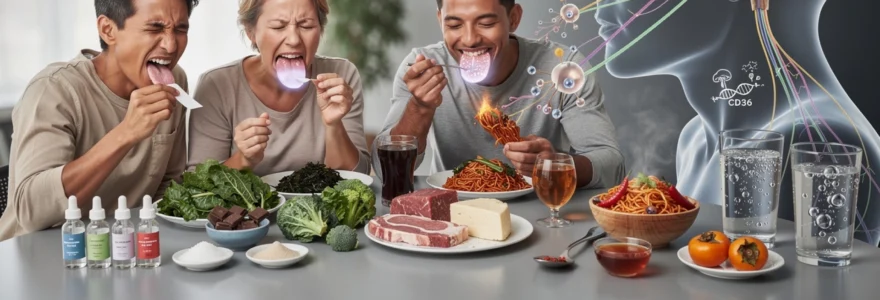
Every bite you take, every meal you select, every food you reject—these decisions feel instinctive, almost automatic. Yet beneath this apparent simplicity lies an intricate interplay of biological mechanisms, genetic predispositions, and learned behaviours that profoundly influence what ends up on your plate. Taste perception extends far beyond the momentary pleasure of flavour; it serves as a critical gatekeeper determining nutritional adequacy, disease risk, and quality of life. From the molecular receptors on your tongue to the reward centres deep within your brain, your gustatory system orchestrates choices that ripple through every aspect of health and wellbeing. Understanding these hidden mechanisms reveals why some individuals gravitate towards vegetables whilst others crave salt, why certain populations embrace bitter flavours whilst others avoid them entirely, and how subtle variations in your genetic code can dictate lifelong dietary patterns you never consciously chose.
The neurobiological mechanisms behind gustatory perception and Decision-Making
The journey from food touching your tongue to the conscious experience of taste involves a remarkably sophisticated cascade of neurological events. This process begins at the microscopic level and culminates in complex brain regions that determine not only what you perceive but also what you desire. The speed and efficiency of these mechanisms explain why taste can trigger immediate acceptance or rejection responses—evolutionary adaptations that once protected your ancestors from toxins and guided them towards nutritious foods.
How taste receptor cells (TRCs) transmit signals to the insular cortex
Taste receptor cells, housed within the taste buds scattered across your tongue and palate, function as highly specialised chemosensors. When food molecules interact with these cells, they initiate electrical signals that travel via cranial nerves—primarily the facial, glossopharyngeal, and vagus nerves—to the nucleus of the solitary tract in your brainstem. From there, information ascends to the thalamus before reaching the primary gustatory cortex located in the insular region of your brain. This pathway processes not merely the basic qualities of sweet, salty, sour, bitter, and umami, but also integrates contextual information about temperature, texture, and even your current physiological state.
The insular cortex doesn’t work in isolation. It maintains extensive connections with the orbitofrontal cortex, where the hedonic value of taste is computed—essentially determining whether you find a flavour pleasant or repulsive. Research demonstrates that damage to the insular cortex can impair taste recognition whilst leaving basic detection intact, highlighting the distinction between sensing and perceiving flavour. This multi-stage processing explains why your taste preferences can shift based on hunger, stress, or even memories associated with particular foods.
The role of dopamine and reward pathways in flavour preference formation
When you consume foods high in sugar or fat, your brain’s reward system responds with a surge of dopamine—the neurotransmitter central to motivation and pleasure. This dopaminergic response, primarily orchestrated through the mesolimbic pathway connecting the ventral tegmental area to the nucleus accumbens, reinforces behaviours that led to consuming palatable foods. Studies indicate that individuals with reduced dopamine receptor availability show diminished responses to food rewards, potentially leading to overconsumption as they attempt to achieve the same level of satisfaction.
The strength of this dopamine response varies considerably between individuals and can be modified by repeated exposure. Regular consumption of highly palatable foods can desensitise reward pathways, requiring progressively greater stimulation to achieve the same pleasurable effect—a phenomenon remarkably similar to substance dependence. This neurological adaptation helps explain why chronic hyperglycaemia in type 2 diabetes patients may impair taste bud function, reducing sweet taste sensitivity and creating a destructive cycle where individuals consume increasing amounts of sugar to compensate for diminished perception, thereby worsening their glycaemic control.
Genetic variations in TAS2R38 and their impact on bitter taste sensitivity
Perhaps no genetic variation has been more extensively studied in taste research than polymorphisms in the TAS2R38 gene, which encodes a bitter taste receptor. The ability to detect phenylthiocarbamide (PTC) and its chemical relative 6
-n-propylthiouracil (PROP), depends largely on which TAS2R38 variants you carry. Common haplotypes such as PAV (proline–alanine–valine) and AVI (alanine–valine–isoleucine) produce receptors with markedly different sensitivities to thiourea compounds. Individuals with two copies of the PAV variant are typically “tasters” or even “supertasters,” reporting intense bitterness from trace amounts of PROP or PTC, whereas those with two AVI copies often perceive little to no bitterness at all.
These bitter taste polymorphisms do more than shape a laboratory test result—they subtly steer everyday dietary choices. People highly sensitive to PROP bitterness are more likely to avoid cruciferous vegetables such as broccoli, kale, Brussels sprouts and cabbage, as well as certain coffees, dark beers and tonic water. Over time, these small avoidances can translate into lower intake of fibre, polyphenols and micronutrients, influencing metabolic health and even body weight trajectories. In contrast, non-tasters may tolerate or even enjoy more intensely bitter foods but may also be less sensitive to warning signals in spoiled or overly bitter products.
Cross-modal sensory integration between olfaction and gustation
Although we often talk about “taste” as if it were a single sense, most of what you experience as flavour is actually an elegant fusion of gustation, olfaction and somatosensory input. As you chew, volatile compounds travel from the mouth to the nasal cavity via the retronasal route, activating olfactory receptors that send signals to the olfactory cortex and then to the orbitofrontal cortex. Here, inputs from taste, smell, temperature and texture converge, producing a unified flavour percept that is far richer than any single sensory modality alone.
This cross-modal integration helps explain why a blocked nose makes food seem bland, or why the same drink can taste sweeter when it smells strongly of vanilla. It also means that your brain can be “tricked” by congruent cues: a bright red beverage may be perceived as sweeter even if its sugar content is unchanged, and a smoky aroma can enhance the perception of savouriness in plant-based dishes. For anyone trying to modify their diet—reducing sugar, salt or fat—leveraging aroma and texture is a powerful strategy to maintain flavour satisfaction whilst improving nutritional quality.
Supertasters, non-tasters, and medium tasters: phenotypic classifications that determine food selection
While genes like TAS2R38 provide a molecular explanation for some taste differences, researchers often rely on broader phenotypic categories—supertasters, medium tasters and non-tasters—to describe how intensely individuals experience flavour. These classifications capture not only bitter sensitivity but also overall taste intensity, mouthfeel perception and even responsiveness to chemesthetic sensations like burn or tingling. Understanding where you fall on this spectrum can shed light on why certain foods feel overwhelming, underwhelming or just right to you.
These phenotypes do not imply “good” or “bad” taste; rather, they reflect natural variation that once offered evolutionary advantages. Supertasters may have been better protected from consuming toxic plants, while non-tasters could exploit otherwise avoided bitter food sources in times of scarcity. In the modern food environment, however, these once-adaptive differences can predispose people to very different dietary patterns, with potential implications for obesity, cardiovascular health and even colorectal cancer risk.
PROP and PTC testing methods for identifying taste phenotypes
To classify individuals as supertasters, medium tasters or non-tasters, scientists commonly use PROP or PTC-impregnated strips or solutions. During testing, participants place a strip on the tongue or rinse with a standardised solution, then rate the perceived bitterness intensity using a labelled magnitude scale. Those who describe the taste as unbearably intense or extremely bitter are typically categorised as supertasters, while those who detect only mild bitterness—or none at all—are classified as medium tasters or non-tasters respectively.
These simple tests reveal robust differences, even among family members who share similar environments. In some studies, children show a higher prevalence of supertaster status than adults, suggesting that taste sensitivity may decline with age or be modified by cumulative dietary exposure. For everyday life, this means that a child who is genetically predisposed to intense bitterness may vehemently reject certain vegetables that a parent finds only mildly flavoured. Recognising this can help you reframe “picky eating” not as stubbornness but as a genuine sensory overload, prompting gentler introductions, repeated exposures and creative preparation methods.
Fungiform papillae density and its correlation with taste intensity perception
Beyond genetics, the physical landscape of your tongue itself contributes to how powerfully you perceive taste. Fungiform papillae—the small, mushroom-shaped structures dotting the front two-thirds of your tongue—house many of your taste buds. People with a high density of these papillae tend to experience more intense taste sensations across the board, from sweetness and saltiness to bitterness and umami, as well as more vivid oral burn from spices and stronger astringency from tannin-rich foods.
Researchers can visualise fungiform papillae by staining the tongue with a harmless blue dye; the papillae appear as pale, unstained islands against a darker background. Supertasters often exhibit a dense “forest” of these structures, whereas non-tasters have a more sparsely populated tongue surface. For a high-density individual, a standard portion of black coffee, dark chocolate or hoppy beer may feel overwhelmingly strong, while for someone with fewer papillae, the same item might seem pleasantly balanced or even mild. This anatomical variability helps explain why “one-size-fits-all” dietary advice around flavourful, bitter or spicy foods often fails in practice.
How CD36 gene polymorphisms influence fat taste detection
Emerging research suggests that humans do not merely feel the texture of fat; many of us can actually taste it. The CD36 gene, which encodes a fatty acid translocase protein expressed on taste bud cells, has been implicated in oral fat detection. Certain polymorphisms in CD36 appear to lower sensitivity to the taste of fat, meaning that affected individuals require higher concentrations of fatty acids to recognise the same creamy or oily sensations that others detect at much lower levels.
Why does this matter for your food choices? People with reduced fat taste sensitivity may unconsciously gravitate toward richer, higher-fat foods to achieve the same oral satisfaction, potentially increasing total calorie intake. Conversely, those who are more sensitive to fat taste may find very rich foods cloying and prefer lighter options. Understanding fat taste as a distinct sensory dimension helps explain why some individuals struggle more with high-fat snack foods, fried items or full-fat dairy products, and why subtle reformulations in fat content can be either noticeable or imperceptible depending on a person’s CD36 profile.
Umami recognition through mGluR4 and T1R1-T1R3 receptors in modern dietary patterns
Umami—often described as savoury, brothy or meaty—is now widely recognised as the “fifth taste,” alongside sweet, salty, sour and bitter. At the molecular level, umami perception is mediated primarily by two receptor systems in taste buds: metabotropic glutamate receptors such as mGluR4, and the heterodimeric G-protein-coupled receptor complex T1R1–T1R3. These receptors respond to glutamate and other amino acids, especially when they are present with nucleotides like inosinate or guanylate, producing the characteristic depth of flavour found in foods such as aged cheeses, cured meats, soy sauce and slow-crewed broths.
Modern dietary patterns, particularly in urban and industrialised settings, often feature elevated exposure to umami through processed foods enhanced with monosodium glutamate (MSG) and yeast extracts. This consistent stimulation can shape flavour expectations over time: meals without a pronounced savoury component may feel “flat” or unsatisfying, even when they are nutritionally adequate. For individuals transitioning to plant-based diets, understanding and harnessing umami—via mushrooms, tomatoes, miso, seaweed or nutritional yeast—can be pivotal in creating satisfying dishes that do not rely on animal products or excessive salt.
On a practical level, strategically using umami-rich ingredients can help reduce dependence on less desirable flavour drivers such as saturated fat or added sugar. For example, adding a small amount of miso or dried mushroom stock to vegetable soups can enhance fullness of flavour without significantly increasing calories. As food technology advances, projects focused on modulating mouthfeel and taste perception are increasingly exploring how to amplify natural umami signals to make healthier, plant-forward meals as appealing as their more indulgent counterparts.
Conditioned taste aversion and the garcia effect in long-term food avoidance
Not all taste preferences arise from gradual exposure or genetic predisposition; some are forged in a single, powerful learning episode. Conditioned taste aversion, often referred to as the Garcia effect, occurs when a particular flavour is paired with illness—regardless of whether the food actually caused it. If you have ever avoided a specific food for years after a bout of food poisoning or chemotherapy-induced nausea, you have experienced this phenomenon firsthand.
What makes conditioned taste aversion unique is its efficiency and durability. Unlike many forms of learning that require repeated pairings, a single association between a novel taste and gastrointestinal distress can be enough to create a lasting avoidance. The brain appears specially tuned to protect the body from potential toxins by linking flavours with visceral feedback, even when the timing between eating and illness spans several hours. From an evolutionary standpoint, this bias makes sense: better to be overly cautious about a suspicious taste than to repeatedly ingest something that might be harmful.
In modern clinical contexts, this mechanism can be both protective and problematic. Cancer patients receiving chemotherapy, for example, may develop strong aversions to foods they consumed before treatment sessions, leading to nutritional deficits. One practical strategy is to use “scapegoat flavours”—novel foods or drinks consumed only around treatment—to absorb the negative association, sparing everyday diet staples. For the general population, recognising that an intense dislike may stem from a single negative experience rather than an inherent property of the food can open the door to cautiously revisiting certain items under more pleasant, controlled circumstances.
The psychophysical influence of temperature, texture, and chemesthesis on taste judgement
Although we often describe food in terms of flavour alone, your brain continuously weighs additional sensory dimensions—temperature, texture and chemesthetic sensations like burn, tingling or cooling—when forming a final taste judgement. Think of these inputs as the “lighting and soundtrack” of a movie: they may not change the script, but they profoundly affect how you experience the story. As a result, the same ingredients can be perceived as comforting or off-putting depending on how warm, smooth or stimulating they feel in your mouth.
Psychophysical studies show that moderate warmth can enhance sweetness perception, while colder temperatures blunt both sweet and bitter sensations, which is one reason ice cream can hide substantial sugar and cocoa bitterness. Similarly, creamy or viscous textures can amplify perceived richness and satiety, even at lower fat levels. By understanding how these factors bias your palates, you can deliberately manipulate them—serving vegetables roasted rather than steamed, or slightly warming tomatoes to boost aroma—to make healthier foods more appealing without drastically changing their nutritional profile.
TRPV1 activation and capsaicin’s effect on flavour acceptability
Chemesthetic sensations such as the burn of chilli peppers are mediated by receptors like TRPV1 (transient receptor potential vanilloid 1), which respond to heat, acidity and capsaicin. When activated, TRPV1 channels allow calcium ions to flow into nerve fibres, sending signals interpreted by the brain as burning warmth or pain. Paradoxically, many people find this controlled irritation pleasurable, especially when balanced by sweetness, fat or umami—a phenomenon that illustrates how sensation and enjoyment are not always aligned with comfort.
Repeated exposure to capsaicin can desensitise TRPV1 receptors, meaning that what once felt unbearably hot may later seem pleasantly spicy. This adaptation partly explains cultural differences in chilli tolerance: in cuisines where spicy foods are introduced early and often, individuals tend to develop both physiological and psychological acceptance of capsaicin’s burn. From a dietary perspective, moderate use of chilli can enhance flavour complexity, reduce the need for added salt and even modestly increase energy expenditure, though it may be less acceptable for supertasters or those with heightened oral sensitivity.
Astringency perception through salivary protein precipitation
Astringency—the drying, puckering sensation often associated with red wine, strong tea or unripe persimmons—is not a basic taste but a tactile experience. It arises when polyphenolic compounds such as tannins bind to salivary proteins, forming complexes that precipitate and reduce the lubricating properties of saliva. As friction between oral surfaces increases, you perceive a distinctive roughness and dryness that can be either intriguing or unpleasant, depending on intensity and context.
Individual differences in salivary composition, flow rate and protein profile strongly modulate how intense astringency feels. Some people produce more proline-rich proteins that readily interact with tannins, amplifying the drying sensation; others generate less, making the same wine or dark chocolate seem smoother. Food technologists are actively exploring how to fine-tune astringency in plant-based beverages, teas and cocoa products—by altering processing conditions, adding specific polysaccharides or modulating protein–polyphenol interactions—to maintain complexity whilst improving overall acceptability.
Carbonation’s impact on trigeminal nerve stimulation and palatability
Carbonated drinks illustrate another dimension of chemesthesis: the tingling, prickling sensation on your tongue and palate is not pure taste but the result of carbon dioxide interacting with carbonic anhydrase enzymes in the oral mucosa. This interaction triggers trigeminal nerve fibres, producing a mild irritant effect that the brain often interprets as refreshing or cleansing. In many cultures, this fizzy stimulation has become tightly associated with thirst quenching and enjoyment, particularly in soft drinks, sparkling waters and beers.
Carbonation can also subtly reshape flavour perception. The bubbles and accompanying acidity can sharpen perceived sweetness, mask certain bitter notes and enhance aromas released from the liquid’s surface. However, for individuals with heightened trigeminal sensitivity, heavily carbonated beverages may feel harsh or painful rather than pleasant. If you find fizzy drinks overwhelming, allowing them to go slightly flat or choosing lightly carbonated options can preserve some sensory interest without crossing your comfort threshold.
Cultural conditioning and mere-exposure effect in developing flavour preferences across populations
Although biology sets the stage for taste perception, culture writes much of the script. From childhood onwards, we learn which foods are safe, desirable or taboo through repeated exposure, social norms and shared rituals. The mere-exposure effect—a well-documented psychological phenomenon—shows that we tend to develop a preference for stimuli we encounter often, even if we initially felt neutral or mildly negative. Applied to food, this means that flavours sampled frequently in positive contexts can gradually become comforting, familiar favourites.
Consider how fermented, bitter or pungent foods vary worldwide: blue cheese in parts of Europe, natto in Japan, kimchi in Korea or very spicy curries in South Asia. To an outsider, these may at first seem challenging, yet for those raised with them, they embody home and heritage. Flavour principles—typical combinations of ingredients and seasonings within a cuisine—reinforce these cultural patterns, making it easier to accept new dishes that share familiar aromatic profiles. For example, someone accustomed to garlic, tomato and basil may be more willing to try an unfamiliar Mediterranean bean stew than a dish with entirely different spice signatures.
Understanding how cultural conditioning shapes your own palate can be empowering. If you wish to adopt healthier eating habits, you can intentionally harness the mere-exposure effect by repeatedly pairing new, nutrient-dense foods with enjoyable situations—a favourite playlist, shared meals with friends or appealing plating. Over time, what once felt foreign can become part of your default comfort repertoire. At the population level, recognising this interplay between sensory biology and cultural learning is crucial for designing public health strategies and food products that respect diversity whilst gently nudging preferences toward patterns that support long-term health.
 Good health cannot be bought, but rather is an asset that you must create and then maintain on a daily basis.