
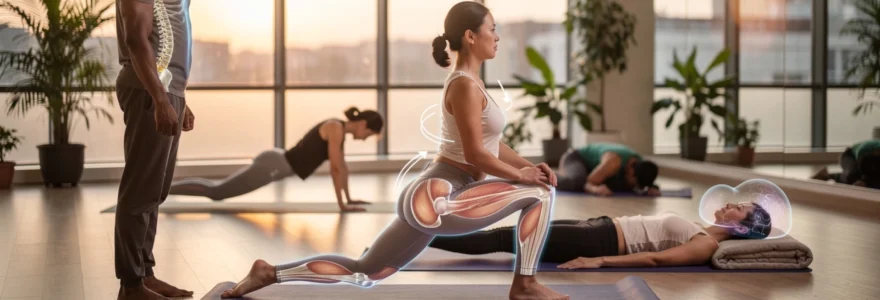
Modern lifestyles have created a perfect storm for postural dysfunction, musculoskeletal tension, and chronic stress. Hours spent hunched over keyboards, smartphones, and steering wheels have become the norm, whilst the psychological demands of contemporary life continue to escalate. Yet within this landscape of tension and misalignment, an ancient practice offers remarkably effective solutions. Yoga provides a comprehensive system for addressing postural imbalances, enhancing flexibility throughout the body’s connective tissue networks, and activating neurophysiological pathways that counteract stress responses. Research continues to validate what practitioners have understood for millennia: the integration of physical postures, controlled breathing, and mindfulness creates measurable improvements in both structural alignment and psychological resilience. Understanding the biomechanical and neurological mechanisms underlying these benefits can help you appreciate how regular practice transforms your body and mind.
Biomechanical principles of yogic postural alignment
Postural alignment in yoga operates on fundamental principles of skeletal positioning and muscular balance. When your body maintains optimal alignment, gravitational forces distribute evenly through the skeletal system, reducing compensatory strain on muscles, ligaments, and joints. This biomechanical efficiency doesn’t happen by accident—it requires deliberate engagement with specific postural cues and an awareness of how different body segments relate to one another. The beauty of yogic postures lies in their systematic approach to retraining postural habits that have developed over years of repetitive positioning. Through consistent practice, you can gradually recalibrate your proprioceptive awareness, enabling your body to recognise and maintain healthier alignment patterns even when you’re not on the mat.
Spinal elongation through tadasana and mountain pose variations
Tadasana, or Mountain Pose, serves as the foundation for virtually all standing postures in yoga. Despite its apparent simplicity, this pose teaches crucial principles of axial elongation—the lengthening of the spine along its vertical axis. When you stand in Tadasana with proper alignment, you create space between vertebrae, reducing compressive forces on intervertebral discs. The pose requires you to ground through all four corners of each foot whilst simultaneously lifting through the crown of your head, creating opposing forces that elongate the spine. This axial loading pattern strengthens the deep stabilising muscles of the core, including the transversus abdominis and multifidus, which are essential for maintaining spinal integrity during daily activities. Research indicates that individuals who practice standing poses regularly demonstrate improved spinal alignment and reduced incidence of lower back pain compared to sedentary populations.
Proprioceptive enhancement via asanas for anterior pelvic tilt correction
Anterior pelvic tilt—a common postural deviation where the pelvis rotates forward—contributes to exaggerated lumbar lordosis and associated lower back discomfort. Many yoga poses specifically address this imbalance by engaging the gluteal muscles and deep hip stabilisers whilst lengthening tight hip flexors. Poses such as Warrior I and Crescent Lunge challenge you to maintain neutral pelvic positioning against the pull of shortened anterior hip structures. The proprioceptive feedback you receive during these postures helps retrain your neuromuscular system to recognise and maintain healthier pelvic alignment. This retraining extends beyond your practice session, gradually influencing your habitual standing and sitting postures. Studies measuring pelvic tilt angles before and after yoga interventions consistently show significant improvements in alignment parameters, with corresponding reductions in reported lower back pain.
Thoracic spine mobility through cobra pose and Upward-Facing dog
The thoracic spine—the middle and upper back region—often becomes rigid and flexed forward due to prolonged sitting and computer work. Backbending poses like Bhujangasana (Cobra Pose) and Urdhva Mukha Svanasana (Upward-Facing Dog) specifically target thoracic extension, counteracting this forward-flexed positioning. These poses require you to articulate through the spine segment by segment, promoting mobility in regions that have become stiff. The controlled spinal extension in these postures also strengthens the erector spinae muscles along the back, building the
muscular endurance needed to support healthier posture throughout the day. By opening the chest and lengthening the front line of the body, Cobra and Upward-Facing Dog also counteract rounded shoulders and collapsed chest posture, which are closely linked to shallow, stress-related breathing patterns. Over time, practising these heart-opening backbends can improve thoracic spine mobility, enhance lung expansion, and contribute to a more upright, confident stance. For people who spend long hours at a desk, even a few gentle repetitions of Cobra Pose can act like a “reset button” for posture and energy levels.
Scapular retraction mechanics in chaturanga dandasana
Chaturanga Dandasana, or Four-Limbed Staff Pose, is often misunderstood as simply a yoga push-up, yet its primary value lies in training optimal scapular mechanics. When performed with control, Chaturanga encourages scapular retraction and depression—drawing the shoulder blades toward the spine and slightly down the back—while maintaining a neutral neck and stable core. This pattern directly opposes the chronically protracted, elevated shoulder position that develops from keyboard work and smartphone use. By strengthening the serratus anterior, lower trapezius, and rotator cuff muscles, Chaturanga improves shoulder joint centration and helps prevent impingement syndromes.
From a postural standpoint, better scapular positioning translates into reduced upper-back tension and less strain on the neck. You learn to support arm movements from the shoulder girdle rather than overusing superficial muscles like the upper trapezius. To protect the wrists and shoulders, beginners can modify Chaturanga by lowering knees to the mat or using blocks under the shoulders to limit range of motion. When integrated mindfully into a vinyasa sequence, this pose becomes a powerful tool for rebuilding shoulder stability and refining your overall upper-body alignment.
Forward head posture reversal using ustrasana and camel pose
Forward head posture, where the skull shifts in front of the shoulders, increases load on the cervical spine and is strongly associated with headaches, neck pain, and even jaw dysfunction. Ustrasana, or Camel Pose, provides a targeted way to counter this misalignment by lengthening the anterior neck muscles and opening the chest while strengthening the posterior chain. In Camel Pose, you lift the sternum and gently draw the head back in line with the spine, rather than simply dropping it backwards. This encourages cervical extension with support from the upper back and deep neck flexors, instead of collapsing into the joints.
Regular practice of Ustrasana helps you reclaim the natural curves of the spine and expand the space across the collarbones, making it easier to stack the head above the shoulders in everyday activities. Many practitioners also notice improved breathing capacity, as the ribcage gains freedom to move. To avoid strain, you can place blocks beside the ankles or keep hands on the sacrum while focusing on lifting the heart rather than forcing the neck. Over time, this combination of strength and openness can gradually reverse the habitual slouch induced by screens, contributing to healthier posture and reduced neck-related stress.
Myofascial release and connective tissue adaptation in yoga practice
Beyond muscles and joints, yoga profoundly influences the body’s fascial system—the continuous web of connective tissue that surrounds and interpenetrates every structure. Fascia responds to slow, sustained loads by reorganising collagen fibres, improving glide between layers, and reducing adhesions that restrict movement. Many yoga styles, particularly those with longer-held poses, act similarly to a gentle, active form of myofascial release. As you breathe and relax into a posture, the nervous system downregulates protective tension, allowing the connective tissue to adapt and lengthen safely.
This fascial adaptation is one reason consistent yoga practice can improve flexibility without aggressive stretching. Rather than forcing muscles to lengthen, you are inviting the entire myofascial network to remodel, much like slowly reshaping a piece of mouldable clay instead of yanking on a rubber band. Over weeks and months, this process leads to smoother, more efficient movement patterns and decreased sensation of stiffness. It also contributes to better posture, as the fascia no longer pulls joints out of alignment due to chronic tightness or asymmetry.
Yin yoga’s impact on fascial elasticity and collagen remodelling
Yin Yoga, characterised by passive holds typically lasting three to five minutes, is especially effective for influencing fascial tissue. These extended durations apply low-intensity, continuous tension to specific myofascial lines, encouraging creep—a gradual, viscoelastic lengthening of collagen fibres. Over time, this stimulates collagen remodelling, improving fascial elasticity and hydration. Studies on slow, sustained stretching show increases in tissue pliability and reductions in perceived stiffness, particularly around frequently loaded regions such as the hips and lower back.
Because Yin postures are supported and non-forceful, they also promote deep parasympathetic activation, allowing muscles to release guarding patterns that limit range of motion. You might notice that a pose feels intense at first, but as you remain still and breathe, the sensation shifts from sharp tightness to a more diffuse, manageable stretch. This is the fascial system adapting in real time. Incorporating even one or two Yin sessions per week can complement more dynamic yoga styles, offering a powerful way to address long-standing restrictions and enhance overall flexibility in a sustainable, joint-friendly manner.
Hip flexor lengthening through anjaneyasana and low lunge sequences
Tight hip flexors, especially the psoas and rectus femoris, are a hallmark of prolonged sitting and a key contributor to anterior pelvic tilt and lower back discomfort. Anjaneyasana (Low Lunge) directly targets these structures by placing the rear leg into controlled extension while the front leg provides stability. When you engage the glute of the back leg and gently draw the tailbone down, you create an active stretch along the front of the hip rather than passively collapsing into the lumbar spine. This active lengthening supports long-term posture correction by teaching the hip flexors to release while the core and glutes share the load.
Sequencing multiple lunge variations—such as Crescent Lunge, Low Lunge with a side bend, and Lizard Pose—offers progressive angles of stretch along the hip and thigh. You can think of this as exploring all the “corners” of hip mobility, rather than only one straight-line stretch. For people who run, cycle, or sit for work, a brief series of lunges at the end of the day can relieve accumulated tension and restore more neutral pelvic alignment. Using props like blocks under the hands helps maintain balance and alignment, ensuring the stretch benefits the hip flexors without straining the knee or lower back.
Hamstring extensibility in paschimottanasana and seated forward folds
Hamstring tightness not only limits flexibility but also influences pelvic position and spinal mechanics. Paschimottanasana, the classic seated forward fold, improves hamstring extensibility when practised with correct technique: hinging from the hips, maintaining a long spine, and avoiding excessive rounding through the lower back. By emphasising length rather than depth, you encourage the hamstrings and surrounding fascia to release gradually, reducing strain on the lumbar discs. Research on regular forward-bending practices indicates improvements in both straight-leg raise tests and functional movements such as walking and squatting.
For many people, the key to safe hamstring stretching lies in using props and adjusting expectations. Sitting on a folded blanket to tilt the pelvis forward, or looping a strap around the feet, allows you to experience the stretch without compressing the spine. Over time, this mindful approach leads to sustainable gains in flexibility that translate into easier daily movements, from tying shoe laces to lifting objects from the floor. As the hamstrings lengthen, you may also notice a reduction in lower back tightness and an increased sense of fluidity in the posterior chain.
Iliotibial band tension relief via pigeon pose variations
The iliotibial (IT) band, a thick band of fascia along the outer thigh, often becomes sensitised in response to hip muscle imbalances and repetitive activities like running. While the IT band itself does not stretch significantly, yoga can reduce perceived tension by addressing the muscles that attach into it, particularly the gluteus maximus and tensor fasciae latae. Pigeon Pose and its variations—such as Reclined Pigeon (Figure Four) or Supported Pigeon on bolsters—provide a targeted stretch to the lateral hip and deep external rotators. As these muscles relax, load distribution across the IT band becomes more balanced, easing discomfort.
When you settle into Pigeon Pose and breathe steadily, you are effectively performing a form of functional myofascial release. The body weight and angle of the femur create gentle pressure and length through the hip tissues, while the nervous system is signalled to downregulate tension. For those with knee sensitivity, substituting a supine variation offers similar benefits with less joint stress. Consistent practice can lead to improved hip mobility, smoother gait mechanics, and less strain along the outer thigh and knee—valuable outcomes for both athletes and desk-workers seeking long-term joint health.
Joint mobility enhancement through controlled range of motion
Healthy joints require movement through their full, comfortable range to maintain cartilage nutrition, synovial fluid circulation, and capsular elasticity. Yoga excels at providing controlled, multi-planar motion that challenges joints without the impact associated with many other activities. Instead of forcing end-range positions, well-sequenced yoga classes progressively warm tissues and explore mobility with mindful attention. This approach supports joint longevity, reduces stiffness, and enhances functional movement patterns essential for daily life—such as reaching, twisting, squatting, and stepping.
Because yoga postures are typically held for several breaths, they offer time for the nervous system to adapt and for muscles to coordinate stabilisation around the joints. You are not only improving flexibility but also teaching your body how to access mobility safely and efficiently. Over months of practice, many people report easier movement, fewer “creaky” sensations, and greater confidence in activities that previously felt risky or unstable. In essence, yoga serves as a form of dynamic joint hygiene, keeping the body’s hinges and pivots well-lubricated and resilient.
Shoulder capsule expansion in gomukhasana and cow face pose
The shoulder is the most mobile joint in the body, and its large range of motion depends on a supple joint capsule and balanced muscular support. Gomukhasana (Cow Face Pose) arms—where one elbow points up and the other down, with hands reaching to clasp behind the back—provide a comprehensive stretch for the rotator cuff, posterior shoulder, and triceps on one side, and the chest and anterior shoulder on the other. This configuration gently tensions different portions of the shoulder capsule, encouraging improved glide and decreasing the feeling of restriction when you reach overhead or behind you.
For many of us, years of forward-oriented tasks limit shoulder movement to a narrow arc in front of the body. Gomukhasana helps reclaim lost ranges by inviting the arms into planes they rarely explore. Using a strap between the hands allows you to experience the benefit without forcing contact, much like adding a flexible bridge between two points that are not yet ready to meet. Over time, this practice can improve posture by reducing rounded shoulders and enhancing your capacity for overhead activities—from putting luggage in an overhead compartment to lifting weights—while lowering the risk of impingement and rotator cuff irritation.
Spinal rotation capacity building with ardha matsyendrasana
Rotational mobility of the spine is crucial for tasks such as checking blind spots while driving, turning to speak to someone, or walking with efficient arm swing. Ardha Matsyendrasana (Half Lord of the Fishes Pose) trains controlled spinal rotation, particularly through the thoracic segments, which often become locked from prolonged sitting. In this seated twist, you lengthen the spine on inhalation and gently rotate on exhalation, using the breath as a guide rather than forcing deeper with the arms. This pattern reinforces segmental rotation, where each vertebra contributes a small amount of movement, instead of hinging excessively at one vulnerable point.
Enhanced rotational capacity also helps distribute forces more evenly across the intervertebral discs and surrounding ligaments. As you practise, you may notice improved symmetry between left and right sides, revealing and gradually correcting imbalances that stem from one-sided activities. Twisting postures additionally massage the abdominal organs and can support digestive function, which indirectly influences stress and energy levels. By incorporating gentle twists like Ardha Matsyendrasana into your routine, you are effectively oiling the spine’s rotational “gears,” helping them move freely and without strain.
Ankle dorsiflexion development in malasana squat variations
Ankle dorsiflexion—the ability to bring the shin forward over the foot—is a critical component of healthy gait, squatting mechanics, and overall balance. Limited dorsiflexion often leads to compensations higher up the chain, such as knee collapse or lumbar rounding, and is linked to injuries in runners and field athletes. Malasana (Yogi Squat) places the ankles into loaded dorsiflexion while the heels remain grounded, training both joint mobility and stability. By using the elbows to gently press the knees apart, you also encourage hip opening and create a more stable base.
For those with tight calves or limited ankle mobility, elevating the heels on a folded blanket or wedge can make Malasana accessible while still providing a beneficial stretch. Over time, gradually lowering the support helps you build functional range without discomfort. The improvements you gain in this posture transfer directly into everyday movements: climbing stairs, crouching to pick something up, or maintaining balance on uneven surfaces. As ankle dorsiflexion increases, you may notice a smoother, more efficient walking pattern and reduced strain on the knees and lower back.
Thoracolumbar fascia stretching through balasana and child’s pose
The thoracolumbar fascia, a broad connective tissue sheath across the lower back, plays a key role in force transmission between the upper and lower body. When this area becomes tight or overloaded, it can contribute to a sense of rigidity and discomfort in the lumbar region. Balasana (Child’s Pose) gently lengthens the thoracolumbar fascia by flexing the hips and spine while the arms extend forward or rest by the sides. As you breathe deeply into the back body, the fascia and surrounding muscles experience rhythmic, subtle stretching that encourages relaxation.
Child’s Pose functions like a soothing decompression for the entire posterior chain, often providing immediate relief after standing or sitting for long periods. You can adjust the width of the knees or support the torso with bolsters to tailor the stretch to your comfort level, making it accessible for most bodies. Regularly returning to Balasana throughout a practice—or even as a brief break during a workday—helps maintain suppleness in the lower back tissues. This, in turn, supports healthier spinal alignment and reduces the likelihood that stress will manifest as chronic lumbar tension.
Neurophysiological stress reduction through parasympathetic activation
While the physical benefits of yoga are evident in posture and flexibility, its impact on the nervous system is equally profound. Modern stressors often keep us locked in a state of sympathetic arousal—the “fight or flight” response—marked by elevated heart rate, shallow breathing, and increased cortisol levels. Yoga counterbalances this by activating the parasympathetic nervous system, our built-in “rest and digest” circuitry. Through specific breathing patterns, mindful movement, and meditative focus, yoga enhances vagal tone, stabilises the hypothalamic-pituitary-adrenal (HPA) axis, and promotes neurochemical shifts associated with calm and emotional resilience.
Neuroimaging and clinical studies over the last decade have shown that regular yoga practice can reduce activity in brain regions linked to rumination and fear, while enhancing connectivity in areas associated with self-regulation and body awareness. In practical terms, this means you may find it easier to recover from stressful events, sleep more soundly, and maintain focus during demanding tasks. Rather than eliminating stressors from your life—a near-impossible goal—yoga changes how your brain and body respond to them.
Vagal tone stimulation via ujjayi pranayama breathing techniques
Ujjayi Pranayama, often called “victorious breath,” involves gently constricting the back of the throat to produce a soft, ocean-like sound during inhalation and exhalation. This technique lengthens the breath cycle and increases intrathoracic pressure in a controlled way, stimulating the vagus nerve as it travels through the neck and chest. Enhanced vagal tone is associated with improved heart rate variability (HRV), a key marker of stress resilience and cardiovascular health. Several small studies have reported increases in HRV following slow, diaphragmatic breathing practices similar to Ujjayi.
From an experiential standpoint, Ujjayi acts like a metronome for the mind. The audible breath provides an anchor for attention, making it easier to stay present and disengage from racing thoughts. You might use this technique during asana practice to synchronise movement and breath, or on its own in a seated position to help transition from a busy workday into a more relaxed evening. Over time, the nervous system learns to associate this style of breathing with safety and calm, allowing you to access a more regulated state even in the midst of external pressure.
Cortisol regulation through savasana and yoga nidra protocols
Savasana (Corpse Pose) and Yoga Nidra (yogic sleep) are powerful tools for resetting the body’s stress chemistry. In Savasana, you lie in a neutral, supported position and systematically release muscular effort, giving the nervous system a clear message that it is safe to downshift. Studies have shown that even a single yoga session ending with Savasana can lower salivary cortisol, the primary stress hormone, and improve subjective measures of relaxation. When this practice becomes a regular ritual, it can help normalise diurnal cortisol rhythms that may have been disrupted by chronic stress or irregular sleep.
Yoga Nidra takes this a step further by guiding you through structured stages of relaxation, body scanning, breath awareness, and visualisation. Brainwave studies suggest that Yoga Nidra induces states similar to the early phases of deep sleep while you remain consciously aware. In a 2020 trial, participants who practised brief daily Yoga Nidra sessions reported reduced stress, better sleep quality, and enhanced well-being, with benefits persisting weeks after the intervention. For anyone who feels too fatigued for vigorous exercise, these rest-focused protocols offer a highly accessible way to support hormonal balance and emotional recovery.
Gamma-aminobutyric acid modulation in restorative yoga sequences
Restorative yoga, characterised by fully supported postures and extended holds, exerts measurable effects on brain chemistry. One proposed mechanism involves modulation of gamma-aminobutyric acid (GABA), an inhibitory neurotransmitter that helps quiet neuronal activity. Low GABA levels have been implicated in anxiety and mood disorders. Research from Boston University has shown that a single 60-minute yoga session can increase brain GABA levels by approximately 27%, and regular practice is associated with sustained improvements in mood and anxiety symptoms.
In restorative sequences, the body is cradled by props—bolsters, blankets, blocks—allowing muscles to release without effort. This sensory input, combined with slow breathing, signals to the brain that it can safely reduce arousal and shift toward a more regulated state. You might think of restorative yoga as the neurological equivalent of dimming the lights and turning down the volume in an overstimulated system. Integrating one restorative session per week can be particularly beneficial if you are managing high work demands, recovering from illness, or navigating emotionally intense periods of life.
Hypothalamic-pituitary-adrenal axis balancing with meditation integration
The hypothalamic-pituitary-adrenal (HPA) axis orchestrates the body’s hormonal response to stress, yet chronic activation can lead to fatigue, mood disturbances, and impaired immunity. Meditation—whether practised in stillness or integrated into yoga—has been shown to modulate HPA activity, reducing baseline cortisol and improving the system’s responsiveness. Meta-analyses of mindfulness-based interventions indicate meaningful reductions in perceived stress and anxiety, as well as physiological markers linked to HPA function.
When you incorporate meditation into your yoga routine—perhaps sitting quietly after asana, focusing on the breath, or practising loving-kindness—you are training your brain to respond differently to internal and external triggers. Over time, this can feel like upgrading your internal “stress thermostat,” so daily challenges provoke a smaller spike in arousal and a quicker return to baseline. Practical strategies include starting with five minutes of breath-focused meditation at the end of a session, gradually extending the time as your capacity for stillness and present-moment awareness grows.
Kinesthetic awareness and neuromuscular re-education
Yoga does more than stretch and strengthen; it re-educates how your nervous system organises movement. Kinesthetic awareness—the sense of where your body is in space—and interoception—the perception of internal sensations—are both enhanced through deliberate, mindful practice. Each pose becomes a feedback loop, helping you notice asymmetries, compensations, and areas of unconscious tension. As you refine alignment and coordination, your brain updates its internal “map” of the body, resulting in smoother, more efficient movement and improved posture even outside the studio.
This neuromuscular re-education is particularly valuable if you are recovering from injury, experiencing chronic pain, or unlearning habits formed by years of sedentary behaviour. By slowing down and paying attention, you create opportunities to replace dysfunctional patterns with healthier alternatives. Over time, the cumulative effect is a body that feels more integrated, responsive, and resilient—a foundation that supports both physical performance and stress management.
Vestibular system training through vrksasana and tree pose progressions
The vestibular system, located in the inner ear, plays a central role in balance, spatial orientation, and gaze stability. Yoga balance postures like Vrksasana (Tree Pose) directly challenge this system, requiring constant micro-adjustments from the ankles, hips, and core to maintain equilibrium. When you stand on one leg, the brain must integrate input from the vestibular apparatus, visual system, and proprioceptors in the joints, effectively fine-tuning your overall sensorimotor integration. With regular practice, this leads to improved balance, reduced fall risk, and greater confidence in dynamic environments.
Tree Pose progressions—such as closing the eyes, changing the arm position, or standing on a softer surface—further strengthen vestibular adaptability. You might wobble initially, but those small losses and recoveries of balance are where the nervous system learns the most. For older adults or individuals returning to activity after injury, these controlled challenges provide a safe way to rebuild stability. Better balance also reduces the subtle muscular bracing that often accompanies fear of falling, indirectly lowering overall muscular tension and stress.
Core stability enhancement in navasana and boat pose variations
Core stability underpins healthy posture and efficient movement, acting as a dynamic support structure for the spine. Navasana (Boat Pose) and its variations specifically train the deep abdominal muscles, hip flexors, and spinal stabilisers to work together. When you balance on the sitting bones with the spine long and chest lifted, you are engaging the transversus abdominis and multifidi to prevent collapse, while the hip flexors support the legs. This integrated effort mimics the demands placed on the core during everyday activities such as lifting, carrying, and transitioning from sitting to standing.
Modifications—like bending the knees, holding behind the thighs, or practising a half-boat variation—make core strengthening accessible at different fitness levels. Consistent work in these poses improves endurance of the postural muscles, helping you maintain an upright, aligned position with less effort throughout the day. As the core becomes more responsive, the lower back no longer bears a disproportionate load, reducing pain and fatigue. In turn, feeling physically supported through the centre of the body can translate into a subjective sense of greater emotional stability and resilience.
Eccentric muscle control development via vinyasa flow transitions
Vinyasa-style yoga, which links postures through fluid transitions, is particularly effective for training eccentric control—the ability of muscles to lengthen under tension. For example, slowly lowering from Plank to Chaturanga, or from Standing Forward Fold to a squat, requires the muscles to act as brakes rather than just engines. This type of control is crucial for joint protection, shock absorption, and injury prevention, as many real-world movements (descending stairs, landing from a jump) rely heavily on eccentric strength.
By moving mindfully between poses instead of collapsing or rushing, you teach your neuromuscular system to manage load smoothly through the entire range of motion. Think of it as learning to drive with a sensitive brake pedal rather than an on/off switch. Over time, improved eccentric control leads to more graceful, efficient movement and reduces the micro-traumas that can accumulate into overuse injuries. It also fosters a sense of embodied mindfulness, as you must stay present to coordinate breath and motion in each transition.
Interoceptive sensitivity cultivation through body scan techniques
Interoception—your ability to perceive internal bodily sensations—is a key factor in emotional regulation and stress management. Yoga enhances interoception through practices like body scans, where you systematically bring attention to different regions of the body, noticing sensations without judgment. This might be done in Savasana, Yoga Nidra, or during slow, gentle movement. As you refine this internal listening, you become better at recognising early signs of tension, fatigue, or anxiety, giving you a chance to respond proactively rather than reactively.
Improved interoceptive sensitivity is linked in research to lower levels of rumination and greater psychological flexibility. In practical terms, you may start to notice when your shoulders creep toward your ears during a stressful email, or when your breath becomes shallow in a meeting. With awareness comes choice: you can consciously relax, adjust posture, or apply a breathing technique before stress escalates. Over time, this turns your body into a reliable source of feedback and guidance, supporting both physical health and mental well-being.
Evidence-based therapeutic applications for chronic conditions
As research into yoga has expanded, so too has our understanding of its therapeutic potential for a wide range of chronic conditions. Clinical trials and systematic reviews now support yoga-based interventions for lower back pain, osteoarthritis, hypertension, anxiety, and depression, among others. Across these studies, common threads emerge: improved posture and joint function, enhanced flexibility, and more regulated stress responses all contribute to symptom relief and better quality of life. Yoga is not a cure-all, but when integrated thoughtfully into a broader care plan, it offers a low-cost, accessible tool with minimal side effects.
For chronic musculoskeletal pain, yoga’s combination of gentle loading, stretching, and relaxation can reduce pain intensity and improve function, often rivaling conventional exercise programmes. In mental health, yoga and related practices have shown moderate effect sizes for reducing anxiety and depressive symptoms, particularly when combined with standard treatments. Perhaps most importantly, yoga empowers you to become an active participant in your own healing process. By learning how to align your body, expand your range of motion, and calm your nervous system, you build a practical toolkit for managing symptoms and supporting long-term health in the face of modern life’s inevitable stresses.
 Good health cannot be bought, but rather is an asset that you must create and then maintain on a daily basis.