
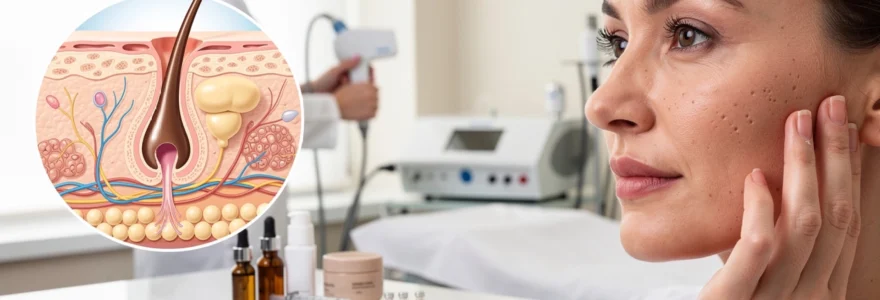
Pores have become the focal point of countless skincare debates, yet misconceptions about their nature persist across beauty forums and marketing campaigns. These tiny openings in your skin serve essential physiological functions, facilitating sebum production and temperature regulation through sweat release. Despite widespread claims promising permanent pore reduction, the reality involves understanding the complex interplay between genetic predisposition, hormonal influences, and environmental factors that determine pore appearance.
The cosmetic industry generates billions annually from products claiming to shrink pores permanently, yet dermatological research consistently demonstrates that structural pore size remains largely immutable. However, this doesn’t render skincare efforts futile. Modern dermatological science has identified numerous evidence-based interventions that can significantly improve pore appearance, reduce congestion, and enhance overall skin texture through targeted therapeutic approaches.
Sebaceous pore anatomy and dermatological classification systems
Pilosebaceous unit structure and follicular architecture
The pilosebaceous unit represents a complex anatomical structure comprising the hair follicle, sebaceous gland, and arrector pili muscle. Each pore serves as the visible opening of this intricate system, with the sebaceous gland producing sebum that travels through the follicular canal to reach the skin surface. The architectural design of these units varies significantly across different facial regions, with the T-zone typically exhibiting larger sebaceous glands and correspondingly more prominent pore openings.
Histological analysis reveals that pore diameter correlates directly with sebaceous gland volume and follicular keratinisation patterns. The infundibular portion of the follicle, where the pore opening occurs, contains specialised epithelial cells that respond to various hormonal and environmental stimuli. Understanding this foundational anatomy becomes crucial when evaluating realistic treatment expectations and selecting appropriate therapeutic interventions.
Genetic determinants of pore diameter and sebaceous gland volume
Genetic factors account for approximately 50-60% of pore size variation among individuals, according to twin studies examining facial morphology inheritance patterns. Specific gene polymorphisms affecting sebaceous gland development, collagen synthesis, and keratinocyte differentiation contribute to the baseline pore architecture that remains relatively stable throughout adult life. These genetic influences explain why certain ethnic populations demonstrate consistently different pore characteristics and why familial clustering of pore prominence occurs.
The FGFR2 and BMP2 genes, among others, regulate follicular development during embryogenesis, establishing the fundamental template for adult pore structure. Additionally, genes controlling sebum composition and production rates indirectly influence pore appearance by affecting the volume of material requiring evacuation through the follicular opening. This genetic foundation underscores why permanent structural changes to pore size remain challenging to achieve through topical interventions alone.
Hormonal influence on sebum production and follicular keratinisation
Androgens, particularly dihydrotestosterone (DHT), exert profound effects on sebaceous gland activity and follicular behaviour. Hormonal fluctuations during puberty, menstrual cycles, and certain medical conditions can dramatically alter sebum production rates, leading to apparent changes in pore size. Increased sebum production doesn’t physically enlarge pores but creates accumulation that stretches the follicular opening, making pores appear more prominent.
Insulin-like growth factor 1 (IGF-1) represents another significant hormonal influence, stimulating both sebaceous gland proliferation and keratinocyte production within the follicular canal. Elevated IGF-1 levels, often associated with high-glycemic diets, can exacerbate follicular congestion and increase the visual prominence of pores. Understanding these hormonal mechanisms enables more targeted therapeutic approaches that address underlying physiological processes rather than merely treating surface manifestations.
Age-related changes in collagen density and elastin fibre degradation
Chronological ageing and photoaging processes significantly impact pore appearance through progressive deterioration of the dermal support matrix. Collagen density decreases by approximately 1% annually after age 25, while elastin fibres undergo cross-linking and fragmentation
within the reticular dermis. As this supportive scaffold weakens, the follicular wall loses tension and the pore rim can sag and appear wider. Clinically, this translates into more visible pores on photoexposed areas such as the nose, cheeks, and forehead in middle-aged and older adults. Longitudinal imaging studies support this observation, showing a correlation between cumulative UV exposure, wrinkle depth, and the density of enlarged pores on facial skin.
Photoaging accelerates these structural changes.Reactive oxygen species generated by UV radiation alter fibroblast function, impairing new collagen formation and promoting matrix metalloproteinase (MMP) activity that breaks down existing fibres. The result is a dermal environment less able to “hold” the pilosebaceous units snugly, which is why pores look more oval, stretched, or irregular over time. This age-related decline in dermal integrity is a key reason why interventions that stimulate collagen and protect against UV damage are central to any realistic strategy for improving pore appearance.
Evidence-based topical interventions for pore appearance modification
Retinoid mechanisms in comedolytic action and cell turnover acceleration
Topical retinoids remain the cornerstone of evidence-based routines aimed at improving pore visibility. At a cellular level, molecules such as tretinoin, adapalene, and cosmetic retinol bind to nuclear receptors in keratinocytes, normalising desquamation within the follicular infundibulum. This comedolytic action reduces the formation of microcomedones—those microscopic plugs of keratin and sebum that silently stretch pore openings before they ever become visible blackheads or whiteheads. Over time, fewer microcomedones mean less chronic distention of the pore rim and a smoother overall texture.
Retinoids also influence the dermis, where they can indirectly affect how large pores appear on the skin surface. Multiple controlled trials have shown that prescription-strength retinoids stimulate new collagen synthesis, inhibit MMPs, and improve epidermal thickness within several months of consistent use. Think of this as reinforcing the “collar” of tissue surrounding each pilosebaceous unit; as the support structure becomes denser and more organised, pores often look less lax and less shadowed. In practice, you can expect any pore-refining benefits from retinoids to emerge gradually over 3–6 months rather than within days or weeks.
Because retinoids accelerate cell turnover, they also carry a risk of irritation, especially when introduced too aggressively. For many people trying to improve pore size and texture, the temptation is to apply a high-strength product nightly from day one, only to end up with redness, peeling, and a disrupted barrier. A more realistic approach involves starting with a pea-sized amount two to three evenings per week, buffering with moisturiser, and slowly building up as tolerated. This “low and slow” strategy maximises long-term pore benefits while minimising the setbacks that come from overdoing it.
Alpha hydroxy acids and beta hydroxy acid exfoliation protocols
Alpha hydroxy acids (AHAs) and beta hydroxy acids (BHAs) provide another clinically supported pathway to improve the appearance of enlarged pores. AHAs such as glycolic, lactic, and mandelic acid are water-soluble and primarily act on the skin’s surface by loosening the bonds between corneocytes. This enhances desquamation, reduces roughness, and helps prevent the build-up of dead cells around pore openings that can exaggerate their size. In contrast, BHAs—most notably salicylic acid—are oil-soluble and can penetrate into the pore lining, dissolving sebum-rich plugs that contribute to blackheads and visible congestion.
Randomised trials evaluating exfoliation-enhancing regimens have reported measurable reductions in enlarged facial pores, with one study documenting roughly a 19% improvement at six weeks compared with around 3% in placebo groups. The critical factor is not using the strongest acid you can find, but applying an appropriate concentration consistently and in a way that respects your skin barrier. For many people, a 1–2% salicylic acid leave-on product used two to four nights per week, combined with a low to mid-strength AHA applied on alternate evenings, is sufficient to keep pores clearer and texture more refined without tipping into chronic irritation.
How do you know if your exfoliation protocol is helping or harming your pore appearance?If pores look smoother and less shadowed over several weeks, you are likely in the right range. If, however, your skin feels tight, looks shiny and inflamed, or your pores paradoxically seem more pronounced, you may be over-exfoliating and compromising the barrier. In that case, decreasing frequency, simplifying your routine, and prioritising hydration often leads to better pore visibility than layering multiple acids every night.
Niacinamide regulation of sebaceous gland activity and barrier function
Niacinamide (vitamin B3) has emerged as one of the most versatile ingredients for those seeking realistic pore size improvement. At concentrations of 2–5%, niacinamide has been shown to reduce excess sebum production, which can minimise midday shine and lower the risk of ongoing pore stretching from chronic oil accumulation. In clinical studies, niacinamide-containing formulations have demonstrated improvements in skin texture, reduced redness, and a modest but meaningful decrease in the appearance of enlarged pores over 8–12 weeks.
Beyond its oil-regulating properties, niacinamide strengthens the skin barrier by upregulating ceramide synthesis and improving moisture retention. A resilient barrier better tolerates actives like retinoids and acids that are essential for pore management, reducing the likelihood of flares that leave pores looking more obvious. You can think of niacinamide as a quiet “systems stabiliser” in a pore-focused routine: it does not melt blackheads overnight, but it subtly shifts several parameters—oil output, inflammation, barrier integrity—in a direction that makes pores look calmer and less conspicuous.
From a practical standpoint, niacinamide is easy to incorporate because it layers well with most other ingredients and suits a wide range of skin types. A lightweight serum or moisturiser containing 4–5% niacinamide in your morning or evening routine can support sebaceous balance while helping to mitigate irritation from stronger actives. For individuals with very sensitive skin or rosacea-prone redness, starting with lower concentrations and observing the skin’s response over several weeks remains advisable.
Peptide complexes and growth factor stimulation of dermal restructuring
Peptide-based formulations and topical growth factor products target the deeper structural contributors to pore appearance rather than the pore opening itself. Signal peptides such as palmitoyl tripeptide-1 and palmitoyl tetrapeptide-7 are designed to mimic fragments of broken-down collagen, effectively “reminding” fibroblasts to increase new matrix production. Over time, this can lead to modest improvements in dermal thickness and elasticity, providing better mechanical support around pilosebaceous units. When combined with established actives like retinoids, these peptide complexes may enhance the visible benefits on fine lines, laxity, and pore prominence.
Topical growth factor formulations, derived either from human cell culture media or bioengineered analogues, work on a similar principle by signalling tissue repair and regeneration pathways. While the evidence base is smaller than for retinoids or acids, early studies using high-resolution imaging have documented improvements in skin texture and pore visibility after several months of consistent application. These effects tend to be subtle and cumulative rather than dramatic; think of them as long-term infrastructure upgrades rather than quick resurfacing work.
Cost and formulation quality are important considerations with peptide and growth factor products.Not every serum boasting “pore-tightening peptides” contains sufficient concentrations or stable delivery systems to impact the dermis meaningfully. If you choose to invest in this category for pore concerns, prioritise brands that publish clinical data, use airless packaging, and clearly state peptide percentages. And remember that even the best peptide complex will perform better when paired with daily sunscreen and a regimen that keeps pores clean and inflammation low.
Professional dermatological procedures and efficacy data
Fractional CO2 laser resurfacing and collagen remodelling outcomes
Fractional CO2 laser resurfacing is often considered one of the most powerful in-office options for improving overall skin texture and the appearance of enlarged pores. Unlike fully ablative lasers of the past, fractional devices create microscopic zones of thermal injury (microthermal treatment zones) while leaving surrounding tissue intact. This pattern allows for faster healing while still triggering an intensive wound-healing cascade that stimulates robust collagen and elastin production. Over several months, this remodelling can tighten the dermal framework around pores, making them appear smaller and less irregular.
Clinical studies evaluating fractional CO2 devices have reported significant improvements in skin roughness scores, atrophic acne scars, and pore visibility, often in the range of 30–60% subjective improvement after a series of sessions. These outcomes come with trade-offs, including downtime ranging from several days of redness and swelling to over a week of crusting and peeling, depending on treatment intensity. Post-procedure care is critical: strict photoprotection, gentle cleansing, and avoidance of potentially irritating actives are non-negotiable for optimal pore and texture results.
Who is an ideal candidate if your main concern is pore size rather than deep scarring?Fractional CO2 can be appropriate for individuals with moderate to severe textural irregularities, enlarged pores, and photoaging who are willing to accept downtime and adhere to aftercare. Those with darker skin tones require especially careful evaluation due to higher risks of post-inflammatory hyperpigmentation; in such cases, alternative modalities like non-ablative fractional lasers or microneedling radiofrequency may offer a safer balance between efficacy and risk.
Microneedling radiofrequency technology and controlled thermal injury
Microneedling radiofrequency (RF) devices combine mechanical needling with the delivery of controlled heat into the dermis, targeting many of the same structural issues that contribute to large, lax pores. The insulated or semi-insulated needles create precise microchannels while RF energy generates a zone of thermal coagulation at predetermined depths. This dual stimulus prompts collagen remodelling and elastin neosynthesis without removing the epidermis, leading to shorter downtime than aggressive ablative lasers for many patients.
Published data on microneedling RF show improvements in acne scarring, fine lines, and pore appearance after a series of three to four treatments spaced four to six weeks apart. In clinical photographs and texture maps, pores often look less elongated and less shadowed, especially on the cheeks and nose. Because energy parameters can be adjusted by depth and intensity, practitioners can individualise treatments based on skin thickness, sensitivity, and baseline pore characteristics, making this a versatile option across a broader range of skin types.
From the patient perspective, what should you realistically expect regarding pore size and downtime?Most people experience several days of redness and mild swelling, sometimes with pinpoint crusting, but can usually resume normal activities within 24–72 hours with appropriate camouflage and sun protection. Pore-refining benefits accrue gradually over several months as collagen remodelling proceeds, so it is important not to judge final results too early. As with other energy-based procedures, maintaining those gains still depends on daily skincare, particularly sun protection, to prevent new damage to the supporting dermal matrix.
Chemical peeling protocols using trichloroacetic acid and jessner’s solution
Chemical peels remain a time-tested, evidence-backed tool for refining skin texture and moderating the appearance of enlarged pores. Medium-depth peels using trichloroacetic acid (TCA) at concentrations of 20–35%, sometimes preceded by a Jessner’s solution (a blend of lactic acid, salicylic acid, and resorcinol), can reach into the papillary dermis. This controlled chemical injury promotes shedding of the compacted stratum corneum, clears out follicular debris, and triggers new collagen formation during the healing process. As the regenerated epidermis emerges, pores often look cleaner, less plugged, and more uniform in contour.
Jessner’s solution itself provides a strong keratolytic and comedolytic effect, which is why it is frequently used as a preparatory “priming” step before TCA application. For patients with oily, congestion-prone skin and prominent pores, this combination can provide more intensive decongestion than at-home acid exfoliants. Studies and extensive clinical experience indicate improvements in pigmentation, fine lines, and pore visibility after a series of well-spaced peels, though downtime (peeling, erythema, and temporary darkening in some skin tones) must be factored into planning.
Safety and technique are particularly important with TCA and Jessner’s peels because excessive depth or inappropriate use on certain skin types can result in scarring or significant hyperpigmentation. This is not a do-it-yourself path to smaller-looking pores; it is a procedure that should be customised and supervised by a dermatologist or experienced aesthetic practitioner. When properly selected and executed, however, medium-depth peels can serve as a powerful “reset” that makes subsequent at-home pore maintenance much more effective.
Platelet-rich plasma integration with mechanical stimulation therapies
Platelet-rich plasma (PRP) has gained popularity as an adjunct to mechanical stimulation techniques such as microneedling and microneedling RF for texture and pore refinement. PRP is prepared from the patient’s own blood and concentrated to provide a high level of growth factors, including platelet-derived growth factor (PDGF) and transforming growth factor-beta (TGF-β). When applied to microinjured skin or injected intradermally, these factors can enhance tissue repair, angiogenesis, and collagen synthesis, potentially amplifying the structural improvements around pores.
Emerging studies suggest that combining PRP with microneedling may accelerate healing and improve subjective outcomes for acne scars and overall texture compared with microneedling alone. For pore appearance, the benefit is largely indirect: better dermal quality, improved tone, and smoother transitions between scarred and non-scarred areas all contribute to pores looking less pronounced. Because PRP is autologous, the risk of allergic reaction is low, though results can vary based on preparation method and individual biology.
Is PRP essential if your primary concern is pore size?Not necessarily. Many patients achieve meaningful pore and texture improvements with mechanical or energy-based treatments alone, supported by a strong topical regimen. PRP is best viewed as a potential enhancer rather than a standalone pore treatment—a useful option if you are already undergoing microneedling or RF and interested in maximising regenerative signalling during the healing window.
Photographic documentation standards and measurement methodologies
Accurately evaluating pore size and treatment outcomes requires more than casual before-and-after selfies under different bathroom lights. In clinical and research settings, high-quality documentation follows strict standards to minimise variables such as lighting, camera angle, and skin surface condition. Consistent use of cross-polarised and parallel-polarised photography helps differentiate surface texture from deeper vascular and pigmentary changes, allowing more objective assessment of pore visibility. Subjects are typically instructed to remove makeup several hours prior and acclimate to room temperature to avoid transient pore dilation from heat or exercise.
Quantifying pore changes also depends on robust measurement methodologies. Image analysis software can identify and count visible follicular openings, calculate their area, and map pore density across predefined facial regions such as the nose, medial cheeks, and forehead. Studies like those published in Clinical, Cosmetic and Investigational Dermatology have used these tools to compare pore patterns between ethnic groups and across age ranges, as well as to track reductions after specific treatments. This level of rigor is what allows us to say, for example, that a given intervention produced a 15–20% reduction in enlarged pore density rather than relying solely on subjective impressions.
For everyday skincare users, adopting a simplified version of these standards can make personal tracking more meaningful. Taking photos at the same time of day, in the same location, with the same lighting and camera distance, and with no filter or skin-smoothing mode helps you see genuine pore and texture changes over months. Without this consistency, it is very easy to misinterpret day-to-day fluctuations in oil, hydration, and lighting as changes in actual pore size—which can lead to unrealistic expectations and constant product hopping.
Realistic expectations framework and treatment limitations
One of the most important truths about pore size is also one of the hardest to accept: you cannot erase pores or permanently shrink them beyond the anatomical template set by your genetics and early development. What you can influence is pore visibility—how much they stand out due to oiliness, congestion, pigmentation contrast, and loss of dermal support. Any treatment promising “poreless skin” is selling an illusion; even in highly retouched media, pores exist, they are simply blurred out. Recognising this distinction early helps you interpret claims and choose interventions that align with biology rather than fantasy.
A realistic expectations framework considers three main axes of change: cleanliness (reducing plugs and oxidation), context (improving the surrounding skin’s smoothness and tone), and support (strengthening collagen and elastin around the follicle). Topical exfoliants and retinoids primarily address cleanliness and context, while professional procedures focus more on support. Most people see the best results when they combine modest improvements across all three axes instead of chasing a single “hero” solution. Pores may not vanish, but they can look lighter, less irregular, and less central to how you perceive your skin.
It is also crucial to acknowledge the limitations and risks of more aggressive approaches.Excessive extractions, repeated high-strength peels without adequate recovery, or frequent use of at-home pore vacuums can cause microtrauma that worsens laxity and leads to permanently stretched or scarred pores. Energy-based treatments, if misused, can trigger pigmentary changes that draw even more attention to the treated area. Understanding that every intervention has a side-effect profile—and that sometimes “less, but consistent” outperforms “more, all at once”—is key to preserving long-term skin health while still pursuing a smoother, more refined complexion.
Maintenance protocols and long-term skin health strategies
Once you have achieved an improvement in pore appearance—whether through a thoughtful topical regimen, professional treatments, or both—the next step is maintaining those gains. Pores respond best to stability: stable barrier function, stable oil control, and stable protection against UV and pollution. In practice, this usually means a simple, repeatable morning and evening routine rather than an ever-changing lineup of trending actives. A realistic long-term protocol often includes a gentle, non-stripping cleanser, a hydrating yet lightweight moisturiser, targeted actives such as a retinoid or salicylic acid on selected nights, and broad-spectrum sunscreen every day.
From a weekly perspective, brief “checkpoints” can help you adjust without overreacting.For example, if you notice more midday shine and darker dots in the T-zone, you might increase salicylic acid use from two to three nights per week or add a single weekly clay mask to absorb excess oil—while keeping the rest of your routine unchanged. Conversely, if your skin feels tight, looks more lined, or your pores seem more obvious after exfoliation, temporarily scaling back acids and prioritising barrier-repairing ingredients such as ceramides, glycerin, and niacinamide will usually serve your pores better than pushing through irritation in the hope of faster results.
Beyond products, lifestyle factors play a measurable role in how pores look over time.Regular use of sun protection, avoidance of smoking, and moderating high-glycaemic diets can all reduce the hormonal and oxidative pressures that enlarge pores and degrade collagen. Adequate sleep and stress management support skin repair processes that subtly influence texture and oil balance. None of these habits will “close” pores, but together they create a physiological environment in which your existing pores are less likely to become congested, stretched, or surrounded by prematurely aged tissue.
Ultimately, the truth about pore size is that you are working with a built-in blueprint, not designing from scratch.When you accept this, pore care becomes less about chasing poreless perfection and more about supporting the structures you already have—keeping them clear, keeping the surrounding skin strong and elastic, and preventing avoidable damage. Under those conditions, pores can fade into the background of your complexion, doing their essential work while allowing your skin’s overall health and radiance to take centre stage.
 Good health cannot be bought, but rather is an asset that you must create and then maintain on a daily basis.