
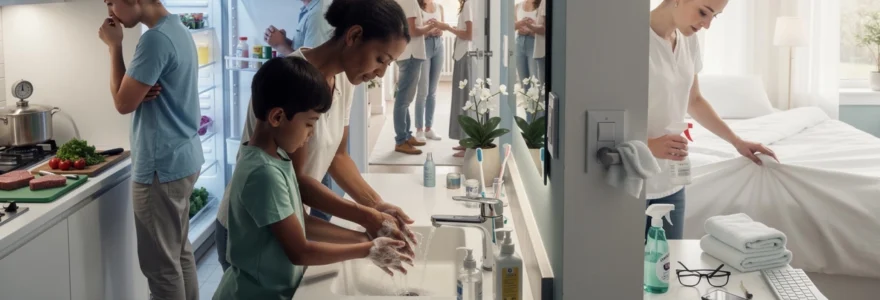
The invisible world of pathogens surrounds us constantly, yet most infections are entirely preventable through consistent hygiene practices. From the microscopic bacteria colonising our fingertips to the viral particles suspended in respiratory droplets, understanding transmission pathways forms the foundation of effective disease prevention. Every surface you touch, every breath you take in crowded spaces, and every meal you prepare presents potential exposure to infectious agents. However, evidence-based hygiene protocols can dramatically reduce your vulnerability to common illnesses ranging from seasonal influenza to gastrointestinal infections. The science behind these protective measures reveals precisely why certain habits prove far more effective than others in interrupting pathogen transmission chains.
Hand hygiene protocols: the Six-Step WHO technique for pathogen elimination
Hand hygiene stands as the single most effective intervention against infectious disease transmission, yet the technique matters immensely. The World Health Organisation’s six-step handwashing method ensures comprehensive coverage of all hand surfaces where pathogens typically accumulate. This systematic approach addresses the palms, back of hands, interdigital spaces, fingertips, and thumbs through specific movements that maximise mechanical removal of microorganisms. Studies demonstrate that proper handwashing can reduce respiratory illness transmission by 16-21% and gastrointestinal infections by approximately 31%, making this simple practice remarkably powerful.
The effectiveness of handwashing depends fundamentally on duration and technique rather than antimicrobial properties of soap alone. Regular soap combined with vigorous friction disrupts the lipid membranes of enveloped viruses and removes bacteria through mechanical action. Research confirms that this physical removal process proves more reliable than chemical antimicrobial agents in most circumstances. The six-step technique requires approximately 40-60 seconds to complete thoroughly, ensuring adequate contact time between soap, water, and all hand surfaces where contamination occurs.
Mechanical action of 20-second friction in disrupting viral lipid envelopes
The minimum 20-second duration recommended for handwashing isn’t arbitrary—it represents the time required for mechanical friction to effectively disrupt viral structures. Enveloped viruses like influenza, coronaviruses, and herpes viruses possess outer lipid membranes that soap molecules can penetrate and destabilise. The amphipathic nature of soap, with both hydrophobic and hydrophilic components, allows these molecules to insert themselves into viral envelopes and bacterial cell membranes, causing structural disintegration. This mechanical disruption proves far more reliable than relying solely on antimicrobial chemicals, which pathogens can develop resistance against over time.
During the friction phase, you should focus on areas frequently missed: the spaces between fingers, thumbs, wrists, and particularly the subungual regions beneath fingernails. These anatomical features create microenvironments where pathogens accumulate preferentially. The rotational rubbing motion generates shear forces that dislodge adherent microorganisms from skin crevices and removes transient flora before they can establish colonisation. Temperature matters less than mechanical action—comfortable warm water encourages longer washing duration without providing significant antimicrobial advantage over cool water.
Alcohol-based hand sanitiser efficacy: 60-95% ethanol concentration standards
When soap and water aren’t immediately accessible, alcohol-based hand sanitisers containing 60-95% ethanol or isopropanol provide effective pathogen inactivation. The antimicrobial mechanism differs fundamentally from soap—alcohol denatures proteins and dissolves lipid membranes through chemical action rather than mechanical removal. This concentration range represents optimal efficacy; formulations below 60% demonstrate substantially reduced antimicrobial activity, whilst concentrations above 95% evaporate too rapidly to achieve adequate contact time. The presence of some water actually enhances protein denaturation compared to absolute alcohol.
However, alcohol-based sanitisers have important limitations you should understand. They prove less effective against certain non-enveloped viruses like norovirus, bacterial spores such as Clostridium difficile, and parasitic cysts including Cryptosporidium. Physical soil, organic matter, and visible contamination also significantly reduce sanitiser efficacy by creating barriers that prevent alcohol contact with pathogen surfaces. Furthermore, sanitis
ers cannot remove physical dirt or bodily fluids and may leave behind pathogens shielded within organic debris. Whenever your hands are visibly soiled, after using the lavatory, or following food preparation, you should prioritise soap and water over sanitiser. Reserve alcohol-based products for interim use when handwashing facilities are unavailable, and apply a sufficient volume to keep hands wet for at least 20-30 seconds while rubbing all surfaces thoroughly.
Critical hand washing moments: before meals and after lavatory contact
Certain moments in your daily routine carry disproportionately high risk for pathogen transmission, making targeted handwashing especially important. Before eating or handling food, your hands often act as the final vehicle transferring microorganisms from contaminated surfaces to your mouth. Washing with soap and water immediately before meals interrupts this oral-faecal route and significantly reduces the likelihood of gastrointestinal infections such as norovirus, salmonellosis, and E. coli-related diarrhoea. Similarly, after using the lavatory, meticulous hand hygiene prevents faecal microorganisms from spreading to shared surfaces and food preparation areas.
Handwashing should also be performed after changing nappies, assisting someone with toileting, handling rubbish, blowing your nose, or touching animals and their waste. Think of these “critical moments” as checkpoints where you reset the microbial load on your hands before interacting with others or clean environments. In healthcare and caregiving contexts, additional moments—before and after patient contact, after touching bodily fluids, and after removing gloves—are equally non-negotiable. By anchoring your handwashing routine to these predictable events, you create an automatic barrier against many of the most common illnesses.
Subungual space cleaning: preventing bacterial reservoirs beneath fingernails
The subungual space—the area beneath the free edge of your fingernails—functions as a natural harbour for microorganisms. Dirt, skin debris, and organic material accumulate easily in this narrow crevice, providing nutrients and protection for bacteria, fungi, and viruses. Studies consistently show that bacterial counts beneath fingernails far exceed those on adjacent skin, especially when nails are long or artificial enhancements are used. Pathogens such as Staphylococcus aureus, enteric bacteria, and yeasts can persist in this microenvironment despite superficial handwashing, creating an ongoing reservoir for contamination.
To minimise this risk, keep nails short and clean, ideally trimmed to follow the contour of the fingertip. During handwashing, pay specific attention to the subungual area by rubbing fingertips against the opposite palm in a rotational motion, which helps to mechanically dislodge trapped material. In high-risk settings such as food handling, healthcare, or childcare, nail brushes can be used periodically, taking care not to cause skin trauma that may facilitate pathogen entry. Avoid false nails and chipped nail polish when working around vulnerable individuals, as both increase microbial load and complicate effective cleaning.
Respiratory etiquette: aerosol transmission prevention through physical barriers
Respiratory hygiene addresses one of the most efficient disease transmission routes: droplets and aerosols expelled when we cough, sneeze, speak, or even breathe. Common illnesses such as influenza, the common cold, RSV, and COVID-19 frequently spread via these microscopic particles, which can travel through the air or land on surfaces others touch. Effective respiratory etiquette acts like a personal “firewall,” containing infectious particles at their source and reducing their dispersion radius. Physical barriers—your elbow, tissues, and masks—intercept droplets before they can enter shared airspace or settle on high-touch objects.
Understanding how far droplets travel and how long they remain suspended helps explain why simple behavioural changes dramatically lower infection risk. When you cover your mouth and nose properly, you reduce both the forward momentum and volume of expelled particles, which in turn decreases the chance that people around you will inhale them or transfer them from contaminated surfaces to their mucous membranes. Combined with social distancing and adequate ventilation, good respiratory etiquette forms a multi-layered defence against airborne and droplet-mediated pathogens.
Elbow-cough technique reducing droplet dispersal radius by 85%
Coughing or sneezing directly into your hands effectively turns them into distribution devices for germs, especially if you then touch door handles, keyboards, or other shared items. The elbow-cough technique—directing your cough or sneeze into the crook of your bent arm—significantly reduces this problem by moving the primary impact zone away from high-contact surfaces. Experimental studies using high-speed imaging and particle tracking suggest that covering with the elbow or upper sleeve can cut the forward dispersal radius of large droplets by up to 85% compared with an uncovered cough. Instead of travelling several metres, many droplets are trapped in fabric fibres close to your body.
For the elbow-cough technique to be effective, you need to turn your head into your inner arm quickly and fully, ensuring both mouth and nose are covered. If you are wearing long sleeves, the fabric acts as an additional absorbent barrier, capturing moisture and droplets. While tissues remain preferable when available—since they can be discarded immediately—the elbow method offers a reliable backup when you are caught off guard. After using this technique, avoid touching your face or other people with the damp area of your sleeve until it has dried or been changed, particularly if you are already unwell.
Surgical mask filtration: N95 respirators vs three-ply disposable face coverings
Masks add an extra layer of protection for both the wearer and those nearby by filtering respiratory particles at their source and during inhalation. N95 respirators (or FFP2/FFP3 equivalents) are designed to filter at least 94-95% of airborne particles down to 0.3 microns when properly fitted, making them highly effective in high-risk settings such as hospitals or crowded indoor environments with poor ventilation. Their tight seal around the nose and mouth minimises leakage, ensuring that most of the air you breathe passes through the filter material rather than escaping around the edges. This makes respirators particularly valuable when dealing with airborne pathogens or prolonged exposure.
Three-ply disposable surgical masks provide a different but still meaningful level of protection. Although they do not seal tightly to the face, their multi-layer non-woven structure efficiently blocks larger droplets and a proportion of smaller aerosols, especially during short, routine interactions. Surgical masks are primarily designed for source control—limiting the spread of particles from the wearer into the environment—yet they also reduce the volume of infectious material inhaled, which may lower disease severity. For most community settings, a well-fitted three-ply mask worn consistently can substantially reduce transmission of common respiratory illnesses, while N95-level respirators are best reserved for situations with elevated risk or vulnerable individuals.
Sneeze plume dynamics: understanding particle suspension and surface contamination
A sneeze releases an explosive mixture of air, mucus, saliva, and microbial particles at speeds that can exceed 160 km/h. High-speed imaging has shown that this “plume” forms a turbulent cloud containing droplets of various sizes, from large visible sprays that fall quickly to microscopic aerosols capable of remaining suspended for minutes. Larger droplets typically travel one to two metres before settling on nearby surfaces such as tables, handrails, and clothing, creating contamination hotspots. Smaller aerosols, however, can stay airborne for extended periods, especially in poorly ventilated spaces, and may be inhaled by people well beyond the immediate vicinity.
This dual behaviour explains why both surface cleaning and air management matter for respiratory infection control. When you sneeze into a tissue and dispose of it immediately, you intercept a substantial proportion of droplets before they enter the room’s air currents. Ventilation—opening windows, using mechanical extraction, or employing HEPA filtration—helps dilute and remove residual airborne particles, reducing their concentration below infectious doses. Recognising that a single uncovered sneeze can contaminate multiple surfaces and linger in the air helps motivate consistent use of barriers and reinforces why we should not rely solely on distance or “holding our breath” when someone nearby sneezes.
One-metre social distancing guidelines for airborne pathogen risk reduction
Social distancing recommendations, such as maintaining at least one metre of space between individuals, stem from observations of how respiratory droplets behave in typical indoor conditions. Most large droplets—the primary vehicle for many respiratory viruses—settle to the ground within this range due to gravity, dramatically reducing the dose another person is likely to inhale. Keeping a one- to two-metre buffer therefore functions like staying out of the “splash zone” of routine coughs and conversations. In crowded settings where distancing cannot be fully maintained, combining physical separation with mask use and hand hygiene offers a more robust level of protection.
Of course, distance alone is not a perfect shield. In poorly ventilated rooms or during prolonged exposure, smaller aerosols can accumulate and travel beyond one metre, especially if people are talking loudly, singing, or exercising. This is why guidelines emphasise a layered approach: distance plus masks, plus ventilation, plus time limitation. As a practical rule, you can ask yourself: “Can I step back one or two paces, open a window, or move this conversation outside?” Small spatial adjustments like these meaningfully reduce your risk of inhaling infectious particles, particularly during peak cold and flu seasons.
Surface decontamination practices: contact transmission interruption strategies
Contact transmission occurs when pathogens move from contaminated surfaces to your hands and then to your face, food, or personal items. Because many viruses and bacteria can survive on inanimate surfaces for hours or even days, regular cleaning and disinfection play a crucial role in breaking this chain. Effective surface decontamination does not require hospital-grade protocols in every household, but it does depend on identifying high-risk objects and using appropriate agents correctly. Think of it as editing the invisible microbial map of your home and workplace so that high-touch points do not become persistent reservoirs for illness.
Targeted cleaning is more efficient than indiscriminate spraying. By focusing on surfaces most likely to be touched repeatedly by multiple people, you gain disproportionate protection for the time and products invested. Pairing routine cleaning with moments of increased vigilance—such as when someone in your household is ill or during community outbreaks—helps keep the overall microbial load low and reduces the probability that a single contaminated touch will lead to infection.
High-touch surface identification: door handles, light switches and mobile devices
High-touch surfaces are objects that receive frequent contact from hands throughout the day, often by several different individuals. Common examples include door handles, light switches, handrails, lift buttons, taps, fridge handles, remote controls, and shared keyboards or mice. Mobile phones occupy a special place on this list: we touch them constantly, take them into the bathroom, lay them on public surfaces, and then press them against our faces. Studies have found that smartphones can harbour more bacteria than toilet seats, underscoring their importance in any effective hygiene routine.
To systematically reduce contamination, start by mentally tracing your typical hand-to-surface journey from the moment you wake up until you go to bed. Which handles do you grip? Which buttons do you press? Which devices do you share? Creating this awareness allows you to prioritise a manageable list of targets for regular wiping with suitable cleaning agents. If you live with children, older adults, or immunocompromised individuals, raising the cleaning frequency of these high-touch surfaces—especially during cold and flu season—can substantially cut the household’s overall exposure to common pathogens.
Quaternary ammonium compounds vs sodium hypochlorite for viral inactivation
Not all cleaning products are equal when it comes to killing viruses and bacteria on surfaces. Quaternary ammonium compounds (“quats”) and sodium hypochlorite (household bleach) are two widely used classes of disinfectants with different strengths and ideal use cases. Quats, commonly found in disinfectant wipes and sprays, are effective against many enveloped viruses and bacteria and are generally less corrosive and odorous than bleach. They work by disrupting cell membranes and viral envelopes, making them well suited for routine disinfection of non-porous surfaces such as countertops, desks, and appliance exteriors.
Sodium hypochlorite solutions, typically diluted to around 0.1% (1000 ppm) for household disinfection, offer broad-spectrum activity, including against many non-enveloped viruses and some hardy bacterial spores. Bleach is particularly useful in situations involving bodily fluid spills, suspected contamination with highly infectious agents, or when a stronger intervention is warranted. However, it can damage fabrics, corrode metals, and irritate skin and respiratory tracts if misused. As a rule of thumb, use quat-based products for everyday high-touch cleaning and reserve properly diluted bleach for periodic deep-cleaning or specific contamination events, always following manufacturer instructions and ensuring good ventilation.
Dwell time requirements: ensuring adequate disinfectant contact periods
A common misunderstanding about disinfectants is that simply wiping a surface briefly is enough to eliminate pathogens. In reality, most products require a specified “dwell time”—the period during which the surface must remain visibly wet—to achieve their advertised level of microbial kill. Depending on the active ingredient and target organisms, this can range from 30 seconds to 10 minutes. If the disinfectant evaporates or is wiped away too quickly, many microorganisms survive, and you may gain a false sense of security about the cleanliness of the area.
To use disinfectants effectively, read the product label carefully and follow the instructions for contact time, dilution, and surface compatibility. In practice, this often means applying a generous amount of product and allowing it to air dry rather than immediately buffing the surface to a shine. For electronics such as phones or keyboards, where excessive moisture is undesirable, pre-moistened disinfectant wipes that specify electronic-safe formulations offer a practical compromise. By respecting dwell time requirements, you ensure that your surface decontamination efforts genuinely reduce the risk of contact transmission rather than merely redistributing microorganisms.
Oral hygiene maintenance: reducing oral-faecal and respiratory infection routes
Oral hygiene is often discussed in the context of cavities and gum disease, but its impact extends far beyond a healthy smile. The mouth serves as both an entry and exit point for numerous pathogens, connecting the digestive and respiratory tracts. Poor oral hygiene can increase the bacterial load in saliva and plaque, facilitating the spread of microorganisms via droplets, shared utensils, or hand-to-mouth contact. Chronic gum inflammation has also been linked to systemic conditions such as cardiovascular disease and diabetes, highlighting the mouth’s role as a reflection of overall immune health.
By maintaining a clean oral environment, you reduce the density of potentially harmful bacteria and viruses that can be transferred to your hands, your food, and the air you exhale. This, in turn, lowers your risk of oral-faecal infections, respiratory illnesses, and secondary complications of systemic disease. Incorporating simple, evidence-based practices such as regular brushing, tongue cleaning, and sensible toothbrush storage into your daily routine creates a powerful, low-cost barrier against common illnesses.
Twice-daily brushing with fluoride toothpaste: biofilm disruption mechanics
Dental plaque is a structured biofilm—a complex, sticky community of microorganisms embedded in a protective matrix that adheres strongly to teeth and gumlines. Left undisturbed, this biofilm becomes increasingly pathogenic, producing acids and toxins that damage enamel and inflame gum tissue. Mechanical brushing twice daily interrupts this process by physically breaking up the biofilm and removing it from tooth surfaces before it can mature. Fluoride toothpaste enhances this mechanical action by remineralising weakened enamel and making it more resistant to acid attack, thereby reducing the likelihood of cavities.
To maximise the protective effect, use a soft-bristled brush and spend at least two minutes covering all tooth surfaces, including the inner fronts of lower incisors and the back molars where plaque tends to accumulate. Small, gentle circular motions are more effective and less damaging to gums than aggressive horizontal scrubbing. Brushing before bed is especially important because saliva flow—and thus natural cleansing—decreases during sleep, allowing acids and bacteria to linger. Regular disruption of the oral biofilm not only keeps your teeth and gums healthier but also lowers the overall microbial burden in your mouth, which may reduce the risk of respiratory infections such as aspiration pneumonia in vulnerable individuals.
Tongue scraping for bacterial load reduction in the posterior dorsal region
The posterior dorsal surface of the tongue—the back, top area—provides an ideal habitat for bacteria due to its rough texture and limited self-cleaning from chewing and saliva flow. These microorganisms contribute significantly to halitosis and can act as a reservoir, reseeding teeth and gums even after thorough brushing. Tongue scraping mechanically removes this coating of bacteria, food debris, and shed epithelial cells, leading to fresher breath and a measurable reduction in oral microbial load. Some studies suggest that regular tongue cleaning can decrease levels of volatile sulphur compounds by up to 75%, indicating substantial bacterial removal.
Using a dedicated tongue scraper or the back of a toothbrush, gently draw the tool from the back of the tongue toward the tip several times, rinsing between passes. You may need to start mid-tongue if your gag reflex is sensitive and gradually work further back as you acclimatise. Integrating tongue scraping into your morning routine takes less than a minute but amplifies the benefits of brushing and flossing, particularly if you are prone to bad breath or frequent respiratory infections. By reducing the bacterial “seed bank” on the tongue, you help keep the rest of the oral cavity cleaner for longer.
Toothbrush storage protocols: preventing faecal coliform contamination
Toothbrushes can inadvertently become contaminated with faecal coliforms and other bathroom-associated bacteria, especially when stored uncovered near toilets. Every flush generates a fine aerosol plume that can deposit microorganisms on nearby surfaces, including exposed bristles. Storing multiple brushes in close contact also facilitates cross-contamination between family members, potentially spreading viruses such as cold and flu or even gastrointestinal pathogens. Moist environments, such as closed containers, further promote bacterial growth by preventing bristles from drying fully between uses.
To minimise these risks, rinse your toothbrush thoroughly after each use and store it upright in an open holder where it can air dry, keeping separate brushes from touching. Position the holder as far from the toilet as practical and close the toilet lid before flushing to reduce aerosol spread. Avoid sharing toothbrushes under any circumstances, and replace each brush every three months or sooner if bristles become frayed or after a significant illness. These simple storage protocols ensure that your toothbrush remains a tool for removing microbes, not an overlooked source of re-exposure.
Food safety and kitchen sanitation: preventing gastrointestinal pathogen transmission
The kitchen is both the heart of the home and a critical battleground in the fight against foodborne illness. Pathogens such as Salmonella, Campylobacter, Listeria, and norovirus can enter via raw ingredients and persist on cutting boards, sponges, and countertops if hygiene practices are lax. Because many gastrointestinal infections arise from unseen cross-contamination rather than obviously spoiled food, consistent kitchen sanitation plays a central role in preventing diarrhoea, vomiting, and more serious complications. Safe food handling combines three key elements: separation, proper cooking, and temperature control.
By treating raw foods—especially meat, poultry, eggs, and unwashed produce—as potential sources of contamination, you can design your kitchen workflow to keep harmful microorganisms away from ready-to-eat items. Regular cleaning and disinfection of work surfaces, thoughtful use of tools and boards, and adherence to refrigeration guidelines transform daily meal preparation into a low-risk activity. In effect, a hygienic kitchen extends your immune system’s reach, stopping many pathogens before they ever have the chance to challenge your body.
Cross-contamination prevention: separate cutting boards for raw meat and vegetables
Cross-contamination occurs when microorganisms from raw foods spread to other items that will not undergo further cooking. One of the most common scenarios involves using the same cutting board or knife for raw chicken and then for salad vegetables without adequate cleaning in between. Pathogens transferred in this way face no subsequent heat treatment and can be ingested directly, leading to illness hours or days later. Using separate, clearly designated cutting boards for raw meat, poultry, and seafood versus fruits, vegetables, and bread dramatically reduces this risk by creating a physical barrier between high- and low-risk foods.
Colour-coded boards—such as red for meat and green for produce—provide a helpful visual cue, especially in busy households. After contact with raw animal products, wash boards and knives in hot, soapy water and, when appropriate, follow with a disinfectant rinse or dishwasher cycle. Remember that kitchen sponges and cloths can also become cross-contamination vectors if they are used indiscriminately on raw meat juices and then on other surfaces. By structuring your workflow around separation principles, you create a simple yet robust system for keeping gastrointestinal pathogens out of your finished meals.
Core temperature monitoring: achieving 75°C internal temperature for poultry
Cooking food thoroughly is one of the most reliable ways to kill harmful microorganisms, but visual cues like colour and texture can be misleading. Poultry, in particular, may appear done on the outside while remaining undercooked internally, allowing bacteria such as Campylobacter and Salmonella to survive. Using a food thermometer to confirm that the thickest part of the meat—avoiding bones—has reached at least 75°C (167°F) provides objective assurance that pathogens have been effectively inactivated. This temperature threshold, held even briefly, is sufficient to destroy most vegetative bacterial cells implicated in foodborne illness.
Insert the thermometer into multiple spots in large items like whole chickens or turkeys, and ensure juices run clear rather than pink. For ground meats, which distribute surface bacteria throughout the mixture, internal temperature checks are equally important. If you frequently prepare poultry or cook for vulnerable groups such as young children, pregnant women, or older adults, investing in a reliable digital thermometer is a low-cost step that significantly enhances kitchen hygiene. Think of it as your personal “safety gauge,” removing guesswork from the cooking process.
Refrigeration chain integrity: maintaining 5°C or below for perishable goods
Many foodborne pathogens do not stop growing at room temperature; some can double in number every 20 minutes under favourable conditions. Refrigeration slows this microbial multiplication dramatically, buying time before food reaches dangerous contamination levels. To be effective, however, the cold chain—from shop to home fridge—must be maintained at 5°C (41°F) or below. This includes transporting perishable items promptly, avoiding long periods in a warm car or on countertops, and organising your fridge so that air can circulate freely and cold zones are not compromised by overpacking.
Use a fridge thermometer to verify actual temperatures, as built-in dials are often approximate. Store raw meats on the lowest shelf in sealed containers to prevent drips onto ready-to-eat foods, and respect “use by” dates on high-risk items such as dairy, deli meats, and pre-prepared salads. When leftovers are involved, cool them quickly—within two hours of cooking—before refrigerating, and reheat to steaming hot before consumption. By preserving refrigeration chain integrity, you drastically slow the growth of many gastrointestinal pathogens, turning your fridge into a true safety device rather than a mere storage box.
Personal item hygiene: eliminating fomite-mediated disease spread
Fomites—objects or materials likely to carry infection—play a surprisingly large role in everyday disease transmission. Items that come into close contact with skin, mucous membranes, or bodily fluids can accumulate bacteria, viruses, and fungi, which may then be transferred to others or back to you at a later time. Bedding, towels, spectacles, smartphones, and keyboards are frequent culprits because they are used repeatedly yet often cleaned infrequently. By incorporating personal item hygiene into your routine, you close off these hidden pathways for pathogens to circulate within households, offices, and shared spaces.
The goal is not to sterilise your environment but to keep microbial levels low enough that your immune system is not constantly overwhelmed by preventable exposures. Regular laundering at appropriate temperatures, combined with targeted disinfection of high-contact devices, creates a living and working space that supports health rather than undermining it. You might be surprised how a few small, consistent habits—changing pillowcases weekly, wiping glasses daily, rotating towels—can noticeably reduce minor infections such as conjunctivitis, skin rashes, or recurrent colds.
Weekly laundering of bedding at 60°C for dust mite and bacterial eradication
During sleep, we shed skin cells, sweat, and secretions that provide ample nutrients for dust mites and bacteria living in our bedding. Over time, pillowcases and sheets accumulate not only these organisms but also pollen, pet dander, and environmental pollutants, which can irritate skin and airways. Washing bedding weekly at a minimum of 60°C (140°F) helps to kill dust mites and significantly reduce bacterial and viral loads, creating a cleaner microenvironment around your face and respiratory tract for roughly one-third of your life. For individuals with allergies, asthma, or eczema, this simple practice can make a noticeable difference in symptom control.
If your fabrics cannot tolerate 60°C, consider using an additive disinfectant approved for lower temperature washes, or alternate higher-temperature cycles with cooler ones to balance fabric care and hygiene. Pay particular attention to pillowcases, which are in direct contact with your mouth, nose, and eyes, and may warrant even more frequent changes if you are prone to acne, allergies, or eye infections. By treating your bed as a critical hygiene zone rather than just a comfort zone, you reduce repeated nightly exposure to potential irritants and pathogens.
Daily disinfection of spectacles, smartphones and computer keyboards
Spectacles, smartphones, and computer keyboards form a triad of high-contact personal items that often escape routine cleaning. Glasses sit on your nose and ears all day, picking up skin oils, sweat, and airborne particles, before being adjusted with fingers that may not be freshly washed. Phones travel between public spaces, bathrooms, kitchens, and your face, while keyboards accumulate skin flakes and respiratory droplets from extended typing sessions. Each item can act as a fomite, transferring bacteria and viruses back to your hands and face even after you have washed them.
Integrating a quick daily wipe-down into your schedule—perhaps when you finish work or before bed—helps keep microbial loads in check. Use alcohol-based wipes or sprays compatible with electronics for phones and keyboards, taking care not to saturate openings, and microfibre cloths with mild soap or lens cleaner for spectacles. In shared environments such as offices or hot-desking arrangements, disinfect keyboards and mice between users whenever practical. These modest efforts create an often-overlooked barrier against respiratory and skin infections, especially during peak seasons for colds and flu.
Towel replacement frequency: preventing staphylococcus aureus colonisation
Towels provide a warm, moist environment ideal for bacterial growth, particularly when they do not dry fully between uses. Skin-associated organisms such as Staphylococcus aureus can colonise damp fibres and then be transferred back to your body or to other household members. Sharing bath towels or using the same hand towel for extended periods increases the chance of spreading not only everyday microbes but also more problematic strains, including MRSA in some settings. Visible cleanliness is not a reliable guide: a towel may look fresh yet harbour substantial bacterial counts after only a few days of use.
As a practical guideline, bath towels should be replaced and laundered every three to four uses—or at least twice a week—while hand towels in busy households may need daily changes. Wash towels at 60°C where fabric care labels allow, and ensure they are completely dry before folding and storing to prevent residual moisture from sustaining microbial survival. Avoid sharing towels, flannels, or loofahs, particularly if anyone has cuts, abrasions, or skin infections. By treating towels as personal hygiene tools that require regular renewal rather than semi-permanent fixtures, you remove a common yet underestimated vehicle for fomite-mediated disease spread.
 Good health cannot be bought, but rather is an asset that you must create and then maintain on a daily basis.