
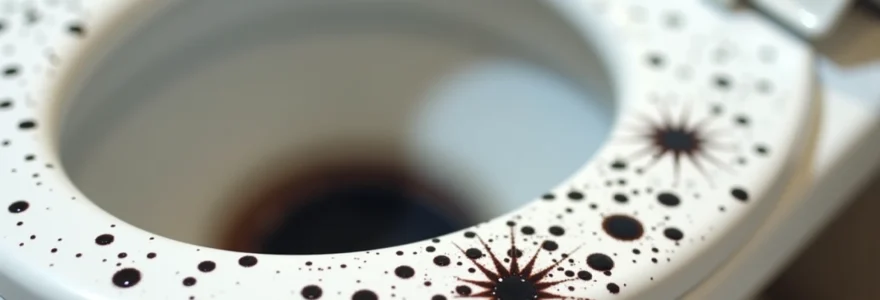
Discovering mysterious black specks on your toilet seat can be both unsettling and puzzling. These dark spots, which seem to appear overnight, often leave homeowners wondering about their origin and potential health implications. While the appearance of these specks might initially cause alarm, understanding their various causes can help you address the issue effectively and prevent future occurrences.
The presence of black specks on toilet seats is more common than you might think, particularly in bathrooms with poor ventilation or high humidity levels. These dark deposits can stem from multiple sources, ranging from harmless environmental factors to more concerning microbial growth. By identifying the root cause, you can implement targeted solutions to maintain a clean and hygienic bathroom environment.
The complexity of bathroom ecosystems creates ideal conditions for various organisms and particles to accumulate on surfaces. Temperature fluctuations, moisture levels, and organic matter all contribute to the formation of these unwelcome deposits. Recognising the different types of contamination helps distinguish between temporary aesthetic issues and situations requiring immediate attention.
Mould and fungal growth manifestations on toilet surfaces
Fungal contamination represents one of the most prevalent causes of black specks appearing on toilet seats and surrounding surfaces. The bathroom environment provides optimal conditions for mould growth, with consistent moisture, warmth, and organic matter serving as nutrients. These microscopic organisms can rapidly colonise surfaces, creating visible deposits that appear as dark spots or specks.
The lifecycle of bathroom moulds involves spore dispersal through air currents, settling onto surfaces where they establish colonies under favourable conditions. Once established, these fungal communities produce pigmented compounds that create the characteristic black, grey, or dark green appearance associated with bathroom contamination. The porosity of certain toilet seat materials can trap spores, making complete removal challenging without proper treatment.
Aspergillus niger black spot formation in High-Humidity environments
Aspergillus niger stands out as a particularly common culprit behind black specks in bathroom environments. This ubiquitous fungus thrives in high-humidity conditions, producing distinctive black conidiophores that create the speckled appearance on toilet seats. The organism’s ability to metabolise various organic compounds found in household dust and skin cells makes toilet areas ideal colonisation sites.
The growth pattern of Aspergillus niger typically begins as small, pinpoint black dots that gradually expand into larger colonies if left untreated. These formations often appear concentrated around areas where moisture accumulates, such as toilet seat hinges or underneath rim areas. The fungus produces melanin-like compounds that create its characteristic dark pigmentation, making it easily distinguishable from other types of contamination.
Stachybotrys chartarum dark residue accumulation patterns
Often referred to as “black mould,” Stachybotrys chartarum creates more concerning contamination patterns on toilet surfaces. This species produces mycotoxins that can pose health risks, particularly for individuals with compromised immune systems or respiratory sensitivities. The organism typically manifests as slimy, dark patches rather than discrete specks, but early colonisation can appear as scattered black dots.
The presence of Stachybotrys chartarum often indicates underlying moisture problems, such as plumbing leaks or inadequate ventilation. Unlike other moulds that primarily affect surface aesthetics, this species requires prompt professional remediation to prevent health complications. The fungus tends to favour cellulose-based materials but can establish colonies on plastic and ceramic surfaces when sufficient organic matter is present.
Chaetomium globosum surface colonisation in poorly ventilated bathrooms
Chaetomium globosum represents another significant contributor to black speck formation in bathroom environments. This fungus produces distinctive perithecia (fruiting bodies) that appear as small, dark spherical structures on infected surfaces. The organism’s preference for damp, poorly ventilated spaces makes it particularly problematic in bathrooms lacking adequate air circulation.
The colonisation process begins with spore germination on organic debris, progressing to mycelial growth and eventual perithecium formation. These dark, flask-shaped structures release additional spores, perpetuating the contamination cycle. The fungus can digest various organic materials, including dead skin cells and soap residues commonly found on toilet seats.
Cladosporium herbarum spore deposits on ceramic and plastic surfaces
Cladosporium herbarum creates distinctive spore deposits that manifest as powdery black specks on toilet seats and surrounding surfaces. This cosmopolitan fungus demonstrates remarkable adaptability to various environmental conditions, making it a persistent presence in household bathrooms. The organism produces abundant dark-pigmented spores that can be easily disturbed and redistributed throughout the bathroom environment.
The spore clusters of Cladosporium herbarum often appear as fine, dust-like particles that can be mistaken for other types of contamination. These deposits typically concentrate in areas with minimal air movement, such as behind toilet seats or along base trim. The fungus exhibits particular affinity for surfaces with microscopic textures that can trap and retain spores over extended periods.
Bacterial biofilm development and pigmentation
Bacterial contamination presents another significant source of black specks on toilet seats, particularly through biofilm formation and pigment production. Unlike fungal growth, bacterial colonies can develop rapidly under appropriate conditions, creating visible deposits within days rather than weeks. The complex interactions between different bacterial species often result in varied pigmentation patterns, including the characteristic black specks that concern homeowners.
Biofilm formation begins with initial bacterial adhesion to surfaces, followed by the production of extracellular polymeric substances that create protective matrices. These structures can trap additional microorganisms and particles, creating multi-layered deposits that appear as dark specks or patches. The biofilm environment provides protection against environmental stresses and antimicrobial treatments, making complete elimination challenging without targeted intervention.
Serratia marcescens dark colony formation mechanisms
Serratia marcescens commonly produces distinctive pink or reddish pigmentation, but certain strains can generate darker colorations that contribute to black speck formation. This opportunistic pathogen thrives in moist bathroom environments, establishing colonies on various surfaces including toilet seats. The bacterium’s ability to produce prodigiosin and other pigmented compounds creates visible deposits that can be mistaken for mould growth.
The organism demonstrates particular affinity for soap scum and organic residues commonly found on toilet surfaces. Colony development typically begins in crevices and joins where moisture accumulates, spreading outward to create larger contaminated areas. The bacterium’s resistance to many common household cleaners can result in persistent recontamination if underlying moisture sources are not addressed.
Pseudomonas aeruginosa melanin production in toilet bowl environments
Pseudomonas aeruginosa represents a significant concern due to its pathogenic potential and ability to produce dark pigments, including melanin-like compounds. This versatile bacterium can establish biofilms on various toilet surfaces, creating black or dark green deposits that appear as specks or larger patches. The organism’s production of pyomelanin contributes to the characteristic dark coloration associated with these infections.
The biofilm-forming capabilities of Pseudomonas aeruginosa make it particularly persistent in bathroom environments. The bacterium can utilise various organic compounds as nutrients, including those found in human waste and cleaning product residues. Its ability to survive in low-nutrient environments allows it to persist on toilet surfaces even with regular cleaning protocols.
Chromobacterium violaceum violacein pigment secretion patterns
Chromobacterium violaceum produces the distinctive purple pigment violacein, but certain environmental conditions can result in darker pigmentation that contributes to black speck formation. This gram-negative bacterium typically inhabits soil and water environments but can establish colonies in bathroom settings with adequate moisture and nutrients. The bacterium’s pigment production serves as both a virulence factor and protective mechanism against environmental stresses.
Colony development patterns often reflect the availability of nutrients and moisture gradients across toilet surfaces. The organism tends to concentrate in areas where organic matter accumulates, such as underneath toilet seat hinges or along seal interfaces. The intensity of pigmentation can vary based on environmental conditions, with darker colorations typically associated with nutrient-rich growth media.
Mineral deposits and hard water precipitation effects
Hard water mineral deposits frequently manifest as dark specks on toilet seats, particularly in regions with high concentrations of dissolved minerals. Iron, manganese, and other metallic compounds can precipitate from water sources, creating oxidised deposits that appear as black or dark brown specks. These mineral accumulations often concentrate along water lines and splash zones, where repeated exposure to mineral-rich water creates buildups over time.
The chemical composition of local water supplies significantly influences the types and severity of mineral deposits encountered in bathroom fixtures. Iron concentrations above 0.3 parts per million typically result in visible staining, while manganese levels exceeding 0.05 parts per million can create dark, tea-coloured deposits. These minerals undergo oxidation reactions when exposed to air, transforming from clear dissolved forms into visible precipitates that adhere to surfaces.
Oxidation processes accelerate in the presence of chlorine and other water treatment chemicals, creating complex mineral compounds that resist removal through standard cleaning methods. The interaction between different minerals can produce various coloration patterns, ranging from rust-coloured iron deposits to dark purple-black manganese stains. Understanding the specific mineral composition helps determine appropriate treatment strategies for affected fixtures.
Water hardness levels exceeding 250 parts per million typically correlate with increased mineral deposition rates on bathroom fixtures. The combination of calcium and magnesium with trace metals creates complex scaling patterns that can trap additional contaminants, including bacteria and organic debris. These hybrid deposits often appear as dark specks embedded within lighter-coloured mineral scales, requiring specialised cleaning approaches for complete removal.
The interaction between hard water minerals and organic contaminants creates persistent deposits that can harbour bacterial growth and resist conventional cleaning methods.
Toilet seat material degradation and oxidation processes
Material degradation represents an often-overlooked source of black specks on toilet seats, particularly with older fixtures or those manufactured from certain plastic formulations. Ultraviolet light exposure, chemical cleaning agents, and mechanical wear can cause molecular breakdown in toilet seat materials, resulting in dark particles that flake or chip away from the surface. These degradation products often appear as small black specks that seem to regenerate despite thorough cleaning efforts.
Plastic toilet seats containing carbon black additives or certain stabilisers can develop surface oxidation over time, creating dark deposits that resemble other types of contamination. The breakdown process typically begins with microscopic surface changes that gradually progress to visible particle formation. Temperature fluctuations common in bathroom environments accelerate these degradation processes, particularly affecting lower-quality materials with insufficient UV stabilisation.
The chemical composition of cleaning products significantly influences material degradation rates, with certain formulations causing accelerated breakdown of plastic components. Bleach-based cleaners, while effective against biological contaminants, can cause oxidative damage to toilet seat materials over extended periods. This chemical attack weakens polymer chains, creating brittle surface layers that shed particles resembling black specks or debris.
Metal hardware components associated with toilet seats, including hinges and mounting brackets, can contribute to black speck formation through corrosion processes. Rust particles and other corrosion products can migrate onto seat surfaces, creating deposits that appear similar to biological contamination. The galvanic corrosion between dissimilar metals accelerates in humid bathroom environments, producing dark metallic oxides that transfer to adjacent surfaces through normal use and cleaning activities.
Pest-related contamination and insect debris accumulation
Pest activity represents a frequently overlooked source of black specks on toilet seats and surrounding surfaces. Various insects and arthropods commonly inhabit bathroom environments, leaving behind droppings, moulted exoskeletons, and other debris that can accumulate on fixtures. These biological deposits often appear as small dark particles that can be mistaken for mould growth or mineral deposits, requiring careful examination to determine their true origin.
The warm, humid conditions typical of bathroom environments attract numerous pest species seeking moisture and shelter. These organisms often establish hiding places behind toilet fixtures, underneath seat assemblies, and within wall cavities, emerging periodically to feed or reproduce. Their presence becomes evident through the accumulation of waste products and shed materials on visible surfaces, including toilet seats and rims.
Drain fly larvae psychoda alternata waste matter identification
Psychoda alternata larvae produce distinctive waste products that can accumulate on toilet surfaces as small, dark specks or pellets. These drain fly larvae inhabit the organic sludge found in bathroom drains and can migrate to nearby surfaces during their development cycle. The larvae feed on bacteria and organic matter, producing concentrated waste that appears as tiny black or dark brown particles.
Adult drain flies emerging from breeding sites often seek additional moisture sources, including toilet bowl water and condensation on fixtures. Their movement between contaminated drain environments and clean surfaces can transfer bacteria and organic debris, creating secondary contamination patterns. The flies themselves can contribute to speck formation through their natural death and decomposition processes on toilet surfaces.
Cockroach faecal pellet distribution patterns around toilet areas
Cockroach droppings represent one of the most concerning sources of black specks in bathroom environments. These pest-produced particles typically measure 1-2 millimetres in length and appear as dark, cylindrical pellets with distinct ridged surfaces. Cockroaches favour bathroom environments due to consistent water availability and potential food sources, including soap residues, skin cells, and organic debris.
The distribution patterns of cockroach faeces often reflect the insects’ movement pathways and preferred hiding locations. Concentrations typically occur behind toilets, underneath seat assemblies, and along base trim areas where the pests travel during nocturnal foraging activities. The pellets can be distinguished from other types of contamination through their uniform size and characteristic shape, though positive identification may require professional pest control evaluation.
Silverfish lepisma saccharina moulting residue characteristics
Lepisma saccharina produces distinctive moulting residues that can contribute to black speck accumulation on toilet surfaces. These primitive insects shed their exoskeletons multiple times during development, leaving behind translucent to dark-coloured debris that fragments into smaller particles. The moulting process typically occurs in hidden locations, but residual materials can be transported to visible surfaces through air currents and human activity.
Silverfish demonstrate strong preferences for cellulose-based materials and can feed on paper products, adhesives, and organic debris commonly found in bathroom environments. Their feeding activities produce additional waste products that appear as fine, dark particles scattered across surfaces. The insects’ nocturnal habits and secretive nature often make their presence difficult to detect until significant debris accumulation occurs.
Spider mite tetranychus urticae webbing and excrement deposits
Tetranychus urticae and related spider mite species can establish populations in bathroom environments, particularly around houseplants or areas with organic debris accumulation. These microscopic arthropods produce fine webbing materials and excrement deposits that can appear as dark specks on surfaces. The mites feed on plant materials and organic matter, concentrating their waste products in areas of heavy infestation.
The webbing produced by spider mites can trap dust, bacteria, and other particles, creating complex deposits that resist removal through standard cleaning methods. These accumulated materials often appear as dark, fuzzy masses that can be mistaken for mould growth or other types of contamination. The mites’ rapid reproduction rates can result in quick accumulation of debris in favourable environments.
Chemical staining from cleaning products and household substances
Chemical reactions between cleaning products and toilet seat materials can generate unexpected staining patterns that manifest as black specks or discoloured areas. The complex interactions between different chemical formulations, particularly when products are mixed or used in sequence, can produce oxidation reactions that create dark deposits on surfaces. These chemical stains often prove resistant to conventional cleaning methods and may require specialised treatments for removal.
The timing and concentration of chemical exposure significantly influence staining patterns, with higher concentrations and longer contact times typically producing more severe discoloration. Certain toilet seat materials demonstrate particular susceptibility to chemical staining, including those containing metal components or specific plastic formulations. Understanding the chemical compatibility between cleaning products and fixture materials helps prevent unintended staining and damage.
Iron-containing cleaning products can react with chlorine-based disinfectants to produce dark iron chloride compounds
that appear as dark specks on toilet seat surfaces. These chemical reactions typically occur when products containing ferrous compounds encounter oxidizing agents, creating persistent stains that penetrate porous materials. The formation process can be accelerated by heat and humidity, common conditions in bathroom environments that promote rapid chemical interactions.
Ammonia-based cleaners can react with certain metal components in toilet hardware to produce dark metallic compounds that transfer onto seat surfaces. These reactions often occur gradually over multiple cleaning cycles, making the source of contamination difficult to identify initially. The resulting deposits typically appear as fine, powder-like specks that can be redistributed through normal toilet use and cleaning activities.
Acidic toilet bowl cleaners containing hydrochloric or phosphoric acid can cause unexpected reactions when they contact metal fixtures or mineral deposits. These reactions can produce dark precipitates that settle on nearby surfaces, including toilet seats positioned above treated bowl areas. The acidic environment accelerates corrosion processes in metal components, generating additional sources of dark particulate matter that contributes to speck formation.
Cross-contamination between different cleaning products stored in bathroom cabinets can create volatile compounds that deposit on surfaces as dark residues. Products containing chlorine bleach should never be mixed with ammonia-based cleaners, as this combination produces chloramine gases that can condense into corrosive deposits on bathroom fixtures. These chemical deposits often appear as dark stains or specks that resist removal through conventional cleaning methods.
Chemical interactions between incompatible cleaning products can create persistent staining compounds that require professional remediation to remove safely and completely.
Hair dye, makeup, and other cosmetic products frequently used in bathroom environments can contribute to black speck formation through transfer and oxidation processes. These products contain various organic compounds and metal salts that can react with cleaning chemicals or oxidize naturally over time. The resulting deposits often concentrate in areas where cosmetic products are applied or stored, creating localized contamination patterns on toilet seats and surrounding surfaces.
Medication residues and supplements containing iron or other metals can create dark deposits when eliminated through normal bodily processes. These compounds can interact with toilet water chemistry and cleaning products to form persistent stains that appear as black specks on seat surfaces. Individuals taking iron supplements or certain medications may notice increased staining frequency, requiring more aggressive cleaning protocols to maintain fixture appearance.
The interaction between fabric softeners, laundry detergents, and bathroom surfaces can produce unexpected staining patterns, particularly when clothing items are stored or changed in bathroom areas. These products contain quaternary ammonium compounds and optical brighteners that can react with cleaning chemicals to form dark precipitates. The deposits often appear as fine specks that seem to regenerate despite regular cleaning efforts, indicating ongoing chemical interactions between residual product components.
Water treatment chemicals added to municipal supplies, including chloramines and fluoride compounds, can interact with toilet materials and cleaning products to create complex chemical deposits. These interactions vary based on local water chemistry and can produce distinctive staining patterns that differ between geographic regions. Understanding local water treatment protocols helps identify potential chemical sources of contamination and develop appropriate countermeasures.
Temperature fluctuations in bathroom environments can accelerate chemical reactions between cleaning products and fixture materials, creating conditions that promote stain formation. Hot water increases reaction rates and can cause volatile compounds to deposit on cooler surfaces like toilet seats. This thermal cycling effect is particularly pronounced in bathrooms with inadequate ventilation, where chemical vapours can accumulate and condense on available surfaces.
Professional identification of chemical staining often requires laboratory analysis to determine specific compound compositions and reaction pathways. This information proves essential for developing targeted removal strategies and preventing future occurrences through appropriate product selection and application methods. Many chemical stains cannot be removed through mechanical cleaning alone, requiring specific neutralizing agents or professional remediation services to restore fixture appearance and prevent ongoing contamination.
 Good health cannot be bought, but rather is an asset that you must create and then maintain on a daily basis.