
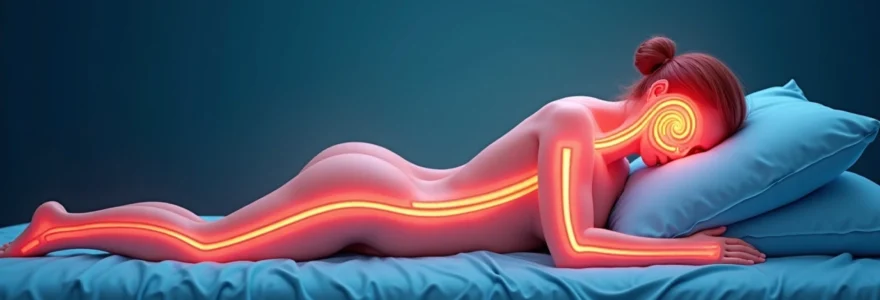
Experiencing head pain when lying down presents a unique clinical challenge that differs markedly from typical headache patterns. Unlike conventional headaches that often improve with rest, positional headaches can intensify when you assume a supine position, creating significant discomfort and sleep disruption. This phenomenon affects millions of individuals worldwide, with underlying mechanisms ranging from benign postural changes to serious neurological conditions requiring immediate medical attention.
The relationship between body position and headache pain involves complex interactions between cerebrospinal fluid dynamics, intracranial pressure fluctuations, and vascular changes. Understanding these mechanisms becomes crucial for proper diagnosis and treatment, particularly as delayed recognition can lead to serious complications. Recent advances in neuroimaging and pressure monitoring have revealed sophisticated pathophysiological processes that govern positional headache development, transforming our approach to these challenging cases.
Intracranial pressure fluctuations and positional headache mechanisms
The brain operates within a delicate pressure equilibrium that can be disrupted by positional changes, leading to significant headache symptoms. When you lie down, gravitational effects alter the distribution of cerebrospinal fluid and blood flow, potentially creating pressure imbalances that trigger pain receptors throughout the cranial cavity. These pressure fluctuations represent the most common underlying mechanism for position-dependent headaches, affecting both acute and chronic pain patterns.
Cerebrospinal fluid dynamics in supine positioning
Cerebrospinal fluid circulation follows predictable patterns that change dramatically with body position. During upright positioning, gravitational forces promote CSF drainage through spinal pathways, maintaining optimal intracranial pressure levels. However, when you assume a horizontal position, this natural drainage mechanism becomes less efficient, potentially leading to fluid accumulation and increased pressure within the cranial vault.
The choroid plexus continues producing approximately 500ml of CSF daily, regardless of body position. This constant production, combined with reduced drainage efficiency in supine positions, can create pressure imbalances that manifest as throbbing, pressure-like headaches. Research indicates that CSF pressure can increase by 5-10mmHg when transitioning from standing to lying positions, sufficient to trigger headache symptoms in susceptible individuals.
Venous congestion and jugular vein compression effects
Venous drainage patterns play a crucial role in positional headache development, particularly involving the jugular venous system. When lying flat, venous return from the brain becomes less efficient, potentially causing congestion within cerebral vessels. This venous pooling increases intracranial volume and pressure, contributing to headache pain that characteristically worsens with recumbent positioning.
Anatomical variations in jugular vein structure can predispose certain individuals to position-dependent venous congestion. Compression of these vessels during specific sleeping positions may further exacerbate venous return problems, creating a cycle of increasing intracranial pressure and progressive headache intensity throughout the night.
Orthostatic intolerance and postural orthostatic tachycardia syndrome (POTS)
Postural orthostatic tachycardia syndrome represents a complex autonomic dysfunction that can paradoxically cause headaches in both upright and supine positions. Individuals with POTS often experience blood pooling and inadequate venous return, leading to compensatory mechanisms that can trigger headache symptoms regardless of body position. The condition affects approximately 1-3 million Americans, with headaches being a prominent symptom in over 80% of cases.
The autonomic nervous system dysfunction underlying POTS creates unpredictable vascular responses to positional changes. When you lie down, the expected normalization of blood pressure and heart rate may not occur, leaving you vulnerable to continued headache symptoms. Treatment approaches often require comprehensive autonomic testing and specialized management protocols to address both the underlying POTS and associated headache patterns.
Arnold-chiari malformation type I and gravitational impact
Arnold-Chiari malformation type I involves herniation of cerebellar tissue through the foramen magnum, creating unique pressure dynamics that worsen with certain positions. This structural abnormality affects CSF flow patterns and can cause severe headaches when lying down, particularly during activities that increase intracranial pressure such as coughing, straining, or sudden position changes.
The gravitational effects on herniated cerebellar tissue create a valve-like mechanism that can obstruct normal CSF circulation. Patients often describe intense occipital headaches that develop within minutes of assuming a supine position, accompanied by neck pain and occasionally neurological symptoms such as dizziness or visual disturbances.
Vascular headache disorders exacerbated by recumbent position
Primary vascular headache disorders demonstrate distinct patterns of position sensitivity, often presenting with characteristic temporal relationships to sleep and circadian rhythms. These conditions involve complex neurovascular mechanisms that become activated or exacerbated by the physiological changes associated with lying down, creating predictable patterns of nocturnal or early morning headache onset.
Cluster headache nocturnal patterns and suprachiasmatic nucleus dysfunction
Cluster headaches exhibit remarkable chronobiological patterns, with approximately 75% of attacks occurring during sleep or rest periods. The suprachiasmatic nucleus, serving as the body’s master circadian clock, appears to malfunction in cluster headache sufferers, creating predictable timing of attacks that often coincide with REM sleep phases. These headaches typically begin 1-3 hours after falling asleep, suggesting a direct relationship between sleep architecture and headache triggering mechanisms.
The hypothalamic involvement in cluster headaches creates unique position-dependent symptoms that worsen when lying down. Autonomic features including lacrimation, nasal congestion, and ptosis become more pronounced in supine positions, likely due to increased parasympathetic activity during rest periods. Recent studies suggest that melatonin dysfunction may contribute to both the circadian timing and position sensitivity of cluster headaches.
Migraine with brainstem aura and positional triggers
Migraine with brainstem aura represents a specialized subtype that demonstrates particular sensitivity to positional changes. The brainstem structures involved in this condition regulate numerous autonomic functions that become disrupted when transitioning between upright and supine positions. Symptoms often include vertigo, tinnitus, and altered consciousness in addition to severe headache pain that intensifies when lying flat.
The vascular changes associated with brainstem aura can create cascading effects that worsen with recumbent positioning. Blood flow alterations in vertebrobasilar circulation may become more pronounced when gravitational effects are removed, leading to increased symptom severity and duration when you attempt to rest or sleep.
Hypnic headache syndrome and Sleep-Related mechanisms
Hypnic headaches occur exclusively during sleep, earning the designation “alarm clock headaches” due to their tendency to wake sufferers at consistent times each night. These headaches affect primarily individuals over age 50 and demonstrate clear relationships to REM sleep phases and circadian rhythm disruptions. The pain typically begins 2-3 hours after sleep onset and can last from 15 minutes to several hours.
The pathophysiology involves hypothalamic dysfunction affecting both sleep regulation and pain processing centers. Melatonin deficiency appears to play a crucial role, with treatment often involving caffeine administration before bedtime or lithium supplementation to restore normal circadian function. The exclusive occurrence during supine positioning suggests that gravitational effects on cerebral blood flow may contribute to headache triggering mechanisms.
Reversible cerebral vasoconstriction syndrome (RCVS) positioning effects
Reversible cerebral vasoconstriction syndrome presents with severe headaches that can worsen significantly with position changes, including lying down. This condition involves temporary narrowing of cerebral blood vessels, creating pressure-sensitive pain patterns that respond dramatically to gravitational changes. The headaches often reach maximum intensity within seconds to minutes of position change, distinguishing them from other headache types.
RCVS commonly occurs in association with pregnancy, certain medications, or recreational drug use. The vasoconstriction creates altered pressure dynamics throughout the cerebral circulation, making patients particularly sensitive to any factor that influences intracranial pressure, including supine positioning during sleep or rest periods.
Secondary headache causes related to supine positioning
Secondary headaches arising from underlying pathological conditions often demonstrate exquisite sensitivity to position changes, particularly worsening when lying down. These headaches serve as important warning signs of potentially serious conditions requiring immediate medical evaluation and intervention.
Idiopathic intracranial hypertension (pseudotumour cerebri) manifestations
Idiopathic intracranial hypertension creates elevated cerebrospinal fluid pressure without an identifiable cause, leading to severe headaches that characteristically worsen when lying down. This condition predominantly affects women of childbearing age, particularly those who are overweight, and can cause permanent vision loss if left untreated. The headaches typically intensify within minutes of assuming a supine position and may be accompanied by visual disturbances, pulsatile tinnitus, and neck pain.
The elevated intracranial pressure in IIH creates a situation where any additional pressure increase, such as that caused by lying flat, becomes intolerable. Patients often sleep in elevated positions or in recliners to minimize headache severity. Diagnostic evaluation requires lumbar puncture to measure opening pressure, which typically exceeds 250mm H2O in affected individuals.
Brain tumour mass effect and elevated ICP symptoms
Brain tumours create space-occupying lesions that disrupt normal intracranial pressure dynamics, leading to headaches that consistently worsen with supine positioning. The mass effect reduces compensatory mechanisms that normally accommodate minor pressure changes, making patients exquisitely sensitive to gravitational effects on cerebrospinal fluid distribution. These headaches often present with progressive worsening over weeks to months, accompanied by neurological symptoms such as weakness, speech changes, or cognitive dysfunction.
The location and size of brain tumours influence the specific pattern of position-dependent headaches. Posterior fossa tumours, which affect cerebrospinal fluid flow pathways, typically cause more severe position sensitivity than supratentorial lesions. Morning headaches that improve throughout the day represent a classic pattern associated with increased intracranial pressure from brain tumours.
Medication overuse headache (MOH) rebound patterns
Medication overuse headaches demonstrate complex patterns that can include position sensitivity, particularly during withdrawal periods when you attempt to reduce medication use. The rebound phenomenon creates sensitized pain pathways that respond excessively to normal physiological stimuli, including gravitational changes associated with lying down. These headaches often occur in individuals using pain medications more than 10-15 days per month for extended periods.
The pathophysiology involves down-regulation of endogenous pain control mechanisms and increased sensitivity of trigeminovascular pathways. When you lie down, normal vascular changes that typically don’t cause pain can trigger severe headache symptoms in individuals with medication overuse. Treatment requires careful withdrawal of overused medications under medical supervision, often requiring hospitalization for severe cases.
Post-lumbar puncture headache and CSF leak complications
Post-lumbar puncture headaches represent a well-characterized complication of diagnostic and therapeutic procedures involving cerebrospinal fluid sampling. These headaches demonstrate classic orthostatic patterns, typically improving when lying down and worsening when upright. However, complications such as subdural hematoma or persistent CSF leak can create paradoxical position sensitivity where headaches worsen in all positions.
The incidence of post-lumbar puncture headache ranges from 10-30% depending on needle size and technique used. Risk factors include young age, female gender, and history of previous headaches. When complications develop, the normal position-dependent pattern may reverse, creating headaches that worsen when lying down due to increased intracranial pressure from subdural fluid collections.
Sleep apnoea and Respiratory-Related headache mechanisms
Sleep apnoea creates unique physiological conditions that can trigger position-dependent headaches through multiple mechanisms involving oxygen saturation, carbon dioxide retention, and intracranial pressure fluctuations. The repeated episodes of airway obstruction during supine sleep create cascading effects on cerebral circulation and pressure dynamics, leading to characteristic morning headaches that may persist throughout the day in severe cases.
Obstructive sleep apnoea affects approximately 25% of adults and demonstrates clear relationships to headache frequency and severity. During apnoeic episodes, oxygen saturation drops while carbon dioxide levels rise, triggering compensatory vasodilation that increases intracranial pressure. These pressure fluctuations can reach significant levels, particularly when combined with the gravitational effects of supine positioning during sleep.
Central sleep apnoea involves different mechanisms but can produce similar headache patterns. The respiratory control dysfunction affects cerebral blood flow regulation, creating unstable pressure dynamics that worsen when you lie flat. Treatment with continuous positive airway pressure typically resolves position-dependent headaches within days to weeks of initiating therapy, confirming the direct relationship between sleep-disordered breathing and headache symptoms.
Studies indicate that up to 50% of individuals with sleep apnoea experience morning headaches, with severity correlating directly to apnoea-hypopnoea index scores and oxygen desaturation levels during sleep.
Cervical spine disorders and cervicogenic headache patterns
Cervical spine disorders create unique headache patterns that can worsen significantly when lying down, particularly when pillow support is inadequate or sleeping position creates additional cervical strain. Cervicogenic headaches originate from dysfunction in the upper cervical spine, specifically the C1-C3 segments, and demonstrate clear relationships to head and neck positioning during rest periods.
The trigeminocervical complex integrates sensory input from both trigeminal and upper cervical nerve roots, creating referred pain patterns that can be triggered or exacerbated by sustained neck positions during sleep. Anatomical studies demonstrate direct connections between upper cervical structures and trigeminal pain pathways, explaining how cervical dysfunction can produce typical headache symptoms that worsen with specific positions.
Facet joint dysfunction, atlantooccipital joint restrictions, and suboccipital muscle tension all contribute to cervicogenic headache patterns. When you lie down without proper cervical support, these structures experience altered mechanical stress that can trigger or intensify headache symptoms. The pain typically begins in the suboccipital region and radiates forward to involve temporal and frontal areas, often accompanied by neck stiffness and restricted range of motion.
Treatment approaches for cervicogenic headaches focus on addressing underlying cervical dysfunction through manual therapy, postural correction, and ergonomic improvements. Diagnostic blocks of specific cervical structures can confirm the diagnosis and guide targeted treatment interventions. Success rates for properly diagnosed and treated cervicogenic headaches exceed 80% when comprehensive approaches addressing both mechanical dysfunction and postural factors are implemented.
Diagnostic evaluation and red flag symptoms assessment
Proper diagnostic evaluation of position-dependent headaches requires systematic assessment of both benign and potentially serious underlying causes. The clinical history should focus on specific positional relationships, timing patterns, associated symptoms, and response to position changes. Red flag symptoms that warrant immediate medical attention include sudden onset severe headache, neurological symptoms, fever with neck stiffness, and headaches that progressively worsen over days to weeks.
Neuroimaging plays a crucial role in evaluating position-dependent headaches, particularly when secondary causes are suspected. Magnetic resonance imaging with and without contrast can identify structural abnormalities, evidence of increased intracranial pressure, and signs of cerebrospinal fluid leak. Specialized imaging techniques including MR venography and time-of-flight angiography may be necessary to evaluate vascular causes of position-sensitive headaches.
Lumbar puncture with pressure measurement becomes essential when idiopathic intracranial hypertension or other pressure-related disorders are suspected. Opening pressure measurements above 250mm H2O in non-obese individuals or above 280mm H2O in obese patients suggest elevated intracranial pressure requiring further evaluation and treatment. Cerebrospinal fluid analysis can identify infectious, inflammatory, or malignant causes of secondary headache syndromes.
The presence of pap
illedema, altered mental status, or focal neurological deficits should prompt immediate emergency evaluation to rule out life-threatening conditions such as acute hydrocephalus, intracranial hemorrhage, or brain tumor.
Specialized testing may include sleep studies to evaluate for sleep apnea, autonomic testing for POTS evaluation, and ophthalmologic examination to assess for papilledema or visual field defects. Continuous intracranial pressure monitoring may be necessary in select cases where pressure fluctuations are suspected but not clearly demonstrated through standard diagnostic approaches. These comprehensive evaluations ensure accurate diagnosis and appropriate treatment planning for complex position-dependent headache syndromes.
The differential diagnosis of position-dependent headaches requires careful consideration of temporal patterns, associated symptoms, and response to therapeutic interventions. Early recognition and treatment of secondary causes can prevent serious complications including permanent neurological disability, vision loss, or even death in cases involving elevated intracranial pressure or structural brain abnormalities.
Clinical studies demonstrate that systematic evaluation protocols can achieve diagnostic accuracy rates exceeding 90% for position-dependent headaches when appropriate imaging, pressure measurements, and specialized testing are utilized in conjunction with detailed clinical assessment.
Treatment decisions should be individualized based on specific diagnostic findings, symptom severity, and patient response to initial interventions. Multidisciplinary approaches involving neurology, sleep medicine, and pain management specialists often provide optimal outcomes for complex cases involving multiple contributing factors to position-dependent headache patterns.
 Good health cannot be bought, but rather is an asset that you must create and then maintain on a daily basis.