
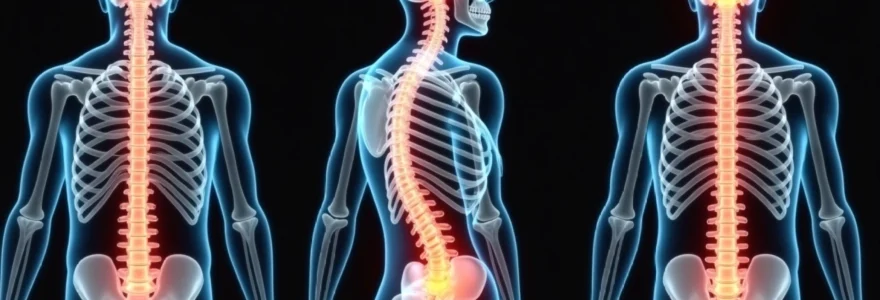
Retrolisthesis of L2 on L3 represents a complex spinal condition where the second lumbar vertebra shifts backward relative to the third lumbar vertebra, creating significant biomechanical and neurological implications. This posterior displacement disrupts the natural alignment of the lumbar spine, potentially affecting nerve function, spinal stability, and overall quality of life. Unlike the more commonly discussed anterolisthesis where vertebrae slip forward, retrolisthesis involves a backward slippage that can be particularly challenging to diagnose and treat effectively.
The condition occurs predominantly in the lumbar region due to the increased weight-bearing responsibilities of these vertebrae and their susceptibility to degenerative changes. Understanding the intricacies of L2-L3 retrolisthesis requires a comprehensive examination of spinal anatomy, classification systems, diagnostic protocols, and treatment approaches. This knowledge becomes essential for healthcare professionals managing patients with this condition and for individuals seeking to understand their diagnosis.
Anatomical structure and biomechanics of L2-L3 vertebral segment
The L2-L3 vertebral segment represents a crucial component of the lumbar spine’s structural integrity and functional capacity. This region bears significant mechanical loads whilst maintaining flexibility for movement patterns essential to daily activities. The second and third lumbar vertebrae exhibit distinct anatomical characteristics that make them particularly susceptible to retrolisthesis under certain pathological conditions.
Lumbar vertebrae morphology and intervertebral disc composition
The L2 and L3 vertebrae possess robust vertebral bodies designed to withstand compressive forces exceeding several times body weight during routine activities. These vertebrae feature thick cortical bone surrounding a trabecular interior, providing optimal strength-to-weight ratios. The vertebral bodies measure approximately 45-50mm in anterior-posterior diameter and 50-55mm in transverse width, with slight variations between individuals based on body habitus and genetic factors.
The intervertebral disc situated between L2 and L3 consists of a central nucleus pulposus surrounded by concentric layers of annulus fibrosus. This disc typically measures 12-15mm in height and contains approximately 80-85% water content in healthy individuals. The nucleus pulposus comprises proteoglycans and type II collagen, whilst the annulus fibrosus contains predominantly type I collagen arranged in alternating oblique layers. This sophisticated architecture enables the disc to distribute loads evenly whilst permitting controlled spinal movement.
Facet joint orientation and zygapophyseal articulation patterns
The facet joints connecting L2 and L3 exhibit a sagittal orientation of approximately 45 degrees from the coronal plane, facilitating flexion and extension movements whilst restricting excessive rotation. These synovial joints feature articular cartilage thickness ranging from 2-4mm and are surrounded by joint capsules containing proprioceptive nerve endings crucial for spinal stability and coordination.
The superior articular processes of L3 articulate with the inferior articular processes of L2, creating a mechanical constraint system that normally prevents posterior displacement. However, degenerative changes affecting these joints can compromise their restraining function, potentially contributing to retrolisthesis development. The joint surfaces may undergo osteoarthritic changes, including cartilage thinning, osteophyte formation, and capsular laxity.
Ligamentous support systems: anterior and posterior longitudinal ligaments
The anterior longitudinal ligament extends along the anterior aspect of the vertebral bodies, providing resistance to hyperextension and contributing to anterior spinal stability. This ligament measures approximately 2-3mm in thickness at the L2-L3 level and consists of longitudinal collagen fibres with excellent tensile strength properties. Degeneration or injury to this structure can reduce anterior spinal support, potentially facilitating retrolisthesis.
The posterior longitudinal ligament, though narrower than its anterior counterpart, plays a crucial role in preventing posterior disc herniation and maintaining posterior spinal integrity. This ligament typically measures 1-2mm in thickness and becomes progressively narrower in the lumbar region. Additionally, the ligamentum flavum, interspinous ligaments, and supraspinous ligaments contribute to segmental stability through their restraining effects on excessive spinal motion.
Neural foramen dimensions and spinal canal diameter measurements
The neural foramina at the L2-L3 level typically measure 18-20mm in height and 8-10mm in width, providing adequate space for nerve root passage under normal circumstances. These dimensions can be significantly reduced in retrolisthesis cases, as the posterior displacement of L2 may narrow both the central spinal canal and the lateral nerve root canals.
The spinal canal at this level normally measures approximately 15-20mm in anterior-posterior diameter and 20-25mm in transverse diameter. Retrolisthesis can reduce these dimensions by 20-40% in severe cases, creating potential for neurological compression. The degree of canal narrowing correlates directly with the severity of retrolisthesis and the presence of concomitant degenerative changes such as ligamentum flavum hypertrophy or facet joint osteophytes.
Retrolisthesis classification systems and grading criteria
Understanding the classification of retrolisthesis provides essential insight into the severity, prognosis, and treatment requirements for individual cases. Multiple classification systems have been developed to standardise the assessment and management of this condition, each offering unique perspectives on the pathophysiological processes involved.
Meyerding classification scale for retrolisthesis severity assessment
The Meyerding classification system, originally developed for anterolisthesis, has been adapted for retrolisthesis assessment. This system divides the superior endplate of the inferior vertebra into four equal quarters, measuring the degree of posterior displacement of the superior vertebra. Grade I retrolisthesis involves displacement of less than 25% of the vertebral body width, typically measuring 3-6mm of posterior slippage.
Grade II retrolisthesis encompasses displacement between 25-50% of the vertebral body width, representing moderate instability with increased risk of neurological compromise. Grade III involves 50-75% displacement, whilst Grade IV represents complete displacement exceeding 75% of the vertebral body width. Grades III and IV are extremely rare in retrolisthesis compared to anterolisthesis, as the anatomical constraints of the spine typically prevent such severe posterior displacement.
The clinical significance of each grade varies considerably, with Grade I cases often remaining asymptomatic or producing minimal symptoms. However, even mild retrolisthesis can become symptomatic when combined with degenerative changes, spinal stenosis, or inflammatory conditions. Grade II and higher classifications typically require more aggressive management approaches and carry increased risks of progressive neurological deterioration.
Complete versus incomplete retrolisthesis differentiation
Complete retrolisthesis occurs when the affected vertebra shifts posteriorly relative to both the vertebra above and below it, creating a uniform displacement pattern. This type typically results from global instability affecting multiple motion segments and may indicate more extensive degenerative changes or traumatic injury. Complete retrolisthesis often presents with more pronounced symptoms due to its effect on multiple spinal levels.
Incomplete retrolisthesis involves posterior displacement relative to only one adjacent vertebra, either superior or inferior. This pattern suggests more localised pathology and may have better prognosis for conservative treatment. The distinction between complete and incomplete patterns helps guide treatment decisions and provides insight into the underlying pathophysiological mechanisms responsible for the displacement.
Stairstepped retrolisthesis and partial retrolisthesis variants
Stairstepped retrolisthesis represents a complex pattern where the affected vertebra demonstrates posterior displacement relative to the superior vertebra but anterior displacement relative to the inferior vertebra. This creates a characteristic staircase appearance on lateral radiographs and suggests multilevel instability with varying degrees of displacement at different levels.
Partial retrolisthesis involves incomplete posterior displacement affecting only a portion of the vertebral body, often associated with rotational components or asymmetric degenerative changes. These variants require careful radiological assessment using multiple imaging planes to fully characterise the displacement pattern and plan appropriate treatment strategies. Dynamic imaging studies may be necessary to assess the behaviour of these complex displacement patterns during spinal movement.
Degenerative versus traumatic retrolisthesis aetiological categories
Degenerative retrolisthesis develops gradually over years or decades due to progressive disc degeneration, facet joint arthropathy, and ligamentous laxity. This type typically affects individuals over 50 years of age and is associated with other degenerative spinal conditions such as spinal stenosis and spondylosis. The displacement usually progresses slowly, allowing for adaptive changes in surrounding tissues.
Traumatic retrolisthesis results from acute injury mechanisms such as hyperflexion injuries, compression fractures, or high-energy trauma. This type can occur at any age and may be associated with other spinal injuries including fractures, ligamentous tears, or disc herniations. Traumatic cases often present with acute symptoms and may require urgent surgical intervention to prevent neurological deterioration.
Pathophysiological mechanisms behind L2 on L3 retrolisthesis
The development of retrolisthesis at the L2-L3 level involves complex interactions between mechanical, biological, and genetic factors that compromise spinal stability over time. Understanding these mechanisms provides crucial insight into prevention strategies and treatment approaches. The pathophysiology begins with disc degeneration, which represents the most common initiating factor in degenerative retrolisthesis cases.
Disc degeneration starts with a reduction in proteoglycan content within the nucleus pulposus, leading to decreased water retention and loss of disc height. This process typically begins in the third decade of life but accelerates significantly after age 40. As the disc loses height, the load distribution across the motion segment changes, placing increased stress on the facet joints and posterior ligamentous structures. The altered biomechanics create a cascade of degenerative changes that can ultimately result in segmental instability.
Facet joint degeneration follows disc height loss, as these joints experience increased loading and altered movement patterns. The cartilage surfaces become irregular, joint capsules stretch, and osteophytes develop in response to abnormal stress patterns. This process compromises the facet joints’ ability to resist posterior displacement forces, particularly when combined with weakened disc structures. Ligamentous laxity develops concurrently, as chronic abnormal loading patterns cause progressive stretching and weakening of the supporting ligaments.
The posterior longitudinal ligament and ligamentum flavum may undergo hypertrophic changes in response to chronic instability, paradoxically contributing to spinal canal narrowing whilst attempting to provide additional stability. These adaptive changes often occur years before clinical symptoms develop, highlighting the insidious nature of degenerative retrolisthesis. Environmental factors such as occupational loading, smoking, and genetic predisposition can accelerate these degenerative processes.
Research indicates that individuals with specific genetic variants affecting collagen synthesis may be up to three times more likely to develop symptomatic retrolisthesis compared to the general population.
The biomechanical consequences of L2-L3 retrolisthesis extend beyond the local motion segment to affect global spinal alignment and function. Posterior displacement of L2 alters the normal lumbar lordosis, potentially creating compensatory changes throughout the spine. The thoracolumbar junction may develop increased kyphosis, whilst the lower lumbar segments often demonstrate hyperlordosis as the spine attempts to maintain overall sagittal balance.
Neural compression mechanisms in retrolisthesis differ significantly from those seen in anterolisthesis. The posterior displacement primarily affects the central spinal canal rather than the neural foramina, though both can be compromised in severe cases. The ligamentum flavum may buckle inward due to the altered vertebral relationships, creating additional mass effect on neural structures. This combination of bony and soft tissue compression can result in neurogenic claudication symptoms even with relatively mild degrees of displacement.
Radiological imaging techniques and diagnostic protocols
Accurate diagnosis of L2-L3 retrolisthesis requires a systematic approach to radiological imaging, utilising multiple modalities to comprehensively assess the extent of displacement, associated degenerative changes, and potential neurological complications. The diagnostic process must distinguish retrolisthesis from other spinal pathologies whilst quantifying the severity and functional impact of the condition.
Plain radiography: lateral and Flexion-Extension views analysis
Standing lateral radiographs remain the gold standard for initial retrolisthesis detection and measurement. These images must be obtained with the patient in an upright position to accurately assess the degree of displacement under physiological loading conditions. The lateral view allows for precise measurement of posterior displacement using established reference lines such as George's line or the posterior vertebral body line method.
Flexion-extension radiographs provide crucial information about segmental instability and dynamic displacement patterns. These functional images may reveal increased displacement during flexion or demonstrate reducibility of the retrolisthesis with extension positioning. Dynamic instability, defined as >3mm of translation or >10 degrees of angulation between flexion and extension positions, significantly influences treatment decisions and prognosis.
Additional radiographic signs supporting the diagnosis include disc space narrowing, facet joint degeneration, and the presence of traction osteophytes. The vacuum phenomenon , characterised by gas accumulation within degenerated discs, may be visible on lateral radiographs and indicates advanced disc degeneration. Careful analysis of spinous process alignment can also provide insights into rotational components of the displacement.
MRI T1 and T2-Weighted sequences for soft tissue assessment
Magnetic resonance imaging provides superior soft tissue contrast compared to plain radiography, enabling detailed assessment of disc morphology, neural compression, and associated pathological changes. T2-weighted sagittal sequences demonstrate disc hydration levels, with decreased signal intensity indicating progressive degeneration. The degree of disc desiccation correlates with the risk of further displacement and treatment response.
T1-weighted sequences excel at demonstrating bony anatomy and can identify vertebral body marrow changes associated with chronic instability. These sequences may reveal sclerotic changes in the vertebral endplates adjacent to degenerated discs, indicating abnormal stress patterns. Fat-suppressed sequences can highlight inflammatory changes within the disc or surrounding soft tissues.
Axial MRI sequences provide critical information about spinal canal dimensions and neural compression patterns. The cross-sectional area of the spinal canal can be measured precisely, with values below 100mm² indicating significant stenosis. Neural foraminal dimensions should also be assessed on axial images, as retrolisthesis can cause both central and lateral stenosis through different mechanisms.
CT myelography applications in complex retrolisthesis cases
Computed tomography myelography combines the bony detail of CT scanning with contrast enhancement of neural structures, providing excellent visualisation of spinal canal compromise in complex cases. This technique proves particularly valuable when MRI is contraindicated or provides insufficient detail due to metallic artifacts from previous surgery or implanted devices.
The procedure involves intrathecal injection of contrast material followed by CT imaging, allowing for precise measurement of canal dimensions and identification of compression sites. CT myelography can demonstrate subtle degrees of neural compression that may not be apparent on conventional MRI, particularly in cases with mild retrolisthesis but disproportionate symptoms.
Post-myelography CT images can be reconstructed in multiple planes, providing detailed three-dimensional assessment of the spinal anatomy. This capability proves essential for surgical planning, as it allows precise localisation of compression points and assessment of the adequacy of proposed decompression procedures. The technique also enables dynamic assessment when performed in different patient positions.
Dynamic imaging: kinetic MRI and functional radiographs
Kinetic MRI represents an advanced imaging technique that allows real-time assessment of spinal motion and neural compression patterns during physiological movement. This technology can identify dynamic stenosis that may not be apparent on static images, providing crucial information for treatment planning in patients with positional symptoms.
The technique involves acquiring rapid MRI sequences whilst the patient performs controlled spinal movements within the scanner bore. These images can demonstrate how retrolisthesis affects neural structures during flexion, extension, and lateral bending movements. Dynamic imaging may reveal intermittent neural compression that explains symptom variability and helps optimise treatment approaches.
Functional radiographs, including stress views and weight-bearing studies, complement kinetic MRI by providing information about spinal stability under various loading conditions. These studies can identify cases where retrolisthesis increases significantly under axial loading, suggesting the need for stabilisation procedures rather than simple decompression alone.
Clinical manifestations an
d neurological complications
The clinical presentation of L2-L3 retrolisthesis varies considerably depending on the degree of displacement, associated degenerative changes, and individual patient factors. Many patients with mild retrolisthesis remain asymptomatic for extended periods, with the condition discovered incidentally during imaging for unrelated complaints. However, as the displacement progresses or develops complications, patients typically experience a characteristic pattern of symptoms that can significantly impact their quality of life and functional capacity.
Lower back pain represents the most common presenting symptom, typically described as a deep, aching discomfort localised to the L2-L3 region. This pain often exhibits mechanical characteristics, worsening with prolonged standing, walking, or spinal extension activities. Patients frequently report morning stiffness that improves with gentle movement, though excessive activity may exacerbate symptoms. The pain pattern differs from typical disc herniation pain, as it tends to be more centralised and less likely to radiate into the lower extremities unless significant neural compression occurs.
Neurogenic claudication develops in approximately 30-40% of patients with symptomatic L2-L3 retrolisthesis, particularly when central spinal stenosis accompanies the vertebral displacement. Patients describe leg heaviness, cramping, or weakness that develops during walking and improves with rest or forward flexion postures. This symptom complex results from dynamic compression of neural structures during upright activities, with the retrolisthesis contributing to baseline canal narrowing that becomes critical during physiological loading.
Radicular symptoms may manifest when the retrolisthesis compromises neural foraminal dimensions or creates lateral recess stenosis. The L2 nerve root, emerging between the displaced vertebrae, is particularly vulnerable to compression forces. Patients may experience numbness, tingling, or burning sensations extending into the anterior and medial thigh regions, corresponding to the L2 dermatome distribution. Motor weakness affecting hip flexion and thigh adduction may develop in severe cases, though complete motor paralysis is extremely rare.
Studies indicate that patients with L2-L3 retrolisthesis and concurrent spinal stenosis experience symptom relief in 85% of cases when the spinal canal cross-sectional area is restored to greater than 150mm² through surgical decompression.
Balance and coordination difficulties may emerge as secondary complications, particularly in elderly patients with multilevel spinal involvement. The altered spinal alignment disrupts proprioceptive feedback mechanisms, whilst concurrent neural compression can affect lower extremity sensation and motor control. These balance impairments significantly increase fall risk and may necessitate assistive devices or environmental modifications to maintain safety during daily activities.
Bowel and bladder dysfunction represents a rare but serious complication of severe L2-L3 retrolisthesis with significant central canal compromise. Though the conus medullaris typically terminates above this level, severe stenosis can affect descending neural pathways and contribute to cauda equina syndrome. Patients reporting any changes in bladder or bowel function require urgent evaluation and potential emergency intervention to prevent permanent neurological deficits.
Conservative treatment modalities and surgical interventions
The management of L2-L3 retrolisthesis follows a systematic approach that prioritises conservative interventions whilst maintaining readiness for surgical treatment when indicated. The choice between conservative and surgical management depends on symptom severity, neurological complications, functional impairment, and patient-specific factors including age, comorbidities, and treatment preferences. Most patients with mild to moderate retrolisthesis respond favourably to comprehensive conservative treatment programmes when implemented early and consistently.
Physical therapy forms the cornerstone of conservative management, focusing on core strengthening, spinal stabilisation, and postural correction. Therapeutic exercises target the deep abdominal muscles, multifidus, and erector spinae to provide enhanced segmental support around the L2-L3 motion segment. McKenzie exercises emphasising spinal extension may help reduce posterior displacement through positional reduction techniques, though these must be carefully supervised to avoid symptom exacerbation.
Manual therapy techniques including spinal mobilisation and manipulation can provide symptomatic relief and may help restore normal segmental motion patterns. Flexion-distraction therapy proves particularly beneficial, as it combines gentle traction forces with controlled spinal flexion to decompress neural structures whilst maintaining spinal stability. These techniques should be performed by experienced practitioners familiar with retrolisthesis pathomechanics to ensure safety and effectiveness.
Pharmacological interventions play a supporting role in symptom management, with nonsteroidal anti-inflammatory drugs (NSAIDs) providing both analgesic and anti-inflammatory effects. Muscle relaxants may help address secondary muscle spasm, whilst neuropathic pain medications such as gabapentin or pregabalin can effectively manage radicular symptoms. Topical analgesics offer localised relief without systemic side effects, making them particularly suitable for elderly patients or those with medication sensitivities.
Epidural steroid injections represent an intermediate treatment option between conservative management and surgical intervention. These procedures can provide significant temporary relief for patients with radicular symptoms or neurogenic claudication, potentially allowing time for natural healing or improved response to physical therapy. Transforaminal epidural injections target specific nerve roots affected by the retrolisthesis, whilst caudal or interlaminar approaches address more generalised inflammatory responses.
Activity modification and ergonomic counselling help patients avoid aggravating activities whilst maintaining appropriate activity levels. Patients learn proper lifting techniques, optimal sleeping positions, and workplace modifications to reduce spinal stress. Weight management programmes benefit overweight patients by reducing mechanical loading on the affected motion segment. Smoking cessation counselling proves essential, as tobacco use significantly impairs disc nutrition and healing capacity.
Surgical intervention becomes necessary when conservative treatments fail to provide adequate symptom relief or when progressive neurological deficits develop. The primary surgical goals include neural decompression, restoration of spinal alignment, and achievement of segmental stability. Posterior lumbar interbody fusion (PLIF) or transforaminal lumbar interbody fusion (TLIF) procedures effectively address both the instability and neural compression associated with L2-L3 retrolisthesis.
Decompression procedures focus on enlarging the spinal canal and neural foramina through removal of hypertrophied ligamentum flavum, facet joint osteophytes, and disc material contributing to neural compression. Bilateral laminotomy or laminectomy may be required depending on the extent of stenosis. However, extensive posterior decompression without fusion can potentially worsen the retrolisthesis by removing stabilising structures, necessitating careful surgical planning and patient selection.
Spinal fusion techniques aim to eliminate motion at the L2-L3 segment whilst maintaining or restoring normal spinal alignment. Modern fusion procedures utilise interbody cages filled with bone graft material to restore disc height and lumbar lordosis. Posterior instrumentation with pedicle screws and rods provides immediate stability whilst fusion occurs over 6-12 months. The choice of fusion technique depends on the degree of displacement, bone quality, and surgeon experience.
Minimally invasive surgical approaches offer potential advantages including reduced tissue trauma, decreased postoperative pain, and faster recovery times. Minimally invasive TLIF procedures can achieve excellent fusion rates whilst minimising surgical morbidity. However, these techniques require specialised training and may not be suitable for all cases, particularly those requiring extensive decompression or correction of significant deformity.
Postoperative rehabilitation follows a structured protocol designed to optimise fusion rates whilst preventing complications. Early mobilisation with appropriate bracing helps maintain spinal alignment during the healing phase. Progressive strengthening exercises begin once fusion is confirmed, typically at 3-6 months postoperatively. Long-term outcomes depend on successful fusion achievement, maintenance of correction, and patient adherence to activity recommendations. Return to full activities generally occurs 6-12 months after surgery, with most patients experiencing significant improvement in pain and function compared to their preoperative status.
 Good health cannot be bought, but rather is an asset that you must create and then maintain on a daily basis.