
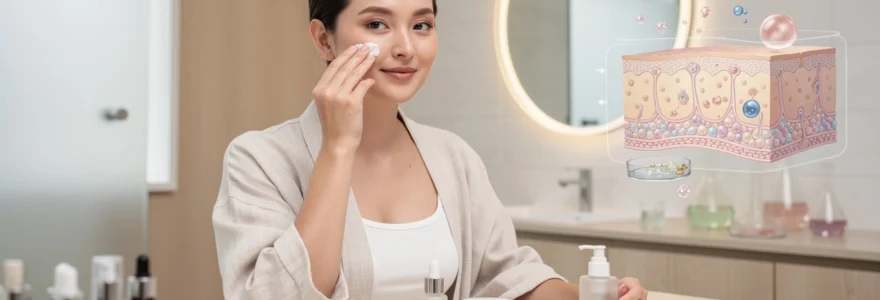
The beauty industry has witnessed a remarkable shift away from complex multi-step routines towards streamlined skincare approaches. This minimalist philosophy challenges the long-held belief that more products equate to better results. Scientific evidence increasingly supports the notion that excessive product layering can overwhelm the skin’s natural repair mechanisms, leading to irritation, compromised barrier function, and paradoxically worse outcomes than simplified regimens. The skin operates as a sophisticated ecosystem that thrives on consistency and gentle intervention rather than aggressive manipulation through countless formulations.
Modern dermatology recognises that the skin’s innate ability to self-regulate and repair can be hindered by product overload. When you strip away unnecessary steps and focus on evidence-based active ingredients, the skin often responds more favourably. This approach particularly benefits individuals with sensitive skin conditions, compromised barriers, or those experiencing product-induced irritation. The minimalist movement in skincare represents a return to scientific fundamentals rather than marketing-driven complexity.
Dermatological science behind minimalist skincare efficacy
The scientific foundation for minimalist skincare lies in understanding how the skin functions as a complex biological system. Research demonstrates that excessive product application can disrupt the skin’s natural pH balance, alter the lipid matrix composition, and overwhelm the penetration pathways. When you reduce the number of products, you allow each formulation to work more effectively without interference from competing ingredients or conflicting delivery systems.
Skin barrier function and lipid bilayer restoration
The stratum corneum operates through a sophisticated arrangement of corneocytes embedded within intercellular lipids, primarily ceramides, cholesterol, and free fatty acids. Minimalist approaches preserve this delicate architecture by avoiding excessive cleansing and product layering that can strip essential lipids. Studies indicate that simplified routines maintain optimal barrier function more effectively than complex regimens that may disrupt the natural lipid ratios through over-manipulation.
When you apply multiple products simultaneously, the cumulative effect of surfactants, emulsifiers, and penetration enhancers can compromise barrier integrity. This disruption leads to increased transepidermal water loss and heightened sensitivity to environmental stressors. A streamlined approach using fewer, high-quality formulations allows the barrier to maintain its protective capacity while still receiving targeted therapeutic benefits.
Transepidermal water loss reduction through simplified regimens
Transepidermal water loss (TEWL) serves as a critical indicator of skin barrier health. Research shows that excessive product use can paradoxically increase TEWL despite the presence of moisturising ingredients. This occurs because frequent application and removal of products, particularly those containing high concentrations of active ingredients, can create microscopic disruptions in the barrier structure.
Minimalist regimens typically demonstrate superior TEWL measurements compared to complex routines. The reduced frequency of product application minimises mechanical disruption while allowing key barrier-supporting ingredients like ceramides and hyaluronic acid to work optimally. This preservation of natural water retention mechanisms leads to improved hydration levels and enhanced skin comfort over time.
Microbiome preservation and commensal bacteria balance
The skin microbiome comprises diverse bacterial communities that play crucial roles in immune function, pH regulation, and pathogen resistance. Excessive use of antimicrobial preservatives, frequent cleansing, and product cocktailing can significantly disrupt these beneficial microbial populations. Minimalist approaches help preserve microbiome diversity by reducing exposure to potentially disruptive ingredients.
Studies demonstrate that simplified skincare routines maintain healthier microbiome profiles compared to complex regimens. When you limit the number of preservative systems and antimicrobial agents contacting your skin, you support the growth of beneficial bacteria while preventing the overgrowth of problematic species. This balance contributes to improved skin health and reduced susceptibility to inflammatory conditions.
Contact dermatitis prevention via ingredient minimisation
Contact dermatitis represents one of the most compelling arguments for minimalist skincare. The probability of developing allergic reactions increases exponentially with the number of ingredients used. Each additional product introduces potential sensitisers, including fragrances, preservatives, emulsifiers, and botanical extracts that
can act as triggers in susceptible individuals. By minimising the overall ingredient load through a minimalist skincare routine, you effectively reduce the number of potential allergens contacting the skin each day. This approach is particularly valuable for people with atopic dermatitis, rosacea, or a history of cosmetic allergies, where even low-level exposure to fragrance or certain preservatives can accumulate into chronic irritation.
From a dermatological perspective, every product you remove from your routine reduces your statistical risk of irritant or allergic contact dermatitis. Patch-testing studies consistently show that common cosmetic allergens include fragrance mixes, certain formaldehyde-releasing preservatives, and some botanical extracts marketed as “natural”. A streamlined, fragrance-free, dye-free regimen built around essential functions (cleanse, treat, protect) limits exposure to these triggers and makes it far easier to identify the culprit if a reaction does occur.
Core active ingredients analysis: retinoids, niacinamide, and ceramides
A minimalist skincare routine does not mean abandoning active ingredients; instead, it emphasises strategic selection of those with the strongest evidence base. Rather than layering multiple overlapping serums, you prioritise a small number of well-tolerated actives that address your primary concerns. Retinoids, niacinamide, ceramides, and hyaluronic acid are among the most studied ingredients for barrier support, anti-ageing, and skin tone improvement, making them ideal anchors in a simplified regimen.
By focusing on a concise set of hero ingredients, you reduce the likelihood of ingredient conflicts while still achieving meaningful clinical outcomes. This is particularly useful if you are trying to manage acne, hyperpigmentation, or photoageing without navigating a confusing array of specialised products. The goal is to let each active operate within an environment that is calm, predictable, and biologically supportive.
Tretinoin efficacy in streamlined anti-ageing protocols
Tretinoin, a prescription-strength retinoid, remains the gold standard for topical anti-ageing and acne management. Clinical trials over several decades have shown that regular tretinoin use improves fine lines, mottled pigmentation, and rough texture by stimulating collagen production and normalising cell turnover. However, tretinoin is also inherently irritating, which is why a minimalist skincare approach around it can be so effective.
When tretinoin is introduced into an already crowded routine filled with acids, scrubs, and multiple serums, the cumulative irritation often leads to peeling, burning, and poor adherence. In streamlined anti-ageing protocols, tretinoin is typically paired with a gentle cleanser and a barrier-supporting moisturiser, sometimes with ceramides or glycerin. This minimalist structure reduces competing actives, allows gradual tolerance to build, and often delivers better long-term results precisely because you are able to use tretinoin consistently rather than stopping and starting due to irritation.
Niacinamide multifunctionality: sebum regulation and inflammation control
Niacinamide (vitamin B3) is a prime example of how one well-chosen ingredient can replace several specialised products in a minimalist skincare routine. Studies show that niacinamide at concentrations of 2–5% can help regulate sebum output, reduce redness, improve skin barrier function, and even lighten post-inflammatory hyperpigmentation. Instead of layering separate products for oil-control, brightening, and calming, a single well-formulated niacinamide serum can address all three.
Because niacinamide is generally well tolerated across skin types, it integrates smoothly into reduced-step regimens without exacerbating sensitivity. It also plays well with most other actives at typical cosmetic pH ranges, making it easier to combine with retinoids or ceramide-based moisturisers. For those dealing with combination skin, adult acne, or rosacea-prone redness, niacinamide offers a low-risk, high-reward option that fits perfectly within a “less but better” philosophy.
Ceramide complex integration for barrier repair
Ceramides are key components of the stratum corneum lipid matrix, and their depletion has been linked to dryness, eczema, and increased transepidermal water loss. Incorporating a ceramide-rich moisturiser into a minimalist skincare routine can therefore have outsized benefits, particularly when other potential barrier disruptors have been removed. Clinical data demonstrate that moisturisers containing ceramides, cholesterol, and fatty acids in physiologic ratios can significantly improve barrier recovery after damage.
In practice, this means that instead of cycling through multiple “hydrating” products, you may achieve superior comfort and resilience by committing to a single, well-designed ceramide moisturiser used morning and night. Over time, this helps stabilise the skin so that other actives—such as retinoids or exfoliating acids used sparingly—are better tolerated. Think of ceramides as the mortar between the bricks of your skin barrier: when the mortar is intact, you need fewer external supports.
Hyaluronic acid molecular weight considerations
Hyaluronic acid (HA) is another cornerstone ingredient in minimalist skincare, but not all HA molecules behave in the same way. High-molecular-weight hyaluronic acid primarily sits on the skin surface, drawing water into the upper layers and providing a plumping, cushioning effect. Low-molecular-weight fragments can penetrate more deeply, but at certain sizes they may also trigger inflammatory signalling rather than soothing the skin.
For a simplified routine that prioritises barrier health, formulations that combine multiple molecular weights of HA at moderate concentrations can offer balanced hydration without the need for several separate serums. This tailored approach reduces product redundancy and keeps the focus on functional outcomes like improved elasticity, smoother texture, and reduced tightness. When paired with occlusive or emollient components, such as squalane or ceramides, HA can help maintain hydration with minimal product layering.
Product layering chemistry and ingredient interactions
One of the most underappreciated advantages of minimalist skincare is the way it sidesteps complex chemical interactions between products. Every time you layer another serum, toner, or essence, you are also combining different pH levels, solvents, emulsifiers, and actives that may not be designed to coexist. Over time, this can lead to reduced efficacy or unexpected irritation, even if each product appears well formulated in isolation.
By limiting the number of steps in your skincare routine, you intrinsically simplify the underlying chemistry. Ingredients remain closer to their intended pH ranges, stabilising agents are not forced to compete, and penetration enhancers are less likely to drive unwanted compounds into deeper layers of the skin. This restraint is especially important where highly active molecules like vitamin C, AHAs, or peptides are concerned.
Ph compatibility between vitamin C and AHA formulations
Vitamin C (ascorbic acid) and alpha hydroxy acids (AHAs) are both pH-dependent actives that require acidic environments to function optimally. Ascorbic acid serums are usually formulated around pH 3–3.5 to maximise stability and skin penetration, while glycolic or lactic acid exfoliants also inhabit a similar low pH range. When these formulas are layered freely in a maximalist routine, you can create excessive acidity on the skin surface, amplifying irritation and barrier disruption.
Minimalist skincare often recommends choosing either a daily antioxidant vitamin C serum or a carefully timed AHA exfoliant, rather than both in the same morning or evening routine. This selective approach respects the skin’s natural pH gradient and prevents cumulative acid loading. If you do wish to use both, alternating days or separating their application by several hours under professional guidance can help preserve benefits without overwhelming the barrier.
Peptide stability in reduced-step skincare routines
Peptides—short chains of amino acids—are increasingly popular in anti-ageing and barrier-support products. However, many peptides are sensitive to oxidation, hydrolysis, and unfavourable pH shifts. When layered under or over highly acidic products, or mixed with incompatible solvents, their structure can degrade, rendering them less effective. In crowded routines, these subtle incompatibilities are hard to detect, which may explain why some consumers see little benefit from peptide serums.
A minimalist routine that limits competing actives creates a more controlled environment in which peptide formulations can remain intact and perform as intended. For example, using a peptide serum after a gentle, pH-balanced cleanser and before a simple moisturiser reduces the number of variables that can destabilise the peptide structures. This is akin to giving a delicate instrument a quiet room in which to play, rather than trying to hear it over a noisy orchestra of other actives.
Emulsification systems: oil-in-water vs water-in-oil ratios
Most moisturisers and lotions rely on emulsification systems to blend oil and water phases. Oil-in-water emulsions typically feel lighter and more cosmetically elegant, while water-in-oil systems create richer, more occlusive textures that can be advantageous for very dry or compromised skin. Problems arise when you indiscriminately layer multiple emulsions with different structures and surfactant systems, as this can alter how each product spreads, absorbs, and interacts with your barrier lipids.
Minimalist skincare encourages you to select one primary moisturiser with an emulsification system appropriate for your skin type and climate, rather than rotating through several textures each day. This consistency allows your skin to adapt to a predictable level of occlusion and surfactant exposure. Over time, many people find that sticking to one well-tolerated emulsion reduces episodes of unexplained congestion or dryness that can stem from constantly changing product architecture on the skin surface.
Preservative system efficacy in concentrated formulations
Preservatives are essential in water-containing products to prevent microbial contamination, but each preservative system also introduces an additional interaction between your skin and a bioactive compound. In extensive routines, you may be exposed to half a dozen different preservative blends in a single morning. For resilient skin, this may be tolerable; for sensitive or reactive skin, it can be a tipping point for chronic irritation or stinging.
Concentrated, minimalist formulations—especially those that are anhydrous, such as oil-based serums and balms—often rely on lower preservative loads or alternative preservation strategies. By using fewer products with thoughtfully chosen, broad-spectrum preservatives, you reduce cumulative exposure without compromising safety. This is another area where “less” is not about neglect, but about designing a routine that demands fewer defensive responses from your skin.
Clinical evidence from minimalist brands: the ordinary and CeraVe studies
While “minimalist skincare” is often discussed philosophically, there is also a growing body of clinical data from brands that prioritise streamlined, ingredient-focused routines. CeraVe, for instance, has sponsored multiple studies demonstrating that its ceramide-containing cleansers and moisturisers improve barrier function and hydration in conditions such as atopic dermatitis and rosacea when used as part of simple, two- or three-step regimens. These studies highlight how a narrow product set, used consistently, can significantly decrease dryness, itching, and visible scaling.
The Ordinary, known for its single-ingredient-focused approach, has indirectly contributed to minimalist skincare by encouraging consumers to understand what each active does and to avoid unnecessary overlap. Although many people still over-layer these serums, clinical investigations into isolated actives such as niacinamide 10% or alpha arbutin have shown that targeted use can improve hyperpigmentation and oiliness without requiring an entire suite of adjunct products. When dermatologists and skincare professionals adapt these actives into reduced-step routines—typically cleanse, one or two serums, moisturise—patient adherence and tolerability often improve.
More broadly, independent dermatology literature supports the idea that low-irritancy, fragrance-free, ceramide-based moisturisers (such as those from CeraVe) used alongside a limited number of actives produce robust improvements in barrier metrics like TEWL and corneometry readings. Patients following simplified regimens report higher satisfaction scores and fewer side effects compared to those using complex, multi-brand combinations. This emerging evidence base reinforces what many clinicians observe in practice: thoughtfully curated minimalism can deliver outcomes that rival or exceed more elaborate programmes.
Personalised minimalist regimen development through skin analysis
Although minimalist skincare emphasises fewer products, it does not endorse a one-size-fits-all routine. The most effective simplified regimens are personalised through careful skin analysis that considers your baseline barrier status, oil production, sensitivity, and specific concerns such as acne, melasma, or fine lines. Professional tools like dermatoscopic imaging, hydration measurements, and sebummetry can offer objective data, but even at home you can glean insights by observing how your skin behaves over several weeks with a stripped-back routine.
A practical way to begin is to temporarily reduce your routine to three core steps: a gentle cleanser, a basic moisturiser, and daily sunscreen. After allowing your skin to stabilise for two to four weeks, you can then introduce one active ingredient at a time—such as a retinoid, niacinamide serum, or azelaic acid—while monitoring for improvements or irritation. This incremental strategy functions like a controlled experiment, making it much easier to see what truly benefits your skin.
| Skin concern | Core minimalist steps | Targeted add-on (optional) |
|---|---|---|
| Dry, tight skin | Gentle, non-foaming cleanser; ceramide moisturiser; SPF 30+ | Multi-weight hyaluronic acid serum at night |
| Oily or acne-prone | pH-balanced gel cleanser; lightweight, non-comedogenic moisturiser; SPF 30+ | Niacinamide serum or low-strength retinoid |
| Uneven tone / pigmentation | Barrier-friendly cleanser; hydrating moisturiser; broad-spectrum SPF 50 | Vitamin C serum (AM) or azelaic acid (PM) |
As your understanding of your skin deepens, you may find you need fewer “rescue” products and can rely on a compact routine that is easy to maintain over months and years. This sustained consistency is a major, often overlooked driver of long-term results. After all, even the most sophisticated product cannot help if you only use it sporadically because your routine feels overwhelming.
Common skincare myths: debunking the 10-step korean beauty paradigm
The popularity of 10-step Korean beauty routines helped many people discover skincare, but it also fuelled the belief that more steps automatically equal better skin. In reality, the original philosophy behind Korean skincare emphasised gentle care, sun protection, and hydration—not indiscriminate layering. When this concept was commercialised globally, the focus often shifted from skin needs to product accumulation, creating pressure to add yet another toner, essence, or ampoule.
One persistent myth is that you must use every available category—oil cleanser, foam cleanser, exfoliating toner, hydrating toner, essence, serum, ampoule, sheet mask, eye cream, moisturiser, and sleeping pack—to achieve “glass skin”. Dermatologists consistently counter that there is no evidence supporting such complexity for most people, and that each additional product increases the risk of irritation and ingredient conflicts. For many, a thoughtful four-step routine (cleanse, treat, moisturise, protect) is not only sufficient but preferable.
Another misconception is that minimalist skincare cannot deliver the same glow or anti-ageing benefits as elaborate regimens. Yet, as we have seen, key actives like tretinoin, niacinamide, ceramides, and appropriately formulated vitamin C can address texture, tone, and fine lines when used consistently in a calm, stable environment. You might think of minimalist routines as a focused training programme instead of a chaotic workout: fewer exercises, performed regularly and correctly, often outperform an unfocused barrage of activity.
Ultimately, the most “luxurious” routine is not the one with the highest product count, but the one your skin can tolerate day in and day out without protest. By questioning popular myths, re-evaluating the necessity of each step, and embracing the idea that sometimes less really is more, you create space for your skin’s own intelligence to do what it does best: regulate, repair, and quietly improve over time.
 Good health cannot be bought, but rather is an asset that you must create and then maintain on a daily basis.