
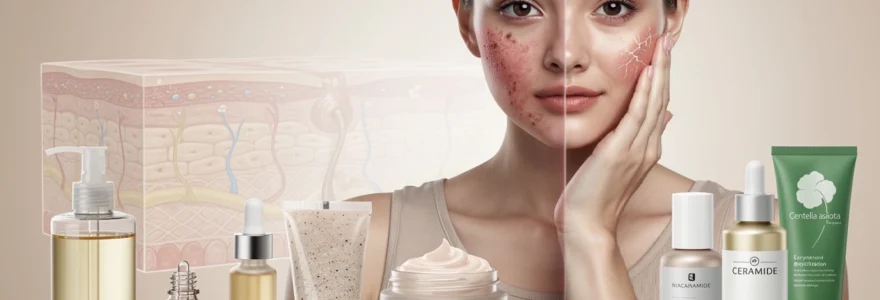
The pursuit of radiant, smooth skin has made exfoliation one of the most popular steps in modern skincare routines. From glycolic acid toners to physical scrubs and enzyme masks, the market offers an overwhelming array of products promising to reveal your freshest, most luminous complexion. However, the widespread availability of powerful exfoliating agents has created an unintended consequence: a growing epidemic of over-exfoliated, compromised skin. When you strip away too much of your skin’s protective outer layer too frequently, you’re not revealing healthier skin—you’re creating a vulnerable, damaged barrier that can take weeks or even months to repair. Understanding the complex biochemical processes that occur when exfoliation crosses from beneficial to harmful is essential for anyone seeking genuinely healthy skin rather than the temporary illusion of smoothness.
The skin’s outermost layer exists for critical protective reasons, and disrupting it excessively triggers a cascade of physiological responses that extend far beyond superficial redness. From disrupted lipid matrices to inflammatory cytokine release, over-exfoliation affects multiple systems within your skin simultaneously. The consequences can manifest as increased sensitivity, paradoxical breakouts, accelerated ageing signs, and even long-term pigmentation issues that prove frustratingly resistant to treatment. This comprehensive examination explores the scientific mechanisms behind over-exfoliation damage, helping you understand not just what happens when you exfoliate too much, but why these changes occur at a cellular level.
Stratum corneum disruption through excessive mechanical and chemical exfoliation
The stratum corneum represents your skin’s first line of defence against environmental insults, moisture loss, and pathogen invasion. This remarkable structure consists of 10-20 layers of flattened, anucleated cells called corneocytes, embedded in a lipid-rich matrix that functions much like bricks held together by mortar. When functioning optimally, the stratum corneum undergoes natural desquamation, shedding approximately one layer of cells daily in a carefully regulated process that takes 28-40 days to complete a full cycle. This natural exfoliation maintains skin health without compromising barrier integrity, as cells are only released when they’ve been properly replaced by newer cells migrating upward from deeper epidermal layers.
Excessive exfoliation—whether through aggressive scrubbing, daily acid application, or combining multiple exfoliating modalities—accelerates this process far beyond what your skin can physiologically manage. When you remove corneocytes faster than your body can replace them with fully mature barrier cells, you create gaps in your protective shield. Think of it like removing roof tiles during a rainstorm before you’ve installed replacements: the structure beneath becomes exposed to damage it wasn’t designed to handle. This premature stripping compromises the skin’s ability to retain moisture, regulate pH, and defend against external aggressors, leaving you with a weakened barrier that paradoxically looks temporarily smooth but functions poorly.
Alpha hydroxy acids (AHAs) and beta hydroxy acids (BHAs) overuse consequences
Alpha hydroxy acids like glycolic, lactic, and mandelic acid work by loosening the intercellular cement that holds corneocytes together, specifically targeting the desmosomes that connect neighbouring cells. Glycolic acid, with its smallest molecular size, penetrates most deeply and works most aggressively, while larger molecules like mandelic acid act more gently on the surface. When used appropriately—typically 2-3 times weekly at concentrations of 5-10% for home use—AHAs accelerate cell turnover beneficially, addressing concerns from dullness to fine lines. However, daily application or use of multiple AHA-containing products simultaneously can dissolve too many cellular connections too quickly, leaving your stratum corneum structurally unstable and prone to excessive transepidermal water loss.
Beta hydroxy acids, primarily salicylic acid, function differently by penetrating into oil-filled pores due to their lipophilic nature, making them particularly effective for acne-prone skin. Yet this very characteristic means they can disrupt the lipid matrix of the stratum corneum when overused. Combining high-percentage AHAs with BHAs creates what dermatologists call « acid load »—a cumulative effect
that the skin often cannot buffer. Instead of a controlled increase in cell turnover, you end up with chemical over-exfoliation: disrupted junctions between cells, irritation of deeper epidermal layers, and a chronic, low-grade inflammatory state. In practice, this might look like tingling that progresses to stinging, redness that lasts hours instead of minutes, or skin that feels tight and waxy rather than plump and hydrated. When AHAs and BHAs are layered in cleansers, toners, serums, and masks, the cumulative effect can be equivalent to a strong in-office peel—but repeated day after day on already sensitised skin.
Physical scrub abrasion damage to epidermal barrier function
Physical exfoliants—granular scrubs, brushes, gloves, and microdermabrasion-style tools—work by mechanically sloughing away corneocytes from the skin surface. Used occasionally with gentle pressure and fine, rounded particles, they can help dislodge stubborn dead cells and instantly smooth rough patches. The problem arises when scrubs contain sharp, irregular particles (like crushed nutshells) or are massaged with excessive force or frequency. In those scenarios, the action shifts from polishing to sanding, creating micro-tears across the epidermis that you cannot see but your skin definitely feels.
These microscopic fissures disrupt the continuity of the lipid barrier and open direct pathways for irritants, allergens, and microbes to penetrate deeper into the skin. Over time, repeated abrasive exfoliation can thin the stratum corneum, much like overusing a scouring pad on a non-stick pan eventually removes its protective coating. You may notice chronic redness, a persistent feeling of tightness, or a shiny, “plastic” look that is often mistaken for a healthy glow. In reality, this is barrier damage that makes the complexion more reactive to everything else in your skincare routine, from simple cleansers to sunscreen.
Retinoid-induced desquamation combined with additional exfoliant products
Retinoids—retinol, retinaldehyde, tretinoin, adapalene, and related compounds—are not classic exfoliants, yet they profoundly influence desquamation. By binding to nuclear receptors in keratinocytes, retinoids increase cell turnover and normalise the way cells mature and shed. That is why they are so effective for acne, photoaging, and texture irregularities. During the initial weeks of use, many people experience retinoid dermatitis: flaking, peeling, and sensitivity as the epidermis adapts to this accelerated turnover. On their own, these effects can be managed with a gentle, barrier-supportive routine.
The real trouble begins when retinoids are combined with other exfoliating agents—AHAs, BHAs, scrubs, or frequent enzyme masks—without appropriate spacing or adjustment. Because retinoids already push the skin toward faster renewal, adding acids or harsh scrubs on top is like asking a marathon runner to sprint at the finish line. The result is often significant barrier compromise: diffuse redness, burning on application of even bland products, and a paper-thin, easily irritated surface. If you are using a prescription-strength retinoid, most dermatologists recommend minimising or even pausing other exfoliants until your skin has fully acclimated.
Enzyme exfoliators (papain and bromelain) frequency thresholds
Enzyme exfoliants, often marketed as “gentle” or “sensitive-skin friendly,” typically contain proteolytic enzymes such as papain (from papaya) and bromelain (from pineapple). These ingredients work by selectively breaking down keratin proteins in the outermost layers of dead cells, softening the stratum corneum without the same level of acid-induced pH shift or friction from scrubs. When used once or twice weekly, especially in lower concentrations, enzyme exfoliators can be a good option for those who cannot tolerate strong acids or physical exfoliation.
However, “gentle” does not mean “limitless.” Enzymes are still actively digesting structural proteins, and daily use—or layering multiple enzyme-based products—can gradually erode the skin’s defensive outer layers. Think of it like leaving a meat tenderiser on the surface of a steak for too long: at some point, the structure starts to break down. Clinically, overuse of enzyme exfoliators presents much like acid over-exfoliation: redness, stinging, increased dryness, and heightened sensitivity to UV exposure. A practical threshold for most complexions is no more than 1–2 enzyme treatments per week, with close attention to how your skin feels in the 24–48 hours afterward.
Compromised skin barrier markers and transepidermal water loss (TEWL)
When over-exfoliation disrupts the stratum corneum, one of the earliest and most measurable consequences is increased transepidermal water loss (TEWL). TEWL describes the passive evaporation of water from the deeper epidermal layers through the skin surface into the environment. In healthy skin, the lipid matrix, corneocyte envelope, and acid mantle all work together to slow this escape of moisture. As soon as these structures are compromised, water escapes more rapidly, leading to dehydration, tightness, and dullness—even in people who previously considered their skin “oily.”
Elevated TEWL is more than a cosmetic issue; it is a key marker of a weakened barrier that is more permeable to irritants and allergens. Studies show that conditions like atopic dermatitis and irritant contact dermatitis are associated with significantly higher TEWL values compared with normal skin. Over-exfoliation can transiently mimic aspects of these barrier disorders, which is why your complexion may suddenly react to products you have used for years without problems. Understanding the underlying biochemical changes—ceramide depletion, filaggrin breakdown, pH shifts, and altered corneocyte cohesion—helps explain why the skin feels so unstable after too much exfoliation.
Ceramide depletion and lipid matrix degradation
The intercellular “mortar” that surrounds corneocytes is composed primarily of ceramides, cholesterol, and free fatty acids arranged in highly ordered lamellar structures. Ceramides make up about 50% of this lipid content and are crucial for preventing water loss and blocking external irritants. Harsh or frequent exfoliation—particularly with strong surfactants, high-percentage acids, and abrasive scrubs—can solubilise or mechanically displace these lipids, disrupting the lamellar architecture. Once those lipid layers are disorganised, the barrier becomes more permeable and less efficient at retaining moisture.
You might notice this as skin that suddenly soaks up moisturiser yet still feels dry an hour later. Even more concerning, chronic ceramide depletion can signal keratinocytes to ramp up inflammatory mediators and alter their differentiation patterns, further weakening the barrier. Replenishing ceramides topically can help, but it is far more effective to prevent their loss in the first place by moderating exfoliation. If your skincare routine relies heavily on acids and scrubs yet omits lipid-replenishing products, you are increasing the risk of long-term barrier fragility.
Filaggrin breakdown and natural moisturising factor (NMF) reduction
Filaggrin is a key structural protein in the epidermis that helps aggregate keratin filaments within corneocytes, contributing to the compact, resilient nature of the stratum corneum. As filaggrin is enzymatically degraded, it generates a group of hygroscopic compounds collectively known as the natural moisturising factor (NMF), including amino acids, PCA, urea, and lactates. NMF molecules bind and hold water within corneocytes, maintaining elasticity and preventing surface roughness. Genetic filaggrin deficiencies are strongly associated with dry, sensitive skin and atopic dermatitis—but environmental factors like over-exfoliation can also reduce functional filaggrin and NMF content.
Repeated removal of superficial corneocyte layers before they have fully matured and accumulated adequate NMF means you are constantly exposing “younger” cells that are less capable of water retention. Over time, this leads to chronic dehydration and micro-fissuring of the surface, much like soil that cracks when it loses too much moisture. Clinically, this appears as fine, powdery flaking, tightness, and exaggerated fine lines that seem to disappear temporarily when you apply humectant-rich products, only to return quickly as water evaporates. Supporting filaggrin function means respecting the skin’s own timeline for maturation and avoiding the temptation to strip away every hint of texture.
Ph imbalance and acid mantle disruption mechanisms
The skin’s surface normally maintains a mildly acidic pH, typically between 4.5 and 5.5, forming what is known as the acid mantle. This delicate acidity optimises the activity of numerous enzymes involved in lipid synthesis, desquamation, and antimicrobial defence. Many chemical exfoliants—especially AHAs—require a low pH to function effectively, which is why formulations often sit around pH 3–4. Used sensibly, the skin can recover from this temporary acid load and re-establish its natural pH within a few hours. Excessive frequency, layering multiple low-pH products, or pairing acids with harsh alkaline cleansers can disturb this balance more persistently.
Why does pH matter so much for over-exfoliation? Enzymes that control corneocyte shedding, lipid processing, and barrier repair are highly sensitive to pH. If the surface becomes too acidic or too alkaline for prolonged periods, these enzymes either over-function or under-function, leading to irregular shedding, impaired lipid organisation, and altered microbiome composition. You might experience this as burning sensations when applying products, unexplained flushing, or delayed recovery from minor irritations. Respecting the acid mantle—by limiting strong acids, avoiding high-alkaline cleansers, and not combining too many pH-disruptive products—helps keep exfoliation in the beneficial zone rather than tipping it into damage.
Corneocyte cohesion weakening through desmoglein interference
Corneocytes are held together by specialised protein structures called corneodesmosomes, which contain desmogleins and other adhesion molecules. During normal desquamation, specific proteases gradually break down these adhesive structures, allowing superficial cells to slough off in an orderly fashion. Acid exfoliants and enzymes accelerate this process by increasing protease activity and directly altering corneodesmosomal proteins. In moderation, this leads to the desirable smoothing effect we associate with well-exfoliated skin. In excess, it causes premature loss of cohesion between cells and destabilisation of the entire stratum corneum.
Imagine loosening too many bricks in a wall at once: the structure becomes wobbly and prone to collapse. Similarly, when desmoglein function is overly disrupted, the skin surface becomes fragile, flaky, and more susceptible to micro-injury from even mild friction or environmental exposure. This not only increases TEWL but also provides “entry points” for irritants and microbes, setting the stage for inflammation and infection. If your skin starts to peel in thin sheets, feels rough despite frequent exfoliation, or develops patchy sensitivity, it is likely that corneocyte cohesion has been compromised by overzealous exfoliation.
Inflammation cascade activation and erythema development
Once the barrier is disrupted and TEWL increases, the skin’s immune system quickly becomes involved. Keratinocytes are not passive bystanders; they act as active immune sentinels that release a variety of pro-inflammatory mediators in response to stress. Over-exfoliation is one such stressor, triggering an inflammatory cascade that can range from subtle subclinical irritation to overt erythema, burning, and swelling. While a mild, transient inflammatory response is part of how controlled exfoliation stimulates renewal, chronic or intense inflammation accelerates collagen breakdown, aggravates existing conditions like rosacea or acne, and contributes to long-term pigmentation problems.
Recognising that persistent redness is a sign of ongoing inflammation—not a normal side effect of “effective” exfoliation—is crucial. If your skin remains flushed for hours after using acids or scrubs, or if the redness seems to be spreading and lasting longer with each use, your immune system is signalling distress. Understanding the roles of cytokines, mast cells, and eicosanoids like prostaglandins helps explain why over-exfoliated skin often feels hot, reactive, and uncomfortable, and why calming this inflammatory cascade is a key step in recovery.
Cytokine release (IL-1α and TNF-α) from keratinocyte irritation
When keratinocytes experience mechanical or chemical injury, they rapidly release pro-inflammatory cytokines such as interleukin-1 alpha (IL-1α) and tumour necrosis factor alpha (TNF-α). These molecules act as distress signals, recruiting immune cells to the site of damage and amplifying the inflammatory response. In controlled doses, this signalling helps initiate repair processes and can even contribute to improved texture and tone after a properly performed peel. However, repeated or excessive stimulation—like daily application of strong acids or aggressive scrubbing—keeps these pathways chronically activated.
Clinically, ongoing IL-1α and TNF-α release manifests as persistent erythema, warmth, and tenderness, even in the absence of visible peeling. Over time, chronic low-grade inflammation can degrade collagen and elastin, contributing to premature fine lines and loss of elasticity. It can also lower the threshold for other irritants to provoke reactions, essentially “training” your skin to become reactive. If you notice that formerly well-tolerated products now sting or flush your skin, it is often a sign that cytokine-mediated inflammation from over-exfoliation has sensitised your complexion.
Mast cell degranulation and histamine-mediated reactions
Mast cells are immune cells residing within the dermis that play a central role in allergic and irritant responses. When activated by physical trauma, chemical insults, or neurogenic stimuli, mast cells degranulate—releasing histamine and other mediators into surrounding tissues. Histamine increases vasodilation and vascular permeability, leading to rapid redness, swelling, and itching. Over-exfoliation, particularly in individuals with an atopic or rosacea-prone background, can prime mast cells to respond more vigorously, making flare-ups more frequent and intense.
This is why some people experience hives-like welts, pronounced flushing, or intense itching after using scrubs or acid toners on an already sensitised barrier. The more often mast cells are triggered, the more reactive the skin can become over time, a phenomenon sometimes referred to as “reactive skin syndrome.” Calming this histamine-driven response requires both removing the offending exfoliating triggers and introducing barrier-repair and anti-inflammatory ingredients. In stubborn cases, dermatologists may recommend short-term use of topical corticosteroids or oral antihistamines to break the cycle.
Prostaglandin E2 production and vascular permeability increase
Another key player in the inflammatory cascade is prostaglandin E2 (PGE2), an eicosanoid derived from arachidonic acid via the cyclooxygenase (COX) pathway. Mechanical and chemical irritation from over-exfoliation increase COX activity in keratinocytes and other skin cells, raising local PGE2 levels. PGE2 promotes vasodilation and enhances vascular permeability, allowing plasma and immune cells to extravasate into surrounding tissues. The visible consequence is erythema—diffuse redness—and sometimes subtle oedema or puffiness, especially around the eyes and cheeks.
While a short-lived PGE2 spike is part of the normal inflammatory response, sustained production due to ongoing barrier disruption can contribute to chronic redness and capillary fragility. Over time, this may predispose to telangiectasia formation—those fine, visible blood vessels often seen in over-treated or rosacea-prone skin. If your complexion looks perpetually flushed or blotchy and seems to worsen with each exfoliating session, it is a sign that vascular changes driven by mediators like PGE2 are occurring beneath the surface.
Microbial dysbiosis and compromised skin microbiome diversity
Healthy skin is home to a complex ecosystem of bacteria, fungi, and viruses collectively known as the skin microbiome. These microorganisms play essential roles in barrier function, immune modulation, and protection against pathogenic invaders. Over-exfoliation disrupts this ecosystem in several ways: by altering pH, removing lipid substrates that commensal microbes rely on, and physically stripping away microbial communities anchored to the stratum corneum. The result is microbial dysbiosis—a shift in species composition and abundance that can predispose to inflammation, infection, and flare-ups of conditions like acne, seborrheic dermatitis, and perioral dermatitis.
You can think of the skin microbiome as a diverse, well-balanced garden. Gentle exfoliation is like light pruning; it can encourage new growth and keep things tidy. Over-exfoliation, on the other hand, is more like ripping up large patches of soil, leaving bare ground where opportunistic “weeds” can quickly take over. Understanding how specific players like Staphylococcus epidermidis, Cutibacterium acnes, and Malassezia furfur respond to barrier disruption helps explain why some people develop sudden breakouts or flares after ramping up their exfoliation routines.
Staphylococcus epidermidis population imbalance
Staphylococcus epidermidis is one of the most abundant commensal bacteria on human skin and generally acts as a protective ally. It produces antimicrobial peptides that help keep potential pathogens like Staphylococcus aureus in check and contributes to immune tolerance at the skin surface. Over-exfoliation can reduce the density of these beneficial colonies by physically removing them and by altering the lipid and pH environment they prefer. As S. epidermidis populations decline or become patchy, there is less competition for space and resources, allowing more aggressive or inflammatory species to expand.
This shift may not be immediately visible but can set the stage for recurrent folliculitis, secondary infections, or exacerbations of atopic dermatitis. Some studies suggest that restoring a healthy balance of commensal staphylococci can improve barrier function and reduce inflammation, reinforcing the idea that protecting your microbiome is just as important as protecting your corneocytes. If you notice that your skin infections, pustules, or general “angry” breakouts increase after introducing strong exfoliants, microbial imbalance may be a contributing factor.
Cutibacterium acnes (formerly propionibacterium acnes) overgrowth potential
Cutibacterium acnes (formerly Propionibacterium acnes) is a key resident of sebaceous follicles and plays a complex role in acne pathogenesis. In a balanced environment, it coexists peacefully with other microbes and the host immune system. However, barrier disruption and increased sebum production—both potential consequences of over-exfoliation—create favourable conditions for specific inflammatory strains of C. acnes to proliferate. Ironically, people often escalate exfoliation in an attempt to control breakouts, not realising that excessive stripping can be part of the problem.
When the stratum corneum is thinned and lipid composition altered, follicles may become more easily clogged with a mixture of retained corneocytes and sebum, while the surrounding environment becomes more hospitable to C. acnes. The immune system then responds to bacterial metabolites and antigens, leading to papules, pustules, and even nodules. If your acne worsens or changes character—becoming more inflamed, tender, or widespread—after increasing your use of acids or scrubs, it is a strong sign that your microbiome and barrier need support rather than further exfoliation.
Malassezia furfur proliferation in sensitised skin
Malassezia furfur is a lipophilic yeast that forms part of the normal skin flora but is also implicated in conditions like seborrheic dermatitis, pityrosporum folliculitis, and some forms of dandruff. This yeast thrives in oily environments and can proliferate when the barrier is disrupted and local immune responses are altered—both common consequences of over-exfoliation, especially on the face, chest, and back. Additionally, changes in surface lipids and pH may favour certain Malassezia species, tipping the balance from commensal to pathogenic behaviour.
Clinically, this can present as itchy, flaky patches around the nose, brows, scalp margin, or chest; tiny, uniform papules on the forehead or upper back; or stubborn “acne” that does not respond to typical treatments. If you notice these patterns emerging or worsening after a period of intense exfoliation, it is worth considering whether yeast overgrowth is involved. In such cases, dermatologists may recommend antifungal agents alongside a strict reduction in exfoliant use to allow both the barrier and microbiome to rebalance.
Clinical manifestations of over-exfoliation syndrome
When you put all of these mechanisms together—barrier disruption, inflammatory cascades, and microbial dysbiosis—you get a recognisable clinical picture often referred to informally as “over-exfoliation syndrome.” While not an official diagnostic term, it captures a cluster of symptoms and signs that many dermatologists and estheticians see weekly: burning, stinging, persistent redness, flaking, paradoxical breakouts, and increased reactivity to everyday products and environmental triggers. Importantly, these manifestations can mimic or exacerbate pre-existing conditions like rosacea, eczema, and melasma, making diagnosis and management more challenging.
Understanding the distinct patterns that over-exfoliation can take—contact dermatitis-like reactions, post-inflammatory hyperpigmentation, telangiectasia, and rebound oiliness—helps you and your skincare professional tailor a recovery plan. Instead of assuming that every new bump or patch of redness is a sign you need to exfoliate more, recognising these as potential markers of damage allows you to step back, simplify, and support repair.
Contact dermatitis and reactive skin phenotype development
One of the most common clinical outcomes of chronic over-exfoliation is the development of a reactive skin phenotype, often overlapping with irritant or allergic contact dermatitis. With the barrier compromised, even low-level irritants—fragrance compounds, preservatives, surfactants, or certain plant extracts—can penetrate more deeply and interact with immune cells. In irritant contact dermatitis, this leads to burning, stinging, and erythema shortly after product application. In allergic contact dermatitis, sensitisation to specific ingredients can cause delayed eczematous reactions with itching, swelling, and sometimes vesicle formation.
People who once tolerated a wide range of products may suddenly find that “everything burns,” prompting them to hop from one formula to another in search of relief. This trial-and-error approach, combined with ongoing exfoliation, often worsens the situation. The most effective strategy is to pause exfoliants, strip back to a minimal routine of bland, fragrance-free products, and, when needed, seek patch testing with a dermatologist to identify specific allergens. Over time, with consistent barrier repair, many individuals can gradually expand their product options again—provided they keep exfoliation in check.
Post-inflammatory hyperpigmentation (PIH) and melasma exacerbation
Inflammation triggered by over-exfoliation does not just make the skin red; in melanin-rich skin, it can also lead to persistent dark marks known as post-inflammatory hyperpigmentation (PIH). When keratinocytes release inflammatory mediators, melanocytes often respond by increasing melanin production and transferring more pigment to surrounding cells as a protective measure. If the inflammation is repeated—through frequent acid peels, harsh scrubs, or friction from tools—these pigmentary changes can accumulate and become difficult to fade.
For individuals with melasma or a predisposition to hyperpigmentation (common in Fitzpatrick skin types IV–VI), aggressive exfoliation is particularly risky. While controlled chemical peels in a dermatology setting can improve melasma when combined with strict photoprotection, unsupervised home exfoliation often does the opposite, deepening patches and creating new unevenness. If your goal is a more even skin tone, it is far wiser to pair gentle, infrequent exfoliation with pigment-regulating ingredients and broad-spectrum sunscreen than to “scrub away” dark spots.
Telangiectasia formation and capillary fragility
Couperose skin—characterised by fine, visible blood vessels (telangiectasia) and diffuse redness—is another potential long-term consequence of repeated irritation and inflammation. Over-exfoliation contributes to this by causing frequent vasodilation, increasing PGE2 and histamine levels, and mechanically stressing superficial capillaries with abrasive scrubs or tools. Over time, these fragile vessels may lose their ability to constrict effectively and become permanently dilated, particularly in genetically predisposed individuals or those with underlying rosacea.
Once telangiectasia form, topical products alone cannot make them disappear; vascular lasers or intense pulsed light (IPL) treatments are usually required to significantly reduce their appearance. This is why prevention is so important. If you notice that your cheeks or nose remain red and show fine, thread-like vessels after a period of intense exfoliation, it is a clear signal to scale back and prioritise barrier-calming care. Continuing to exfoliate aggressively in this context risks locking in long-term vascular changes that are far harder to treat than a few dry patches.
Sebaceous gland hyperactivity and rebound oil production
Many people turn to frequent exfoliation in an attempt to control excess oil and shine, yet over time they find that their skin seems oilier than ever. This paradoxical effect is partly explained by sebaceous gland hyperactivity in response to barrier disruption. When harsh exfoliants strip away surface lipids and increase TEWL, the skin interprets this as a threat to homeostasis and may upregulate sebum production in an attempt to compensate. In addition, low-grade inflammation around follicles can alter hormonal and local signalling pathways that influence sebaceous activity.
The result is rebound oiliness: a complexion that looks shiny within hours of cleansing, enlarged-looking pores, and a tendency toward congestion and breakouts—despite feeling dry and tight underneath. The instinctive reaction is often to exfoliate even more and use stronger cleansers, which only deepens the cycle. Breaking this pattern requires accepting a temporary period of adjustment while you reduce exfoliation, switch to gentle, non-stripping cleansers, and introduce barrier-repairing moisturisers. Once the skin no longer feels under siege, sebaceous output often normalises, and true combination or oily skin becomes easier to manage with strategic, moderate exfoliation rather than daily stripping.
Dermatological recovery protocols and barrier repair strategies
Recovering from over-exfoliation is less about finding a miracle product and more about creating the right environment for your skin’s innate repair mechanisms to work. The first and most important step is always to stop or drastically reduce the offending exfoliating agents—whether they are acids, scrubs, retinoids, or enzyme masks—until your skin returns to its baseline state. This recovery period can take anywhere from a few days for mild irritation to four to six weeks for more significant barrier compromise, reflecting the time needed for a full epidermal turnover cycle.
During this phase, your focus should shift from “treatment” to “support”: gentle cleansing, intensive moisturisation, and rigorous sun protection. Ingredients such as ceramides, cholesterol, fatty acids, niacinamide, panthenol, colloidal oatmeal, and Centella asiatica extracts can all contribute to barrier repair and inflammation reduction. Working with a dermatologist or qualified skincare professional can help you tailor a protocol that addresses your specific symptoms while avoiding further irritation. Once your skin is stable and comfortable, you can gradually reintroduce exfoliation—this time with clear limits and a better understanding of your skin’s unique tolerance.
Ceramide-dominant moisturisers and cholesterol-fatty acid ratios
Because over-exfoliation directly disrupts the lipid matrix of the stratum corneum, one of the most effective recovery strategies is to use moisturisers that closely mimic the skin’s natural lipid composition. Research suggests that formulations containing ceramides, cholesterol, and free fatty acids in roughly equimolar ratios are particularly beneficial for repairing barrier function. Ceramide-dominant moisturisers supply the key structural lipids that may have been depleted through harsh exfoliation, while cholesterol and fatty acids help re-establish the lamellar organisation necessary for optimal TEWL control.
When choosing a barrier-repair cream, look for products that list multiple ceramide types (such as ceramide NP, AP, or EOP), cholesterol, and non-fragrant plant oils or fatty acids high on the ingredient list. Apply generously—more than you might have before over-exfoliation—and reapply as needed, especially after cleansing. You can think of this step as “re-mortaring” the brick wall of your stratum corneum: without adequate lipids, other beneficial ingredients cannot perform optimally, and the barrier remains vulnerable to further damage.
Niacinamide (vitamin B3) for barrier restoration and inflammation reduction
Niacinamide, a water-soluble form of vitamin B3, is one of the most versatile and well-tolerated actives for over-exfoliated skin. At concentrations of 2–5%, it has been shown to increase ceramide and free fatty acid synthesis within the epidermis, strengthening the barrier from the inside out. Niacinamide also exerts significant anti-inflammatory effects, downregulating the release of cytokines like IL-1α and reducing redness and blotchiness. For those struggling with post-inflammatory hyperpigmentation from over-exfoliation, niacinamide can further help by interfering with melanosome transfer from melanocytes to keratinocytes.
Because niacinamide is generally compatible with a wide range of ingredients and functions well across a relatively broad pH range, it is easy to incorporate into a simplified recovery routine. A gentle cleanser, a niacinamide-containing serum or lotion, and a ceramide-rich moisturiser can form a powerful trifecta for calming and rebuilding compromised skin. If you are particularly sensitive, starting with lower concentrations and patch testing is wise, but in most cases niacinamide is far less risky than continuing to use strong acids or scrubs on an already inflamed barrier.
Centella asiatica and madecassoside for wound healing support
Centella asiatica, also known as gotu kola or tiger grass, has a long history in traditional medicine for its wound-healing properties. Modern research attributes many of these effects to triterpenoid compounds such as madecassoside, asiaticoside, and asiatic acid. These molecules have been shown to promote fibroblast proliferation, enhance collagen synthesis, and modulate inflammatory pathways—all highly relevant actions for skin recovering from micro-injury caused by over-exfoliation. Additionally, Centella extracts can help reduce erythema and improve overall comfort in sensitised skin.
In practical terms, products containing Centella asiatica or purified madecassoside can be used as soothing serums, creams, or masks during the recovery phase. They are particularly helpful for those who experience burning, stinging, or visible redness but wish to avoid stronger anti-inflammatory drugs like topical steroids except when medically necessary. As with any active ingredient, formulation matters: look for fragrance-free, alcohol-free products designed for sensitive skin to avoid offsetting the benefits of Centella with new irritants.
Recommended exfoliation frequency based on fitzpatrick skin types
Once your skin has healed, the final step is to establish an exfoliation routine that respects your individual biology rather than following generic advice. One useful framework is the Fitzpatrick skin type classification, which categorises skin based on its tendency to burn or tan and correlates with melanin content and reactivity. While there is no rigid rulebook, we can outline general frequency guidelines that you can then adjust based on your own experience.
For Fitzpatrick types I–II (very fair to fair, always or often burns), the skin tends to be thinner, more prone to redness, and more susceptible to long-term vascular changes. In this group, chemical exfoliation with low-strength AHAs, BHAs, or enzymes is usually best limited to once or twice weekly, avoiding abrasive scrubs altogether or keeping them to rare use. For types III–IV (medium to olive, sometimes burns then tans), the barrier may tolerate 2–3 sessions of gentle chemical exfoliation per week, with careful monitoring for signs of sensitivity or hyperpigmentation.
For Fitzpatrick types V–VI (brown to deeply pigmented, rarely burns), the stratum corneum can often handle slightly more robust exfoliation in terms of barrier thickness, but the risk of post-inflammatory hyperpigmentation is significantly higher. Here, 1–2 sessions of mild chemical exfoliation per week, combined with strict photoprotection, is usually a safer starting point than daily acids or frequent peels. In all skin types, remember that retinoids, scrubs, professional treatments, and over-the-counter acids contribute to your total “exfoliation load.” Listening to your skin—watching for increased redness, tightness, tingling, or breakouts—is more important than following any fixed schedule.
 Good health cannot be bought, but rather is an asset that you must create and then maintain on a daily basis.